


The domestic blockchain industry is expanding beyond finance into diverse fields such as public services and healthcare.
 Published2017.03.27 19:29
Recently, financial services related to the Fourth Industrial Revolution are once again becoming a hot topic as the Gyeonggi Provincial Government announced that it would incorporate blockchain into its donation management system.
The blockchain-based donation management system, which enables donation management information to be shared with donors in real time, originated from concerns regarding the proper use of donations. According to a survey by the Ministry of Health and Welfare, respondents with donation experience questioned the transparency of organizations, while those without donation experience questioned the trustworthiness of organizations.
As the form of employment changes due to the Fourth Industrial Revolution, the types of financial transaction customers are also expected to change. Accordingly, it is predicted that blockchain will become more active and non-traditional payment systems such as mobile money and P2P (peer-to-peer) will spread.
Blockchain is commonly referred to as a technology that prevents money from being paid more than once when using electronic currency (Bitcoin) between transaction parties (P2P). Overseas, it is being used in various fields such as e-commerce, finance, fintech, public data, royalty payments, crowdfunding, stocks, Bitcoin, medical data, social media, smart contracts, and IoT platforms.

In Korea, blockchain is primarily used in the financial sector. Paygate has been providing 'Safert' to P2P companies since 2015. Safert is a blockchain-based platform that offers fund collection, escrow, currency exchange, and settlement services. Jeonbuk Bank has integrated BLOCO's blockchain Open Keychain technology into its mobile banking app's simplified login service. Last August, Shinhan Bank launched the 'Shinhan Gold Safe Service,' the first in Korea to issue purchase exchange certificates and guarantees for gold bars.
Lotte Card introduced a blockchain-based fingerprint authentication service to its application, enabling identity verification without accredited certificates or passwords. KB Kookmin Card also introduced a blockchain-based identity verification service.
Blockchain, not a technology, but a discourse
At ICT Convergence Korea held on the 23rd, Blocko CEO Kim Jong-hwan stated, “There are various terms used to describe blockchain. I would like to say that blockchain is a discourse, not a technology.” He explained, “Blockchain is a system that runs on top of a computing system that performs parallel and distributed processing for tasks handled by a single existing database.”
Blockchain is different from escrow payment methods that secure security through centralization. While traditionally problems were solved by someone possessing trustworthy data and supervising it, blockchain implements the human act of supervision in software.
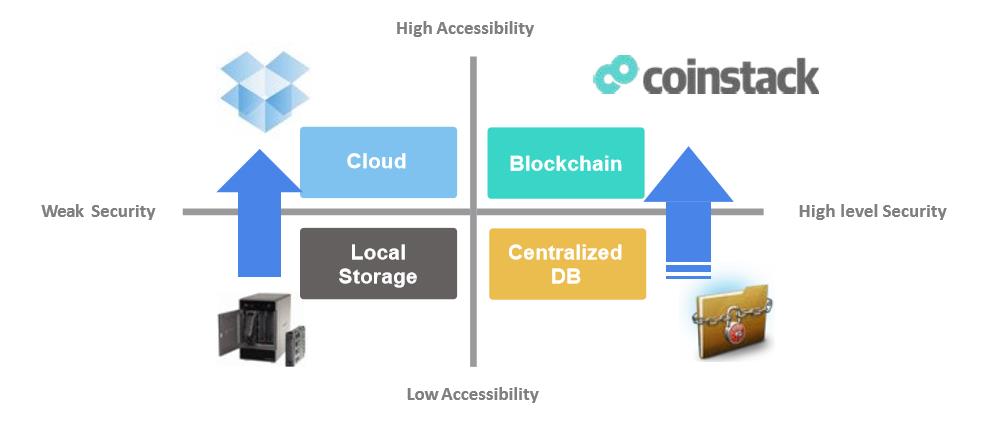
In this context, CEO Kim cited blockchain as the first technology that humans must create. Utilizing a structure where security strengthens as accessibility increases, blockchain is being deployed in various software sectors, including finance, healthcare, and the public sector. Bitcoin can be viewed as a collection of applications that communicate via the Bitcoin Protocol implemented on the blockchain. As the utility of Bitcoin expands, it is expected that costs within the existing payment ecosystem will decrease.
CEO Kim stated, “The blockchain currently used in Korea is in a simple form. It is compatible with public and private certificates and is used for light tasks.” He added, “Starting with finance, attempts are being made to utilize it in various fields such as the public sector, refugee management, donations, and automated medical billing. Since the application areas are so broad, there are limitations to what a startup can achieve alone. We are striving to popularize blockchain in Korea through collaboration with the market.”
Comments
Related news
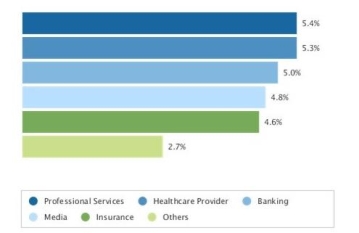
Led by financial services and manufacturing industries, accounting for 30% of total IT revenue.
According to a recent research report from IDC (www.idc.com), global IT spending this year is projected to reach $2.4 trillion, representing a 3.5% increase compared to 2016. Additionally, global IT spending is expected to grow at a compound annual growth rate (CAGR) of 3.3%, reaching approximately $2.65 trillion by 2020.
2017.03.02by 김지혜 기자
NXP Expands Series of Safe and Reliable Industrial Apps
NXP Semiconductors has expanded its i.MX 8 application processor series with the introduction of a new i.MX 8X product family. This product family leverages common subsystems and architecture applied in the advanced i.MX 8 product family, enabling pin-compatible options and software reusability. The ARM Cortex-A35 and Cortex-M4F CPUs are optimized using FD-SOI (fully depleted silicon-on-insulator) technology, delivering enhanced power efficiency, reduced heat generation, and extended battery life.
2017.03.16by 김자영 기자
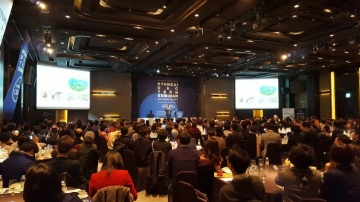
Hyundai BS&C Announces Entry into Blockchain-Based Digital Asset Business
Hyundai BS&C, DoubleChain, and Korea Digital Exchange held a 'Hyundai DAC' technology seminar on the 15th and announced their full-scale entry into blockchain-based digital asset business. The seminar, hosted by the Korea Software Industry Association and Korea Digital Exchange, was organized by Hyundai BS&C, DoubleChain, and the Korea Fintech Platform Forum, with numerous blockchain technology-related companies participating as sponsors.
2017.03.17by 김자영 기자

The financial services industry is the most active in adopting hybrid cloud.
Nutanix announced the cloud adoption status and outlook for the financial services industry through its Enterprise Cloud Index report. According to a survey of current hybrid cloud adoption rates by industry, the financial services industry's hybrid cloud adoption rate was 21%, which was higher than the industry average of 18.5%. Financial services companies are facing the challenge of providing differentiated experiences to customers through methods such as leveraging emerging technologies like blockchain, while simultaneously simplifying operations.
2019.04.02by 이수민 기자

IBM Blockchain World Wire… Real-time global financial payment network expands to over 50 countries worldwide
IBM announced on the 19th the expansion of IBM Blockchain World Wire, a real-time global financial settlement network for financial institutions. World Wire was developed to accelerate and optimize foreign exchange transactions and cross-border payment and remittance speeds. Additionally, it integrates payment message transmission, clearing, and settlement procedures into a single network while supporting network participants in selecting various types of digital assets for settlement. Starting from the 19th, the payment service area will be expanded to 72 countries, including 47 global currencies and 44 financial endpoints. Busan Bank became the first domestic bank to join World Wire.
2019.03.19by 이수민 기자











