


9 Reasons Why You Should Be Amused by Smart Sensors
 Published2017.04.04 14:50
1. Environmental monitoring: Fine dust, don't move!
In the heart of Myeongdong, you access environmental monitoring via smartphone. Nano sensors measure congestion, air quality, and weather at your current location and transmit these data to a center, which then relays the relevant information. This information, gathered from various sources, is then compiled and used to predict various areas, such as how to disperse fine dust and how to control traffic.
2. Measuring and controlling air quality in the car: My car won't start after drinking alcohol!
It senses carbon dioxide exhaled by people on buses, trains, and subways. When temperatures are high, it turns on the air conditioner or air conditioner to maintain a comfortable indoor air quality. For vehicles in operation, there are also sensors in operation to prevent moisture from forming due to differences in outdoor temperatures and sensors to prevent the engine from starting for drunk drivers.
3. Food Freshness Monitoring: A Refrigerator That Alerts You to Inedible Food
Spoiled food emits specific gases. By analyzing these gases, a total of eight types of gas are detected and installed in the refrigerator. The refrigerator detects the substance through pattern recognition. If a specific gas exceeds a certain level, the system determines the food is inedible and issues notifications such as "Eat quickly" or "This food is inedible."
4. Marine Environment Monitoring and Red Tide Warning System: Red Tide, Crabs, Go Away!
Taking into account the occurrence of eutrophication, the ion concentrations of nutrients were measured during marine exploration. A system has been developed to send warnings and prevent red tides two to four weeks before they occur.
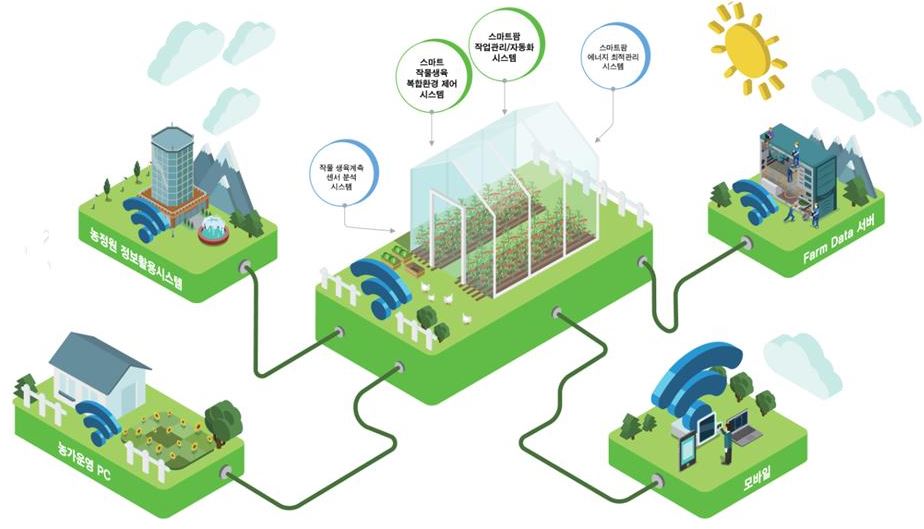
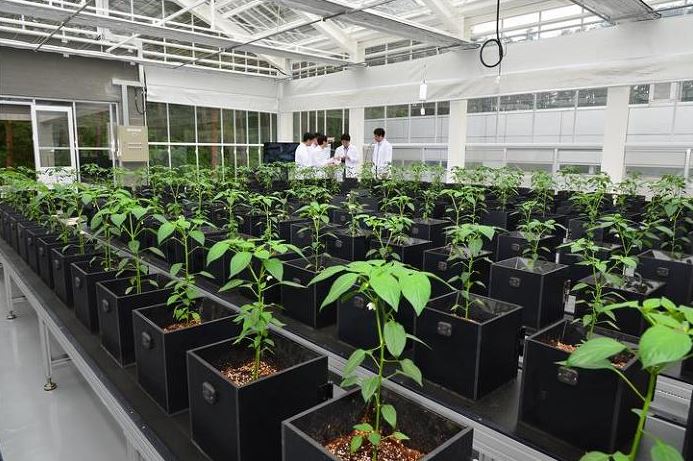
5. Smart Farm Monitoring: You can even understand the language of plants!
6. Drone Monitoring for Radiation and Chemicals: We Can Detect Nuclear Accidents in Advance!
The Fukushima nuclear accident was detected by an American drone. Japan was forced to confess to the drone's ability to detect radiation levels while passing through room temperature. South Korea has also developed a drone monitoring system for radiation monitoring.
7. Smart Firefighting Uniform Sensor Monitoring: Protecting Firefighters
It is a sensor that monitors the location information of firefighters, indoor harmful gases, and temperature. Although it is still in the development stage, if it is introduced, it could help ensure the safety of firefighters to some extent by informing them of their location in case of distress during rescue or when their vital signs become abnormal.
8. U-Health Respiratory Disease Monitoring System: Diagnose diseases simply by breathing.
"Just breathing..." Early diagnosis of diseases like diabetes and asthma. Diabetes is associated with high levels of acetone, carbon monoxide, and ethanol in exhaled breath, while asthma is associated with increased levels of carbon monoxide, nitrogen, and ammonia. Based on this gas data, various diseases can be identified. Development is underway in Europe and the United States, and Korea plans to further develop this technology.
9. Interactive Smart Toy: When you spell the word lion, the screen makes an 'Ah ...
“Build a robot that walks, talks, grasps, thinks, and fires bullets. You can do anything you can imagine.” You can even create your own programs using programming software. This is the result of combining LEGO's Mindstrom (see video below) with programming blocks, motors, and sensors. It's also being developed for early childhood education. When you spell "LION," a lion appears on screen and says, "Uh-huh!" There are also coding educational toys that allow you to input actions and have them play back automatically.
Comments
Related news

Image sensor capable of capturing images quickly or slowly
When designing an image sensor, the most critical step is to fully understand how to use the device. The product equipped with the device must explain to customers how they should operate it. Customer requirements are endless, such as whether customers primarily want to use the device in high frame rate or low-light environments, or whether they want to optimize for low power consumption or low read noise. While it is natural that the finished product will be used in more than one way, if the use cases for the new product run counter to the direction desired in the design, complications can arise.
2017.03.23by 김지혜 기자
If you are curious about the current state of technology for future smart sensors
The Korea Industrial Technology Association announced that it will hold a seminar at Automation World, which opens on the 29th, with the theme of "Technology Development Trends and Application Cases of Future Smart Sensors by Sector." Sensors, a core infrastructure technology in the era of hyper-connectivity, can create high value-added products when integrated with machinery, and as they serve as the foundation for IoT and ICT convergence, this is a sector with significant need for enhanced R&D investment. The government is establishing an active promotion plan by investing substantial funds to develop 10 core sensors by 2020 and to achieve entry into the top 4 sensor industry nations by 2025.
2017.03.27by 김지혜 기자
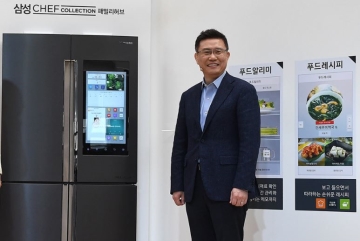
Can I ask a smart home for a voice-understanding IoT refrigerator?
Samsung's acclaimed IoT refrigerator, Family Hub, has returned as an even smarter home appliance. Samsung Electronics recently introduced the '2017 Chef Collection Family Hub' equipped with 'fine temperature control technology' enhanced by 'full metal cooling' and a host of evolved next-generation smart features at the 'Chef Collection Experience Day' event.
2017.04.03by 신윤오 기자
Intel Unveils Next-Generation 'Core Ultra Series 3' and vPro Platform for Enterprise PCs
Intel has officially unveiled the "Intel Core Ultra Series 3" for next-generation enterprise PCs and the latest vPro platform, addressing a wide range of demands from enterprise notebooks to high-performance workstations.
2026.03.26by 배종인 기자
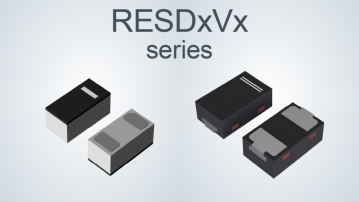
ROHM Launches ESD Protection Diode Compatible with High-Speed Interfaces of 10Gbps or Higher
Semiconductor specialist ROHM has developed the 'RESDxVx series' of ESD (electrostatic discharge) protection diodes capable of responding to next-generation high-speed data communication environments exceeding 10Gbps, simultaneously enhancing both signal quality maintenance required in high-speed interfaces and IC protection performance.
2026.03.26by 배종인 기자











