


ETRI Develops Ultra-High-Resolution Pixel Hologram Technology Using Phase-Transition Materials
 Published2017.04.10 12:28
The Electronics and Telecommunications Research Institute of Korea has implemented a holographic image measuring 3 centimeters in width and height with 1 micrometer pixels using a phase-transition material, and the results were published in Scientific Reports on January 24.
A Korean research team has successfully developed a hologram capable of ultra-high-resolution pixels using phase-transition materials. This development promises to enable the development of display panels capable of playing holographic videos in the future.
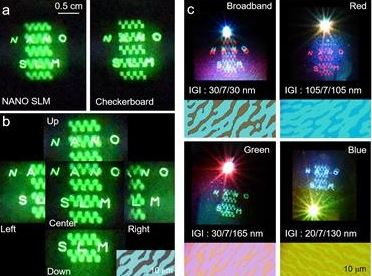
The phase-transition material used in this study is germanium antimony telluride (Ge2Sb2Te5, GST), a chalcogenide compound that has recently been receiving renewed attention. It has been applied to DVDs and phase-change memory devices (PRAM). Currently, holographic image displays mainly use a spatial light modulator method using liquid crystals. By applying voltage to the liquid crystals, the phase and polarization of light are effectively changed to create a holographic image. However, liquid crystal devices have limitations in producing micrometer-level pixel sizes, which are necessary to improve the image quality and viewing angle of holographic images.
To address these issues, ETRI utilized phase transition materials (GSTs), previously studied as semiconductor memory devices. Phase transition materials can exist in both amorphous and crystalline states, with varying transmittance and refractive index. They can be manufactured with pixel sizes sub-micrometers and can control the phase of light, enabling the creation of holographic images. The significance of this result lies in the fact that it achieved a pixel size close to the wavelength of light while making the pixels about 1/4 smaller than those using existing liquid crystals.
The research team used a holographic device utilizing a phase-change material, using indium tin oxide (ITO) on both sides and a semiconductor material, GST, in between. By using this multi-layer thin film structure, they were able to maintain the thickness of the phase-change material layer while controlling the thickness of the transparent electrode layer, creating a device that can maximize phase modulation in specific colors. By controlling the thin film thickness without a separate color filter process, they made it possible to generate holographic images of various colors depending on the thickness of the transparent electrode layer.
In this research, a 3-centimeter-sized hologram composed of 1-micrometer-sized pixels was created using laser-assisted phase transitions. The increased resolution allows the hologram to appear clearly even with standard LED light. In the prototype, when illuminated by a smartphone flashlight (LED), the green lettering "NANO" appeared as a hologram on a checkered background. Various color expressions are also possible.
ETRI has revealed that it is possible to implement ultra-small pixels of less than 1 micrometer, which has been one of the biggest topics and obstacles in developing spatial light modulation devices for holographic displays. To verify this, the research team created a unit pixel based on a thin film of a phase-change material. When an electrical signal was applied to the unit pixel structure designed with a light modulation area of 1㎛ x 4㎛, the optical properties of the phase-change material-based multilayer structure were successfully observed to change.
The research team plans to implement digital hologram images in the form of panels based on phase-transition materials within two years. Through this, we plan to apply it to video implementation and flexible hologram display panels.
ETRI's Hwang Chi-seon, head of the Immersive Display Research Group, said, "The current level of research results is at the level of implementing stationary holographic images using phase-transition materials, but through continued research, we plan to develop a next-generation optical modulation device capable of video playback."
Comments
Related news
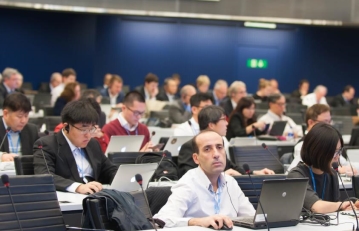
ETRI Takes the Lead in International Standardization by Securing 114 International Standard Patents Last Year
Securing pioneering patents alongside core technology development is essential for research and development. Additionally, efforts to guide proprietary patents toward international standards represent strategic R&D activities required for preempting the global market. Efforts to secure international standard patents, referred to as the goose that lays golden eggs, are gaining further momentum. Over the past year, ETRI (Electronics and Telecommunications Research Institute) secured 114 international standard patents, bringing its cumulative international standard patents to over 600.
2016.02.26by 신윤오 기자
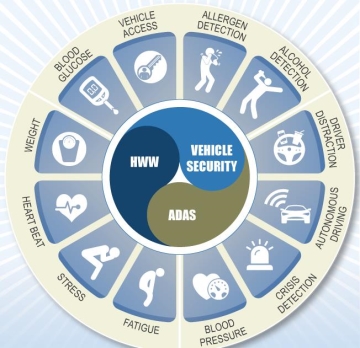
One in three new cars will be equipped with bio-wearable technology.
Frost & Sullivan has released the "Biometrics in the Global Automotive Industry, 2016-2025" analytical report. Advances in biometric technology will significantly transform the driving experience, health wellness and wellbeing (HWW), and automotive security. One in three new vehicles will be equipped with functionalities such as fingerprint recognition, iris recognition, voice recognition, gesture recognition, heart rate monitoring, EEG monitoring, stress detection, fatigue monitoring, eyelid monitoring, facial monitoring, and pulse detection.
2017.01.02by 신윤오 기자
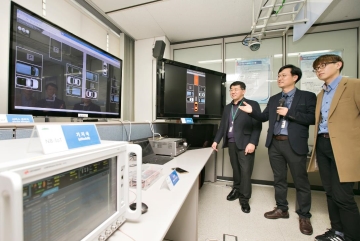
KT and ETRI succeed in developing NB-IoT terminal technology
KT announced that it has successfully developed 'NB-IoT' terminal technology that can provide Internet of Things services over wide areas with low power consumption through technical collaboration between ETRI (Electronics and Telecommunications Research Institute) and small and medium-sized enterprises. KT provided an open IoT service platform and terminal verification environment, while ETRI was responsible for NB-IoT system design.
2017.02.16by 김지혜 기자

ESP32 Development Environment Selection and GPS Application Implementation
The ESP32 is a microcontroller that integrates Wi-Fi, Bluetooth, 12-bit ADC, capacitive touch, PWM, DAC, and UART in a single SoC. However, the abundance of features does not by itself solve the designer's problems. The real challenges lie in selecting the appropriate development environment, determining which pins can be used and which must be avoided, and converting raw data from modules into usable information. This document addresses ESP32 peripheral constraints (ADC2 and Wi-Fi coexistence limitation, UART1 occupancy, ADC non-linear regions), the trade-offs between Arduino IDE and ESP-IDF, and the process from connecting NEO-6M/NEO-M8N GPS modules to UART2, parsing NMEA sentences, and visualizing routes in Google Earth, all organized based on documented references.
2026.10.12by 편집부

MIPI CSI-2, DSI-2, C-PHY, D-PHY Test Solution Technical White Paper
The MIPI interface adopts a burst mode that transitions between low-power (LP) and high-speed (HS) states for low-power consumption, and in return, strict timing rules are imposed on state transitions. Additionally, the high-speed section operates as a packet-based protocol with headers, ECC, and CRC, so verification engineers must handle waveforms and protocols simultaneously. Traditional configurations combining general-purpose oscilloscopes and AWGs reveal limitations in setup complexity, measurement uncertainty, and lack of reproducibility when faced with these requirements. This white paper, based on webinar materials, organizes the structure of this problem and describes how the SV5C-DPTXCPTX generator for receiver testing and SV5C-DPRXCPRX analyzer for transmitter testing integrate state transition testing, stressed eye testing, and protocol analysis into a single bench, along with their application boundaries.
2026.10.12by 편집부











