



[Shut Up and Try It] Mixed Reality Applied to Architecture, This Is a 'Gem'
 Published2017.04.10 15:22
지난달 27일, 본지에서 건설 3D BIM 기술 전문업체 트림블이 마이크로소프트와 협력을 통해 홀로그래픽 기술을 건설 산업에 도입할 계획이라고 밝히자 관련 기사와 더불어 높은 조회수가 나타났다. 독자들이 가상현실과 증강현실, 나아가 혼합 현실에도 얼마나 관심이 있는지 짐작할 수 있는 대목이었다.
그래서, 이번엔 기자가 홀로그램 ‘혼합현실’ 체험에 나섰다.
건설현장에 적용된 마이크로소프트의 홀로렌즈를 직접 체험할 수 있다는 BIM 이노베이션 컨퍼런스 2017에 무작정 찾아갔다. 홀로그램 영상은 VR 체험과 같이 모니터에 재생됐다. 홀로렌즈를 착용하자 담당 직원은 모니터를 보며 작동법을 알려줬다. 그림을 클릭해 로비에 가져왔다. 건물 몇 채와 나무가 곳곳에 심어진 ‘세트장’이 생겼다.
직원: 물체가 커서 그런 걸 수도 있으니 가장자리에 화살표 보이시죠? 거기를 꼬집듯 잡고 줄여보세요. 가까이 가서 보셔도 되고요.
기자: 손으로 하는 작동법이 생각보다 어려운데, 음성인식은 안되나요?
직원: 음성인식도 돼요. 다음으로 넘어가기, 선택하기, 지우기 같은 단순 기능은 음성인식이 가능하고, 움직이거나 사이즈 조절은 손으로 할 수 있어요. 지금 사용하고 있지는 않지만, 클리커를 사용하면 좀 더 편하게 작동할 수 있어요.

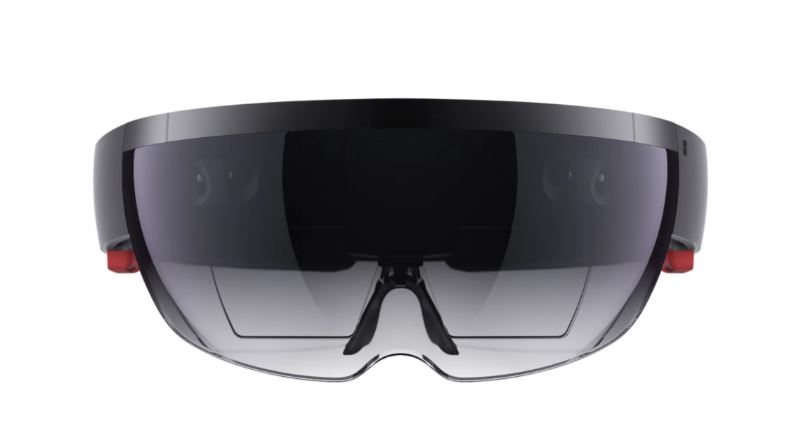
홀로렌즈는 579g, 완충 시 3시간 작업이 가능하고 2GB RAM과 WiFi 및 블루투스 인터넷이 지원되는 ‘컴퓨터’다. 마이크로소프트사는 건축, 게임, 여행, 영상통화 등의 애플리케이션과 연계해 활용하고 있다. 트림블 사의 ‘트림블커넥트’도 애플리케이션 중 하나다. 기존 트림블 사의 설계, 스케치, 디테일한 사항을 수정하는 프로그램들을 트림블커넥트라는 클라우드를 통해 홀로 렌즈로 연결해 보여주는 것.
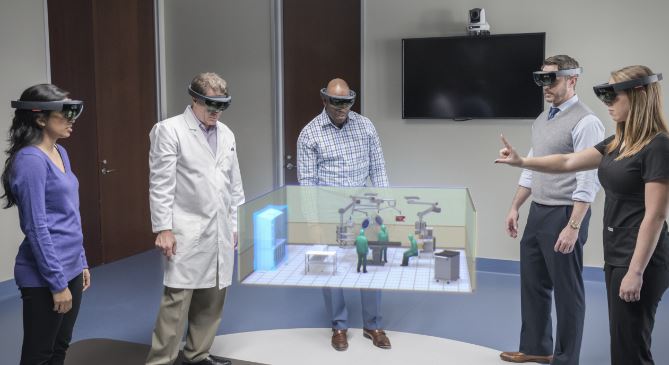
원거리에 있는 사람과도 같은 화면을 보며 이야기 할 수 있다. (사진출처:마이크로소프트웹사이트)
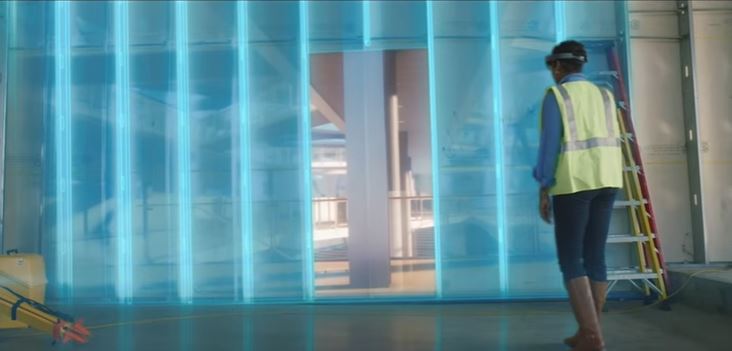
컨퍼런스에서는 건설 현장에 도입될 혼합현실(MR) 영상(기사 하단 동영상 참조)이 재생됐다. 현장에 나온 데스크가 엔지니어와 이야기하며 설계 시 미처 보지 못했던 철근 위치를 확인해 바로 수정하는 장면이었다. 2D에서 놓쳤던 까다로웠던 것들도 시각적으로 확인할 수 있어서 비전문가라도 이해하기에 수월하다. 또한, 컴퓨터의 장점인 정보 입력과 전송을 할 수 있어 현장 밖에 있는 사람도 실시간 간섭 체크와 데이터 공유가 가능하다.
“도면 위주 건축에서 작업물을 직접 체감할 수 있어서 좋았다”
현장에서 만난 건축 전문가 및 종사자들은 홀로렌즈를 체험해보곤 MR의 장점을 언급했다. 건축프로그램 개발자는 “도면 위주 건축에서 작업물을 직접 체감할 수 있어서 좋았다. 건설현장에 도입되기 전 교육 콘텐츠로도 좋을 것 같다”고 말했다. 배울 것이 있을 것 같아 견학을 나왔다는 건축학 교수와 학생들은 “미래 건축에 적합한 사례라 흥미로웠다”고 전했다.
홀로그램의 건축 상용화 관련 질문에는 “빠르게 성장하는 VR, AR 시장을 봤을 때 MR도 2~3년 안에 상용화 가능할 것”이라고 입을 모았다. 반면, 기술적 아쉬움으로 끊김 현상과 작동 편의성, 화질 및 선명도가 언급되며 “현장 엔지니어가 시스템을 능숙하게 사용할 수 있다면”이라고 덧붙이는 의견도 있었다.
건축업에 또 다른 솔루션은?
기존 2D 도면을 대체할 솔루션으로 3D프린터가 제시되기도 했다. 컨퍼런스 한쪽에 전시된 3D프린터 부스에 전시된 모형물의 제작 시간을 묻자, 간단한 기둥 형태의 모형물은 2시간 정도 소요되나 외국 성당 같은 모형은 20시간을 넘긴다고 답했다. 직접 만질 수 있다는 장점이 있지만, 수정 사항에 대해서는 즉각적인 반영이 어렵다. 관계자는 “국내보다는 외국 사례가 많은 편”이라며 “국내 건축업은 도면 아르바이트를 하는 학생들이 많아 이틀이면 도면 제작이 가능해 아직 3D 시장이 활성화되지 않았다”고 말했다.
이미 상용화 단계에 들어선 VR은 어떨까. 프로그램을 제작해 기기로 가져와 ‘보는’ 형태는 MR과 VR이 크게 다르지 않다. VR은 가상 공간이라는 기본 전제가 있지만, 최근 전시업, 여행업, 부동산업 등에 도입되는 추세다. 현실 공간을 촬영해 재가공하거나 가상으로 가져와 재생하는 것이다. 더군다나 대표적인 VR기기 중 하나인 오큘러스 리프트의 판매가는 리모컨을 포함해 598달러지만, 마이크로소프트의 홀로렌즈 판매가는 최소 3천 달러다. 앞서 말했듯 ‘컴퓨터’인 홀로렌즈가 클라우드 상 정보를 가져오는 것에 그치는 점에 아쉬움이 남는 이유다.
Comments
Related news
[Experience] We asked the VR experience users what their desired price range would be. How much would it be?
I visited a virtual reality (VR) expo on the 10th. The VR expo, which featured around 40 different booths, showcased the current state of VR technology across gaming, video, healthcare, marketing, and other sectors. However, what caught the eye was the long waiting lines reminiscent of an amusement park, despite being a weekday morning, at the end of which stood VR attractions—amusement ride-type experience devices. I asked participants who had completed the experience whether they encountered any inconveniences, and if charged, what would be an appropriate price point.
2017.03.13by 김자영 기자
[Experience] Experience 5G at the Olympics in Pyeongchang
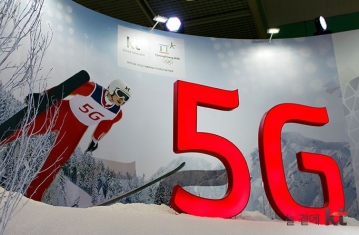
The PyeongChang Winter Olympics is now 332 days away. Following a vision announcement two years ago to showcase the world's first 5G trial service at the PyeongChang Olympics, KT held a press briefing on the 14th (Tuesday) at PyeongChang Alpensia Resort. The event began with a congratulatory video message from the organizing committee chairman and proceeded with demonstrations of autonomous driving 5G buses and drone delivery services, a 'VR Walkthrough' experience of the Olympic torch relay in virtual reality, and the public opening of the PyeongChang 5G Center showcasing four immersive services. The four immersive services are Sync View, Interactive Time Slice, 360° VR Live, and Omni Point View.
2017.03.16by 김자영 기자
ETRI Develops Ultra-High-Resolution Pixel Hologram Technology Using Phase-Transition Materials
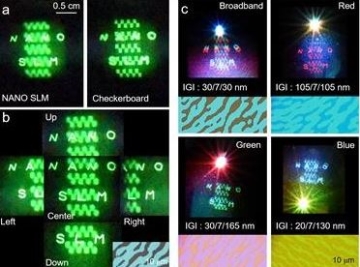
The Electronics and Telecommunications Research Institute has successfully implemented a hologram image of 3 centimeters by 3 centimeters in size on 1 micrometer pixels using phase-change materials, and the results were published in Scientific Reports on January 24th. Domestic research teams have succeeded in developing holograms capable of implementing ultra-high-resolution pixels using phase-change materials. This opens prospects for the future implementation of display panels capable of playing hologram videos. The Electronics and Telecommunications Research Institute has successfully implemented a hologram image of 3 centimeters by 3 centimeters in size on 1 micrometer pixels using phase-change materials, and the results were published in Scientific Reports on the 24th. Domestic research teams have succeeded in developing holograms capable of implementing ultra-high-resolution pixels using phase-change materials. This opens prospects for the future implementation of display panels capable of playing hologram videos.
2017.04.10by 김자영 기자
ESP32 Development Environment Selection and GPS Application Implementation
The ESP32 is a microcontroller that integrates Wi-Fi, Bluetooth, 12-bit ADC, capacitive touch, PWM, DAC, and UART in a single SoC. However, the abundance of features does not by itself solve the designer's problems. The real challenges lie in selecting the appropriate development environment, determining which pins can be used and which must be avoided, and converting raw data from modules into usable information. This document addresses ESP32 peripheral constraints (ADC2 and Wi-Fi coexistence limitation, UART1 occupancy, ADC non-linear regions), the trade-offs between Arduino IDE and ESP-IDF, and the process from connecting NEO-6M/NEO-M8N GPS modules to UART2, parsing NMEA sentences, and visualizing routes in Google Earth, all organized based on documented references.
2026.10.12by 편집부
MIPI CSI-2, DSI-2, C-PHY, D-PHY Test Solution Technical White Paper
The MIPI interface adopts a burst mode that transitions between low-power (LP) and high-speed (HS) states for low-power consumption, and in return, strict timing rules are imposed on state transitions. Additionally, the high-speed section operates as a packet-based protocol with headers, ECC, and CRC, so verification engineers must handle waveforms and protocols simultaneously. Traditional configurations combining general-purpose oscilloscopes and AWGs reveal limitations in setup complexity, measurement uncertainty, and lack of reproducibility when faced with these requirements. This white paper, based on webinar materials, organizes the structure of this problem and describes how the SV5C-DPTXCPTX generator for receiver testing and SV5C-DPRXCPRX analyzer for transmitter testing integrate state transition testing, stressed eye testing, and protocol analysis into a single bench, along with their application boundaries.
2026.10.12by 편집부











