


To make a small, cost-effective Bluetooth speaker
 Published2017.04.14 06:26
Many companies are releasing a wide range of Bluetooth speakers, from inexpensive speakers with basic systems to high-spec, expensive ones. To develop products with reasonable price-to-performance ratios, design constraints such as solution size, number of components, cost, efficiency, and battery size must be considered. Figure 1 shows the basic internal components of a Bluetooth speaker.
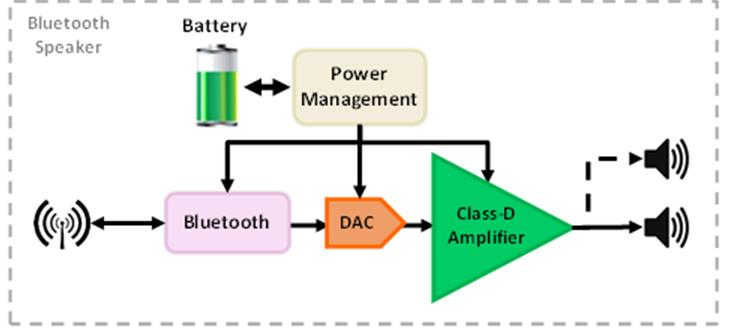
Batteries are essential in portable applications. They must be small and lightweight, and utilize cells to provide maximum usage time. The power management block supplies the necessary power to the rest of the circuit. Due to battery constraints, the voltage provided by one or two battery cells is very low. Therefore, a boost converter is required to increase the available voltage for the rest of the system.
The Bluetooth block must provide wireless communication to the speakers of other devices, such as smartphones and tablets. The module provides a complete solution for portable audio systems and supports both wired and wireless audio by default. The audio block includes all the electronic devices required to drive the system's speakers. Since the incoming signal from the module may be low voltage and low current, an audio amplifier is used. In addition, it includes a Digital-to-Analog Converter (DAC) to convert incoming digital audio signals into analog. As a high-spec system for audio processing added to the digital domain, it enables the provision of a rich user experience.
Class AB and Class D amplifiers are available as audio amplifiers for Bluetooth speaker systems.
Class AB audio amplifiers are linear amplifiers that do not generate electromagnetic interference (EMI) and do not require many external electronic components; however, because they are highly inefficient, they require significant passive or active thermal management in the form of heat sinks or fans. On the other hand, Class D audio amplifiers are highly efficient switching amplifiers that require almost no thermal management, but they require an output inductor, which has the disadvantage of not being free from EMI issues.
Portable systems must present a method to reduce costs while adopting batteries required to constitute one or more individual cells of the battery material. Class AB audio amplifiers are suitable for use in price-sensitive systems, such as Bluetooth speakers, because they do not generate EMI and do not require many external electronic components. However, since Class AB audio amplifiers have very low efficiency, most of the charge from the battery backup is wasted as heat when used in Bluetooth speakers. As such low efficiency leads to high costs, systems using Class AB amplifiers require additional battery cells to meet requirements.
Class D amplifiers are suitable for use in portable audio systems due to their high efficiency. Due to its high efficiency, a Bluetooth speaker system can be powered using a battery consisting of a very small number of cells (a single battery cell is also possible if suitable materials are selected), which can significantly reduce the overall system cost, weight, and size.
Audio systems are selected based on output and peak power ratings, but these specifications do not accurately reflect typical usage patterns. Most users do not listen to music at such high output levels with home audio systems, and this is even more true for portable applications like Bluetooth speakers. In the case of Bluetooth speakers, the factor consumers care most about is battery life.
While it is true that a Class D amplifier was designed with high efficiency for a Bluetooth speaker system, this efficiency was not considered solely for maximizing usage time. Furthermore, factors such as the power consumption of all system blocks and the idle power loss of the audio amplifier itself, which are not clearly apparent when the system is operated and shut down, must also be taken into account.
A typical music waveform exhibits amplitude fluctuations, and as shown in Figure 2, one can observe "loud" music (high amplitude) and "quiet" music (low amplitude) sections. Looking at this waveform, it can be seen that when an audio system plays typical music, it stays in the "quiet" music band for most of the time. Therefore, the audio amplifier outputs low-power sound for most of the time.

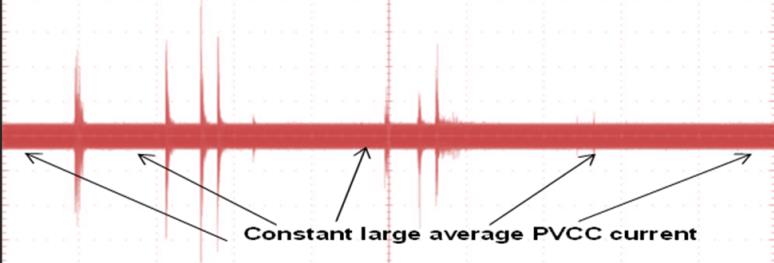
Most Class D amplifiers on the market, including TI’s widely popular previous-generation Class D amplifier solution TPA3110D2, are not optimized for efficiency at low output power. As shown in Figure 3, the supply current of previous-generation Class D amplifiers remains constant even when the output power is low or even zero. This constant current wastes battery charge, which reduces usage time, increases the number of battery cells, and consequently raises system costs.
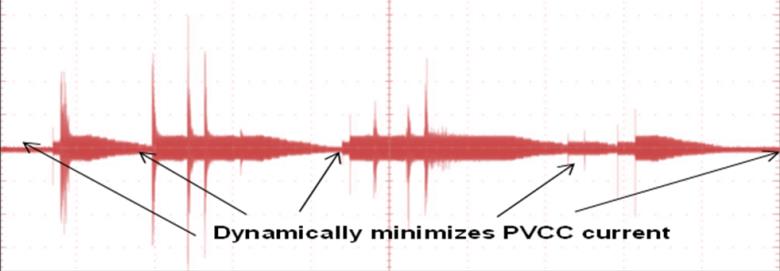
TI's next-generation Class D amplifier, the TPA3128D2, utilizes an innovative hybrid modulation mode to minimize idle power loss and maximize power savings. Figure 4 illustrates that the supply current to the amplifier decreases dramatically as output power drops. These power savings extend operating time and reduce the number of battery cells, thereby lowering system costs.
By migrating from the TPA3110D2 to the TPA3128D2, it is possible to fully leverage these benefits and reduce costs. Since these two solutions are pin-compatible, developers can conveniently redesign.
Comments
Related news
Smart door lock, how to use AA batteries for a long time
How should a smart door lock be designed with power device topology to maximize battery life? Generally, the power device topologies used in smart door locks include linear regulators, boost (step-up), and buck (step-down). The success of IoT (Internet of Things) devices depends on user convenience. Fundamentally, user convenience refers to easy connection and control of electronic devices. The less maintenance required for these connected electronic devices, the better. Would any user be willing to tolerate the inconvenience of having to stop electronic devices frequently for battery replacement?
2017.03.06by 김지혜 기자
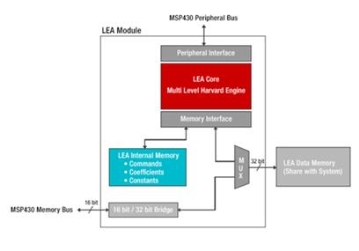
MCU processing speed improvement with LEA modules
Devices connected to the internet are highly diverse, ranging from industrial sensors used for factory process monitoring and intelligent fire detection systems to home Wi-Fi-connected thermostats and video doorbells, as well as barbecue thermometers. Many fields wish to add connectivity functionality, but implementation has been difficult due to hardware complexity and cost. Due to these constraints, it has recently become feasible with the emergence of user-friendly and cost-effective wireless connectivity modules and ICs.
2017.03.17by 김지혜 기자
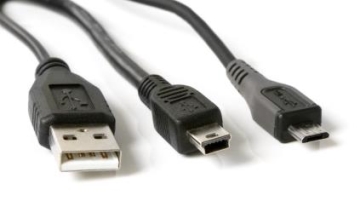
USB Type-C, design is important for use regardless of cable
A new type of USB has emerged. As USB Type-C ports become more prevalent in tablets, notebooks, and smartphones, early adopters are experiencing issues due to the use of many USB Type-C cables that are incompatible with the USB 3.1 specification. In previous USB implementations (Figure 1), most systems were able to tolerate less than 10W delivered by non-compliant cables. However, with the adoption of USB Type-C, charging capacity has increased to a maximum of 100W, making the implementation of appropriate system protection functions more complex.
2017.03.29by 김지혜 기자

Intel Unveils Next-Generation 'Core Ultra Series 3' and vPro Platform for Enterprise PCs
Intel has officially unveiled the "Intel Core Ultra Series 3" for next-generation enterprise PCs and the latest vPro platform, addressing a wide range of demands from enterprise notebooks to high-performance workstations.
2026.03.26by 배종인 기자

ROHM Launches ESD Protection Diode Compatible with High-Speed Interfaces of 10Gbps or Higher
Semiconductor specialist ROHM has developed the 'RESDxVx series' of ESD (electrostatic discharge) protection diodes capable of responding to next-generation high-speed data communication environments exceeding 10Gbps, simultaneously enhancing both signal quality maintenance required in high-speed interfaces and IC protection performance.
2026.03.26by 배종인 기자











