


Airborne Negative Ions Are Easily Detected at a Low Price Using IoT Sensors
 Published2017.04.19 11:12
Planned to be utilized as a semiconductor gas sensor for detecting harmful gases, formaldehyde, etc.
A way has been opened to easily detect negative ions in the air that have sterilization, deodorization, and fine dust removal effects.
Although negative ions are being adopted in home appliances such as air purifiers and humidifiers, it was difficult to determine when to replace them because the equipment capable of checking their concentration was expensive, costing between 2 million and 3 million won.
The Korea Electronics Technology Institute (KETI) announced that it has developed a nano semiconductor FET sensor and an operating algorithm for detecting negative ions in the air.
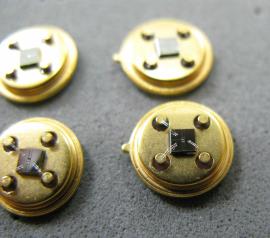
This technology can be miniaturized and made inexpensive, so if applied to home appliances, anyone can easily check whether negative ions are being generated and their concentration. It is developed as an IoT sensor, and the negative ion generation status can also be monitored in real time through a website.
The nano semiconductor FET sensor is an ultra-small semiconductor sensor that maximizes the sensor's detection capability by configuring the channel thickness of the silicon FET to nanometers, increasing sensitivity and stability, and can further improve sensitivity by increasing the area of the sensing gate electrode.
In addition, since an algorithm is applied to set the sensor's operating range and initialize it by adjusting the control gate electrode voltage, there is no need for a separate electrode structure or MEMS process for initialization, making manufacturing simple and reducing costs.
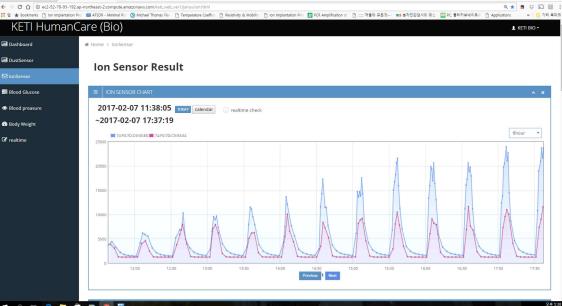
KETI stated that because the power consumption is low at several microwatts, it is expected to be utilized in various fields by combining it with IoT technology, and that by adding a sensing material that specifically adsorbs gas molecules in addition to negative ion detection, it can also be applied as a semiconductor gas sensor, which is expected to create a new market in the field of hazardous gases.
Lee Kuk-nyung, a principal at KETI’s Human Care System Research Center, said, “We have currently gone through the demonstration phase of the airborne negative ion detection sensor and are discussing follow-up research with domestic gas sensor companies for demonstration and commercialization in the hazardous gas sector.”
Comments
Related news
[Interview] Will the path to mass production of the dream nanomaterial, graphene, open?
Is there no new method to mass-produce graphene, which is attracting attention as a next-generation advanced material, at low cost and high quality? The high-quality graphene mass production technology developed by the Graphene Materials Team (Principal Researcher Yang Woo-seok) at the Electronics and Telecommunications Research Institute (KETI) presents a solution to this demand. The technology developed by the Graphene Materials Team demonstrates the possibility of controlling interlayer insertion speed through a reactor utilizing shear stress, explosion reaction control, and continuous production. Graphene is a single layer composed of hexagonal carbon atoms and is an advanced material with superior properties—including high strength, electron mobility, and electrical conductivity—among all existing materials. However, mass production technology for single or few-layer graphene with uniformity has not yet been developed globally, presenting challenges for industrialization.
2017.01.16by 김지혜 기자
[Interview] Domestic LiDAR Technology Capable of Multi-Channel, 360-Degree Scanning
In autonomous driving, sensors play a role in recognizing surrounding situations. Among them, LIDAR is referred to as the 'eyes' of autonomous vehicles and is a sensor that can cover blind spots invisible to radar. However, it faces the challenge of needing to reduce costs in order to commercialize Level 3, where vehicles can operate partially autonomously. Han-Young Lee, Principal Researcher at the Smart Sensor Research Center of the Korea Electronics Technology Institute (KETI), explained, "LIDAR used in autonomous vehicles must respond to accidents that can suddenly occur in fast-moving cars, so the number of channels and scan speed are important factors."
2017.04.12by 김지혜 기자

Intel Unveils Next-Generation 'Core Ultra Series 3' and vPro Platform for Enterprise PCs
Intel has officially unveiled the "Intel Core Ultra Series 3" for next-generation enterprise PCs and the latest vPro platform, addressing a wide range of demands from enterprise notebooks to high-performance workstations.
2026.03.26by 배종인 기자

ROHM Launches ESD Protection Diode Compatible with High-Speed Interfaces of 10Gbps or Higher
Semiconductor specialist ROHM has developed the 'RESDxVx series' of ESD (electrostatic discharge) protection diodes capable of responding to next-generation high-speed data communication environments exceeding 10Gbps, simultaneously enhancing both signal quality maintenance required in high-speed interfaces and IC protection performance.
2026.03.26by 배종인 기자
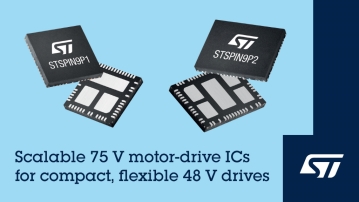
ST Launches 75V Drive IC Targeting 48V Industrial Motor Driving
ST Microelectronics has unveiled the 'STSPIN9P' series of 75V motor drive ICs tailored for 48V-class industrial drive system design. The new product family is characterized by half-bridge and full-bridge configurations that enable design scalability according to motor type and output conditions. Power supply circuits, protection functions, and current sensing circuits are integrated on-chip to simplify system configuration, and the devices are designed to support applications up to 500W maximum. The company plans to provide reference designs and demo boards to support development and evaluation in industrial automation, robotics, pumps, fans, lighting, and textile machinery.
2026.03.26by 배종인 기자











