


[Planning - Autonomous Vehicles ③] Camera, Lidar “Cars finally have eyes”
 Published2017.04.24 14:11
Domestic company developing ADAS-based vision chip to be used in autonomous vehicles
If there is a technology that best fits the phrase, “dreams become reality,” it would be the self-driving car. When you call a car, it comes to you on its own, and it drives to its destination on its own. Self-driving cars recognize and avoid obstacles while driving, and provide various conveniences and information to the owner. Although it will take some time for fully self-driving cars to be commercialized, the so-called “semi-self-driving car” technology is becoming increasingly sophisticated. Now, it is easy to see advertisements for cars with self-driving functions, and they have become a deep part of our lives. This magazine will serialize the self-driving car project over the next 11 issues. Starting with the self-driving car industry trend, it will cover semiconductor components such as radar, lidar, and camera sensors, communications, precision maps, SW platforms, artificial intelligence, security, and K-City services. We ask for your continued support. <Editor’s Note>
As the commercialization of Level 3 autonomous vehicle technology begins, interest in advanced driving assistance systems is also increasing. ADAS systems are the foundation for autonomous vehicles, and in the beginning, they mainly played a role in informing road conditions through notifications, but recently, they have reached the level of automatically controlling the steering wheel, brakes, etc.
The Genesis EQ900 is equipped with advanced driving assistance systems (ADAS), including Advanced Smart Cruise Control (ASCC), Blind Spot Detection (BSD), Autonomous Emergency Braking (AEB), Driver Attention Alert (DAA), Smart High Beam Assist (SHBA), and Front Seat Pre-Active Seat Belts. The new i30 wagon is equipped with ADAS technologies such as adaptive cruise control (ACC), AEB, and lane keeping assist system. For such ADAS to operate, detection through cameras, lidar, and radar sensors is important.
Looking at the ADAS system installation by commercial vehicle, except for some small vehicles, cameras alone or radar and stereo cameras are applied. The range that the camera can cover is 100m in front, surround view, and rear. It plays a role in intuitively helping the driver because it can be seen with the actual eyes. When autonomous driving is achieved, at least 5 camera sensors per vehicle must be installed to detect 360-degree full coverage.
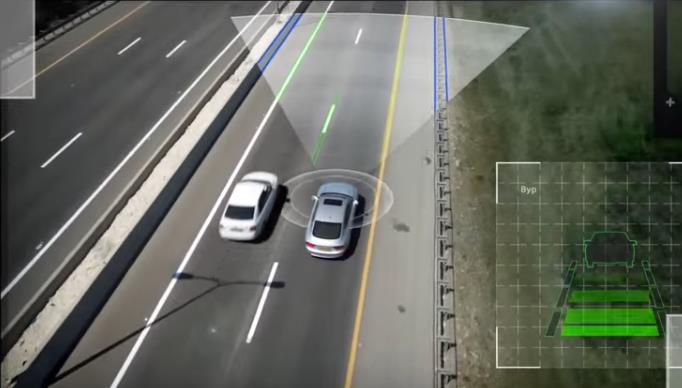
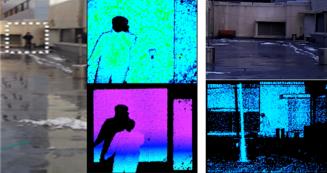
WDR(Wide Dynamic Range) CIS sensor provides characteristics similar to human vision. The purpose is to detect objects stably in situations such as backlighting or passing through tunnels while driving. NIR night vision sensor is to prevent accidents caused by collisions with wild animals at night, and can distinguish objects based on temperature differences when taking images. Stereo vision is trending at 16cm between the two cameras, but large commercial vehicles use ones with wider spacing, and general passenger cars use ones with narrow spacing. It is used to check how far the road is and whether you are leaving the road rather than directly detecting the distance. It expresses the actual distance information as a depth image.
The leader in automotive camera sensors is Israel's Mobileye. It currently supplies software and chips to more than 80% of OEMs worldwide, and is researching and developing self-driving cars with most companies. Mobileye has already reached agreements with some companies to supply image devices applicable to level 4 autonomous driving, and EyeQ5 and REM are scheduled to be released in 2018.
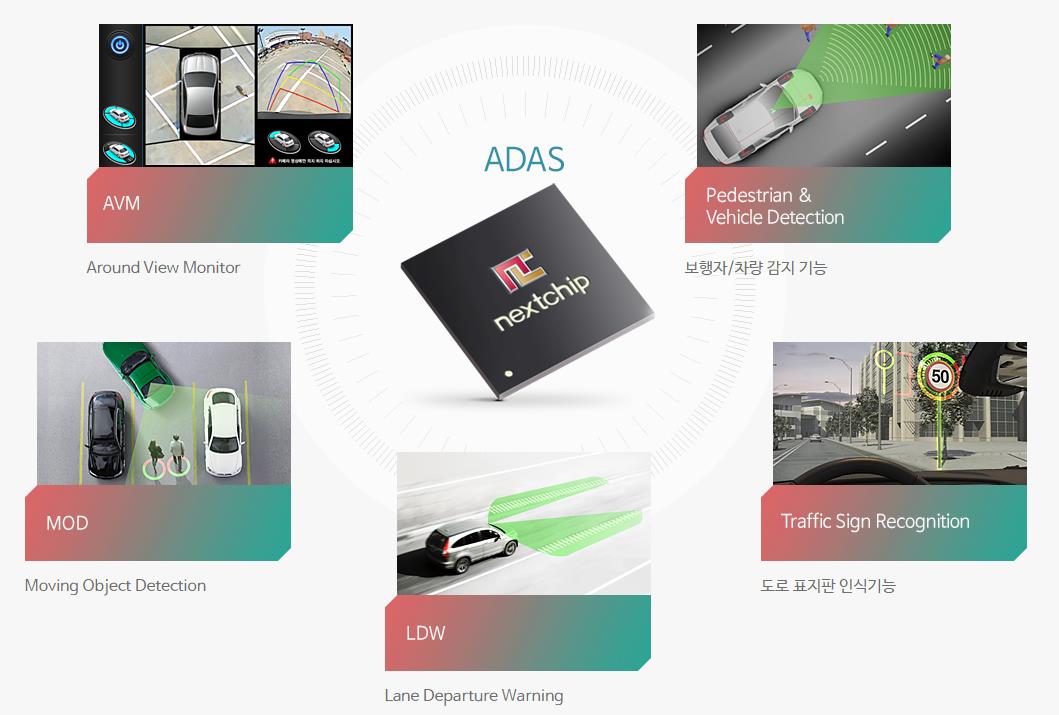
In Korea, Nextchip is developing APACHE4, a vision-based ADAS SoC. Apache is an integrated chip that can be applied to a vision-based ADAS system with an ADAS algorithm added, built-in ETRI's vehicle CPU, 'Aldebaran'. It is capable of pedestrian detection (PD), vehicle detection (VD), lane detection (LD), and moving object detection (MOD).
Nextchip’s Jeong Hoe-in, head of the research lab, said, “We are currently testing Apache 4. We are checking and resolving issues that have not yet been resolved through road tests,” and “We are also considering applying deep learning to some extent in the next lineup.” Apache 4 is scheduled to be prototyped early next year and enter mass production in 2020, and will be supplied through Tier 1 vendors of automakers.
Lidar, trend toward miniaturization and low-cost development
Another essential sensor for securing 3D location information in autonomous vehicles is LIDAR. The global LIDAR market was valued at $1.4279 billion in 2016. It is expected to grow at a compound annual growth rate (CAGR) of 25.8% to reach $5.248 billion in 2022.
Lidar technology can be implemented in various ways, and is divided into active technology that irradiates lasers and passive technology that does not irradiate lasers. To be suitable as a vehicle Lidar, it must be usable both during the day and at night, and be capable of detecting high-resolution 3D spatial information about the surroundings at a range of 100 m or more.
The lidar model initially applied to Google's self-driving car is Velodyne's HDL-64, a rotating scanning lidar sensor with 64 laser channels. It has the disadvantage of being difficult to commercialize, with a price range of 100 million won. Accordingly, Google miniaturized the lidar sensor while making its own self-driving car in 2014.
Ford demonstrated a self-driving car capable of night driving in 2016. This was to show that night driving was possible using lidar sensors. Equipped with Velodyne's 32-channel lidar, it overcomes the performance limitations of a single sensor by equipping four of the same sensors.
Quanergy Systems has introduced an eight-channel rotational lidar with solid-state scanning. The product is 1/30th the price of Velodyne’s product. It is focusing on mass production of models that secure only a fixed field of view, from motorized rotation to non-rotating lidar products, targeting $250 per unit.
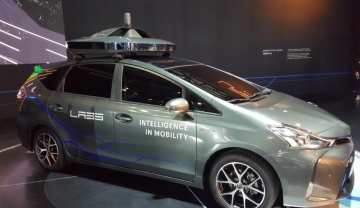
At first, lidar was mounted on the roof of the car due to size issues, but as it became smaller, it is being mounted on the front grill of the car considering design considerations.
ETRI develops independent technology to improve lidar problems
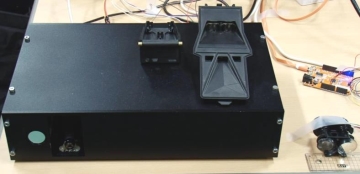
In Korea, the Electronics and Telecommunications Research Institute (KETI) has developed a ‘scanning lidar optical engine platform’ using purely domestic technology, has undergone road driving tests, and is currently developing 360-degree scanning lidar technology. The Electronics and Telecommunications Research Institute (ETRI) has also developed a domestically unique technology called the Static Unitary Detector (STUD) method to complement the inherent problems of existing 3D lidar technology.
This technology is a solution that secures high-resolution 3D image quality at a low cost, and depending on the sensor arrangement structure, it can be used not only for autonomous vehicles but also for drones, surveillance robots, and ultra-small IoT sensors. The developed prototype GEN3 model has a size of 100*100*150mm, which is the same as commercial lidar products. Because it is a stud type, it can be implemented in a wide-angle/360-degree detection form without rotation, the resolution can be freely adjusted even during operation, and it is advantageous for miniaturization.
ETRI said, “LiDAR 3D image sensor technology is changing the fastest and is moving in the direction of requiring low-cost technology,” adding, “This technology is no longer just one of the sensors installed in vehicles, but will play a key role in shaking up the foundation of the future global autonomous vehicle and smart car market.”
Comments
Related news
[Planning-Autonomous Vehicles①] Domestic Technology 'Cannot Stand Alone' - Strategic Collaboration Ecosystem Must Be Established
The most striking aspect of the 2017 Seoul Motor Show that concluded last week was the first-time participation of NAVER, a leading domestic IT company. While IT companies developing automobiles is no longer an unfamiliar sight, the appearance of a leading domestic IT company at Korea's representative auto show holds significant symbolic meaning for the automotive sector. NAVER became the first domestic IT company to receive temporary road-driving approval from the Ministry of Land, Infrastructure and Transport for autonomous vehicles. Presenting a Level 3 autonomous vehicle, NAVER is developing autonomous vehicles as part of environmental implementation with 'living environment intelligence' as its technological direction. Prior to this, Hyundai Motor presented a Level 4 vehicle where the system can safely operate without driver intervention. Hyundai achieved autonomous driving by adding only minimal sensors such as radar and LiDAR to sensors already applied in mass-production vehicles.
2017.04.10by 김지혜 기자
[Interview] Domestic LiDAR Technology Capable of Multi-Channel, 360-Degree Scanning
In autonomous driving, sensors play a role in recognizing surrounding situations. Among them, LIDAR is referred to as the 'eyes' of autonomous vehicles and is a sensor that can cover blind spots invisible to radar. However, it faces the challenge of needing to reduce costs in order to commercialize Level 3, where vehicles can operate partially autonomously. Han-Young Lee, Principal Researcher at the Smart Sensor Research Center of the Korea Electronics Technology Institute (KETI), explained, "LIDAR used in autonomous vehicles must respond to accidents that can suddenly occur in fast-moving cars, so the number of channels and scan speed are important factors."
2017.04.12by 김지혜 기자
[Feature - Autonomous Vehicles ②] Radar IC Market Seeing More 'Players'; Will Competition Heat Up Among Semiconductor Companies?
If there is a technology where the phrase "dreams have become reality" fits best, it would surely be autonomous vehicles. You summon a car and it comes running on its own, then drives to your destination by itself. Autonomous vehicles recognize and avoid obstacles during driving while providing various convenities and information to the owner. While full autonomy commercialization will take some time, so-called "semi-autonomous driving" technology is becoming increasingly sophisticated. Nowadays, advertisements for automobiles equipped with autonomous driving functions are easy to see, bringing the technology deep into our daily lives. This publication will serialize an autonomous vehicle planning series over the course of 11 installments. Beginning with autonomous vehicle industry trends, we will cover semiconductor components such as radar, lidar, and camera sensors, as well as communications, precision mapping, software platforms, artificial intelligence, security, and K-City services. We appreciate your continued support and interest. <Editor's Note> The radar IC market, one of the key sensors for autonomous driving, is heating up increasingly.
2017.04.17by 신윤오 기자

[e4ds Tech Day 2026 ⑨] Sim Sang-gyu, Autocrypt CTO: "In the Physical AI Era, Automotive Security Must Extend Beyond the Vehicle"
At e4ds Tech Day 2026, Sim Sang-gyu, CTO of Autocrypt, explained automotive cybersecurity strategies in the era of Physical AI and SDV (Software-Defined Vehicle). Automobiles are evolving as part of an ecosystem connected to AI, cloud, chargers, IoT, and robots, and he emphasized that the scope of security must expand beyond the vehicle interior to the entire connected environment. In particular, AI model tampering, adversarial attacks, OTA updates, and EV charger hacking were identified as major threats. He explained that response measures require zero trust, AI model integrity protection, intrusion detection, Security by Design and Default, and full lifecycle security management, and that proactive security system establishment beyond regulatory compliance is critical for securing future mobility competitiveness.
2026.10.12by 배종인 기자

Practical HIL Construction Strategy for Automotive and Off-Highway Controller Validation
As vehicle E/E architecture transitions to zonal structures and shifts to software-defined vehicles (SDV), the number of controllers (ECUs) requiring validation and software complexity are surging dramatically. Meanwhile, real vehicle testing cannot provide repeated verification under identical conditions and entails lead time and safety concerns. This white paper explains the principles of HIL (Hardware-in-the-Loop) validation and the structure of the NI platform composed of PXI, SLSC, and VeriStand, and through two actual implementation cases—Camera Record & Replay HIL for In-Cabin Monitoring Controller (ICMU) and Forklift Controller (VCU) HILS—describes how controller-level regression testing becomes possible. Additionally, it explicitly states application boundaries and limitations, such as lack of A2B support.
2026.10.12by 편집부











