



[Interview] “Vehicle Communications, Where Even Simple Failures Can Threaten Lives—Fix Them with Accurate Testing”
 Published2017.04.25 11:27
If you get into an accident while driving, you call 119. Even if you witness an accident while driving, you call 119. It is a natural course of action. But what happens after you make the call? How many people would accurately report, "This is the SUV involved in a triple collision on the third lane of Route 15, which crosses from Seoul to the East Sea"?
This is the background behind the European Commission's announcement of a regulation requiring all new cars to be equipped with an emergency call (eCall) module starting in April 2018. 'eCall' is a calling method in which the driver, either directly or the vehicle itself, transmits data including vehicle type, time, location, and direction in the event of an accident. This is part of telematics technology, which is considered the core of connected cars.
I heard about telematics technology and its testing technology from Jang Seung-taek, a manager at Keysight Korea.

Q. As autonomous vehicles become a reality, the importance of safety, which is directly linked to life, is being highlighted. There are various communication technologies applied to vehicle communication, such as V2V and V2X.
A. Considering the scope of application in the current situation, cellular technology is said to be suitable for V2I, while WAVE technology is suitable for V2V due to technical safety, readiness of test specifications, and latency. Therefore, the strengths of both cellular and WAVE communication technologies must be appropriately utilized.
Q. It seems the situation will change again with the introduction of 5G, which is expected to be the next-generation communication with low latency, high reliability, and fast data speeds. As a result, testing doesn't seem like it will be easy either.
A. If all the various characteristics of 5G technology are met, it appears that it can replace existing WAVE or cellular technologies. However, taking the broadband bandwidth usage of mmWave—one of 5G's features—as an example, 5G is akin to sending fast data over a wide highway. Therefore, it utilizes high mmWave frequency bands. Measurements are also conducted through radiation tests using antennas rather than traditional cables. For this reason, accurate mmWave testing and an understanding of antenna technology are crucial.
Spectral analysis of real-time interference and coexistence phenomena is important
Q. I heard that the key to connected car design and testing is interference and the verification of real-world scenarios. What is the most important factor in testing coexistence and interference phenomena between telematics devices?
A. It is the spectral analysis of real-time interference and coexistence phenomena. To test for interference between adjacent channels or other signals, the signal generator must generate a signal by combining multiple signals. Keysight provides tools that allow for easy configuration and analysis of these functions.
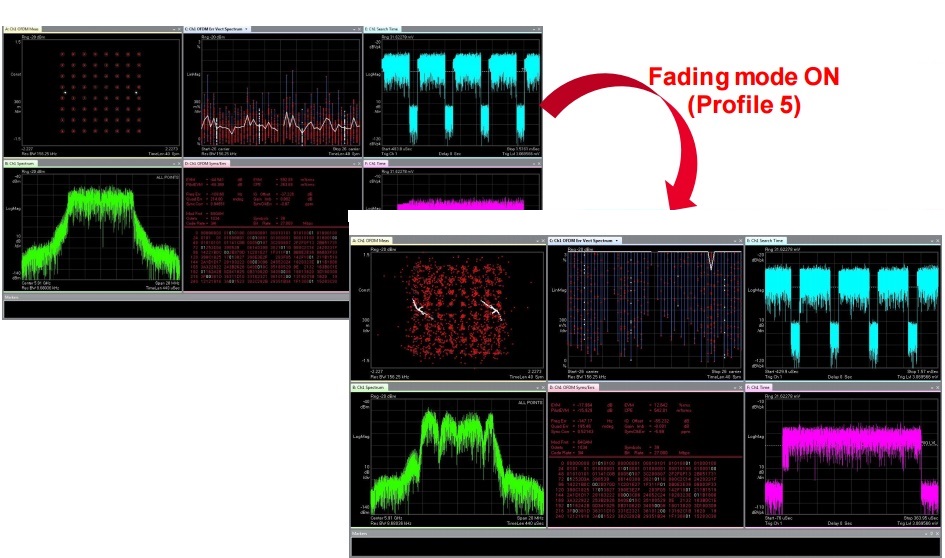
Q. Then, how does Keysight's signal generator respond to irregular changes in signal strength caused by obstacles or movement in a vehicle environment?
A. Keysight test solutions can generate signals for various cellular signals (2G/3G/4G) and diverse in-vehicle wireless communication methods (BT/WLAN/GPS/Broadcast signals), either individually or in combination. Additionally, various fading signals can be created and simulated using the Real-time Fading Signal Studio.
Q. I have heard that Europe is standardizing eCall, Russia ERA-GLONASS, and the US and Asia are also proceeding with eCall standardization. How is eCall verification performed, and what measures should engineers take?
A. “eCall must apply eight requirements: ▲ operate using only GNSS; ▲ be equipped with an automatically running system (GSM/UMTS) without using a modem; ▲ send information on the last three locations recorded in the MSD; ▲ establish cooperation standards within Europe (urban or rural); ▲ set response times and recording intervals defined as errors; ▲ set appropriate test times for the IVS modem to resume operation after the GPS stops; ▲ assume a moving vehicle situation; and ▲ assume a highway situation. Engineers must verify that the IVS module operates according to eCall standard procedures.
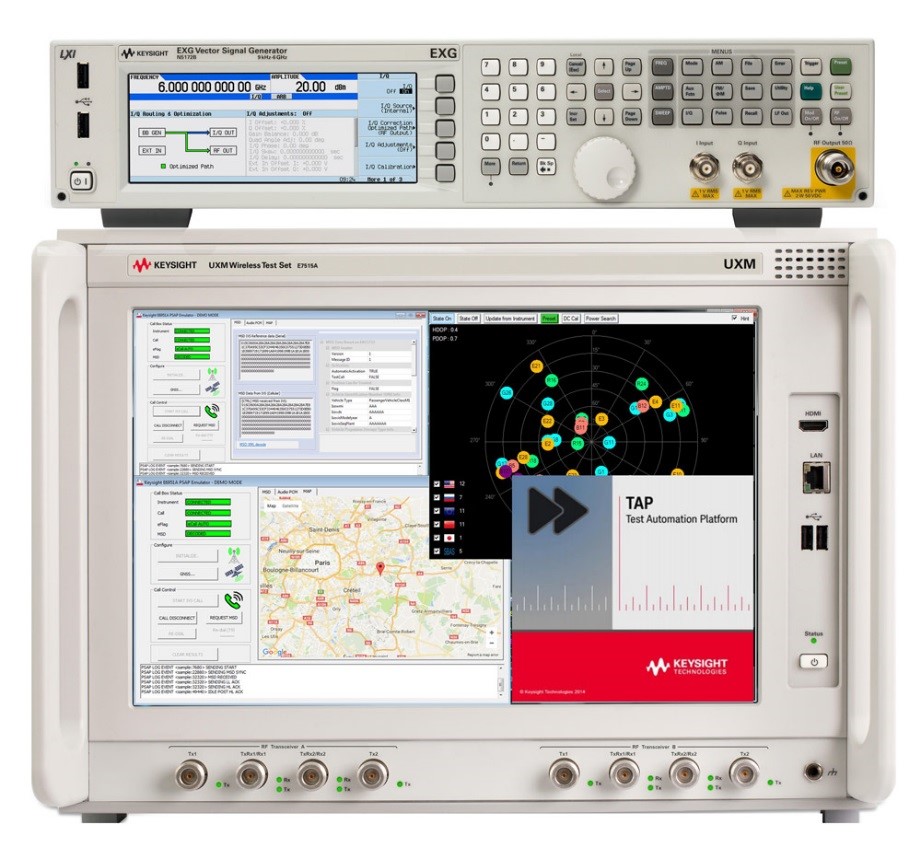
Q. What should be the primary focus when verifying and testing wireless communication in future automobiles?
A. Stability, accuracy, and scalability. Even a simple communication failure can threaten human lives. Keysight supports various wireless communication methods and also provides calibration services and professional training services for accurate measurements.
Q. I heard that China Mobile announced plans to establish Cellular V2X (C-V2X) by 2019. What roadmap does Keysight have for V2X?
A. “We participate in various consortium and standard meetings, such as IWPC and 3GPP, to propose measurement methods and solutions, and we attended this year's eCall Testfest. Although it was our first time attending, we received positive evaluations regarding interoperability between devices.” In addition, we plan to rapidly support solutions related to vehicle signal measurement by participating in various consortia such as 5GAA.
Please click to view the Korean brochure and demo video for Keysight's eCall solution for connected cars .
Comments
Related news
Keysight Announces 802.11ad Integration Test Solution
Keysight Korea (CEO Yoon Deok-gwon) has announced a solution for testing 802.11ad devices. The flexible and compact E7760A wideband transceiver is an integrated test solution supporting the IEEE 802.11ad wireless standard. This solution was first introduced at the Mobile World Congress (MWC) held in Barcelona earlier this year.
2016.11.16by 홍보라 기자
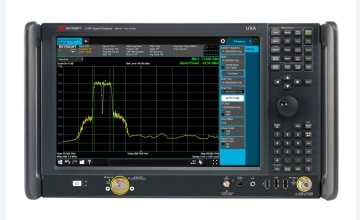
Keysight Launches Millimeter-Wave Frequency Signal Analyzer Analyzing Up to 110 GHz
Keysight announced a signal analyzer for millimeter wave frequencies. The Keysight N9041B UXA X-Series signal analyzer is the industry's first to analyze signals across frequencies ranging from a maximum of 5GHz up to 110GHz.
2017.01.03by 김지혜 기자
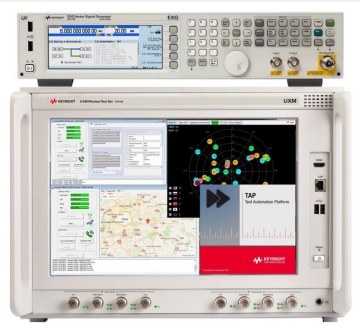
Keysight Announces eCall Test Solution to Accelerate Time-to-Market
Keysight Korea announced the E6950A eCall conformance test solution. It simulates PSAP (Public Safety Answering Point), emulates cellular networks using Keysight wireless test sets and RF signal generators, and provides GNSS (Global Navigation Satellite System) coordinates. This is required for IVS (in-vehicle system) to be equipped with the minimum dataset.
2017.03.28by 김자영 기자
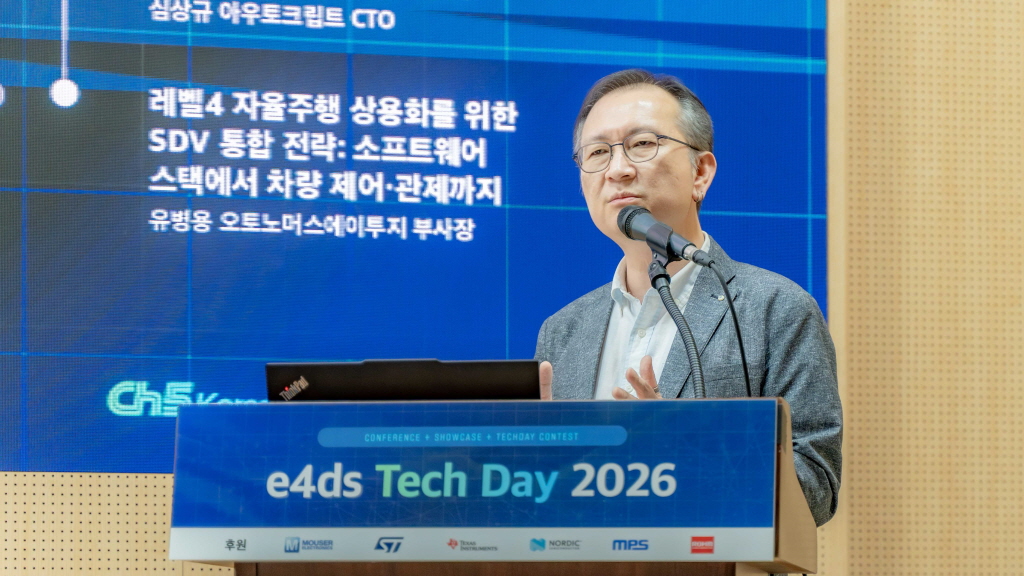
[e4ds Tech Day 2026 ⑨] Sim Sang-gyu, Autocrypt CTO: "In the Physical AI Era, Automotive Security Must Extend Beyond the Vehicle"
At e4ds Tech Day 2026, Sim Sang-gyu, CTO of Autocrypt, explained automotive cybersecurity strategies in the era of Physical AI and SDV (Software-Defined Vehicle). Automobiles are evolving as part of an ecosystem connected to AI, cloud, chargers, IoT, and robots, and he emphasized that the scope of security must expand beyond the vehicle interior to the entire connected environment. In particular, AI model tampering, adversarial attacks, OTA updates, and EV charger hacking were identified as major threats. He explained that response measures require zero trust, AI model integrity protection, intrusion detection, Security by Design and Default, and full lifecycle security management, and that proactive security system establishment beyond regulatory compliance is critical for securing future mobility competitiveness.
2026.10.12by 배종인 기자

Practical HIL Construction Strategy for Automotive and Off-Highway Controller Validation
As vehicle E/E architecture transitions to zonal structures and shifts to software-defined vehicles (SDV), the number of controllers (ECUs) requiring validation and software complexity are surging dramatically. Meanwhile, real vehicle testing cannot provide repeated verification under identical conditions and entails lead time and safety concerns. This white paper explains the principles of HIL (Hardware-in-the-Loop) validation and the structure of the NI platform composed of PXI, SLSC, and VeriStand, and through two actual implementation cases—Camera Record & Replay HIL for In-Cabin Monitoring Controller (ICMU) and Forklift Controller (VCU) HILS—describes how controller-level regression testing becomes possible. Additionally, it explicitly states application boundaries and limitations, such as lack of A2B support.
2026.10.12by 편집부











