



ARM Launches Image Processing Device for Accurate Viewing and Safe Driving
 Published2017.04.25 23:43
Meets ISO26262, ASIL D, IEC 61508, and SIL3 safety standards
ARM announced the launch of the ARM Mali-C71 Image Processor (ISP), the first product in the Mali Camera family. The new Mali-C71 processor is designed for ADAS SoCs.
As autonomous driving technology advances, advanced image processing technologies such as replacing vehicle mirrors, detecting drowsy driving, and pedestrian protection systems are being required for ADAS applications. Market research firm Strategy Analytics predicted that "the number of cameras required to implement the technology will increase," and that "most high-end cars will be equipped with up to 12 cameras within the next five years."
This type of complex camera technology must be able to rapidly process and analyze images even in the worst weather conditions, and must be designed to meet stringent automotive safety standards. It is impossible to integrate general camera technology used in smartphones or consumer video cameras.
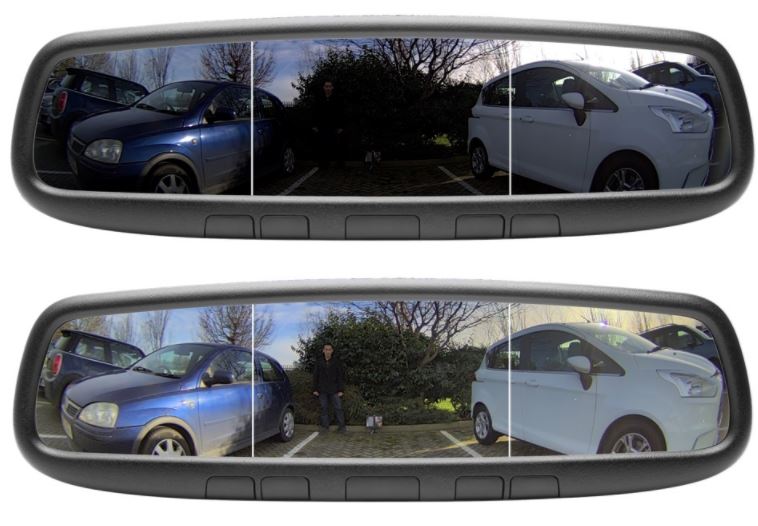
Changes in the role of the Image Signal Processor (ISP)
An ISP converts raw pixels into high-definition images for display. As the number of cameras installed in vehicles increases and sensor fusion technology advances, ISP functions—which involve encoding and additional processing by computer vision algorithms—are becoming concentrated within ADAS SoCs. SoCs can not only manage multiple cameras but also provide reliability and safety to the automotive market. To achieve this, a new approach to virtual parallel processing for automotive functional safety and computer vision applications is required.
Automotive cameras must provide the highest level of clarity and reliability. The Mali-C71 offers an ultra-wide dynamic range (UWDR) with a difference in exposure values of up to 24 stops. In some cases, it provides detailed images that are invisible to the naked eye. It supports superior performance in clarity and reliability compared to high-performance DSLR cameras that offer a dynamic range of approximately 15 stops. In addition, it removes image noise and processes multiple camera exposures, as well as generates UWDR frames and transmits them to displays or computer vision engines.
When cameras are used for ADAS, such as pedestrian protection or drowsy driving detection systems, safety standards become even stricter. The Mali-C71 provides low latency and advanced fault detection capabilities through more than 300 dedicated fault detection circuits. This enables system-level certification for ISO26262, ASIL D, IEC 61508, and SIL3 standards.
An ARM official stated, "We plan to provide all software reference code to control ISPs, sensors, automatic white balance, automatic exposure, and more, and to develop comprehensive automotive software designed to comply with ASIL standards."
Tim Ramsdale, Executive Vice President of ARM’s Imaging and Vision Group, said, “The automotive industry is moving fast to realize autonomous driving. The ARM Mali-C71 will display the information necessary for the driver’s quick and accurate decisions on a high-level display, while simultaneously providing reliable data to the computer engine to control the vehicle.”
Comments
Related news

ARM Launches Automotive Safety Hypervisor for Cortex-R52
ARM announced that it has developed a software hypervisor for the ARM Cortex-R52 processor. The Cortex-R52 converts a single base chip into multiple virtual machines, enabling different software tasks to run simultaneously.
2017.01.26by 김지혜 기자
ARM MCU Onboard Supply Spacecraft
ARM announced that a VORAGO Technology microcontroller (MCU) based on the ARM Cortex-M0 processor was deployed on SpaceX CRS-10, which was launched by the U.S. National Aeronautics and Space Administration (NASA) to supply materials to the International Space Station (ISS). NASA had previously adopted the ARM Cortex A-53 processor for developing next-generation space electronics equipment. This project, supported by NASA and the Air Force Research Laboratory, marks the first instance of an MCU based on ARM Cortex-M0 that was developed with radiation tolerance being adopted in space applications.
2017.02.21by 김지혜 기자
ARM Sets AI Milestone with DynamIQ
ARM has announced ARM DynamIQ technology for multi-core processor systems. DynamIQ will deliver multi-core capabilities to devices ranging from security-requiring platform terminals to the cloud. It can be applied to smartphones, vehicles, consumer appliances, and numerous other connected devices. This enables artificial intelligence (AI) that leverages machine learning for zettabyte-scale data generated between the cloud and devices.
2017.03.22by 김자영 기자

[e4ds Tech Day 2026 ⑨] Sim Sang-gyu, Autocrypt CTO: "In the Physical AI Era, Automotive Security Must Extend Beyond the Vehicle"
At e4ds Tech Day 2026, Sim Sang-gyu, CTO of Autocrypt, explained automotive cybersecurity strategies in the era of Physical AI and SDV (Software-Defined Vehicle). Automobiles are evolving as part of an ecosystem connected to AI, cloud, chargers, IoT, and robots, and he emphasized that the scope of security must expand beyond the vehicle interior to the entire connected environment. In particular, AI model tampering, adversarial attacks, OTA updates, and EV charger hacking were identified as major threats. He explained that response measures require zero trust, AI model integrity protection, intrusion detection, Security by Design and Default, and full lifecycle security management, and that proactive security system establishment beyond regulatory compliance is critical for securing future mobility competitiveness.
2026.10.12by 배종인 기자

Practical HIL Construction Strategy for Automotive and Off-Highway Controller Validation
As vehicle E/E architecture transitions to zonal structures and shifts to software-defined vehicles (SDV), the number of controllers (ECUs) requiring validation and software complexity are surging dramatically. Meanwhile, real vehicle testing cannot provide repeated verification under identical conditions and entails lead time and safety concerns. This white paper explains the principles of HIL (Hardware-in-the-Loop) validation and the structure of the NI platform composed of PXI, SLSC, and VeriStand, and through two actual implementation cases—Camera Record & Replay HIL for In-Cabin Monitoring Controller (ICMU) and Forklift Controller (VCU) HILS—describes how controller-level regression testing becomes possible. Additionally, it explicitly states application boundaries and limitations, such as lack of A2B support.
2026.10.12by 편집부











