



Are you worried about IoT usage and security?
 Published2017.05.02 09:48
Threats can be prevented with Wi-Fi wireless microcontroller solutions
With the rise of the Internet of Things (IoT), most devices around us are connected to the internet. Any device connected to the internet can be subject to local or remote attacks. Attackers can attack connected devices to steal corporate intellectual property stored in the system, access user data, or maliciously manipulate the system to harm users.
Security threats are a critical issue in the IoT. We have several misconceptions regarding how to address them. As evidenced by the massive distributed denial of service (DDoS) attack that occurred late last year—which experts described as the largest in history—even seemingly harmless products, such as home digital video recorders (DVRs), can be maliciously infected and used as "botnets" to disable the operation of third-party objects. While last year's attack dealt a blow to services like Twitter and PayPal, similar attacks could target large-scale smart infrastructure technologies, such as power grid systems. According to a 2016 survey conducted by Kapersky Lab, some companies or organizations spent more than $1.6 million to resolve a single DDoS attack.
Recognizing these threats, TI’s SimpleLink™ Wi-Fi CC3220 wireless microcontroller (MCU) integrates a series of powerful, multi-layered hardware-based security features to provide a robust solution that protects products from various attacks, including local or remote packet sniffing, man-in-the-middle (MITM) server emulation, malicious privilege escalation via “over-the-air” updates, remote file manipulation, data and software theft, and intellectual property (IP) cloning.
To defend against local and remote network packet sniffing, strong encryption at the Wi-Fi (AES / WEP) and Internet (TLS / SSL) levels is required. However, these measures are insufficient to defend against malicious privilege escalation attempts or to provide comprehensive protection against the theft of IPs, code, data, keys, and identity information stored or used by connected systems. Figure 1 below shows how these measures are implemented.
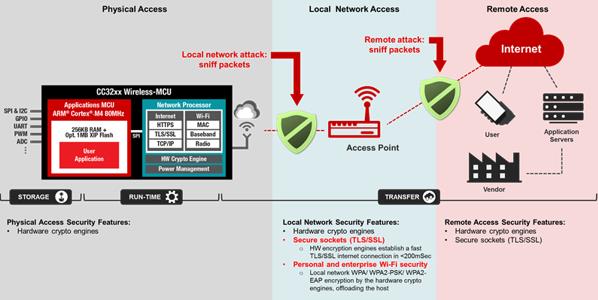
Figure 1: Local network security features in operation
The CC3220 device integrates more than 25 additional security features to provide a means to defend against potential attack risks across the entire end-to-end IoT domain. These features are illustrated in Figure 2 below.
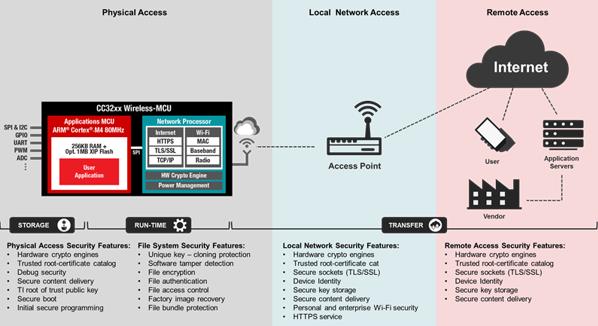
Figure 2: CC3220 Security Features
While the increasing volume of IoT system resources poses design challenges, stronger security can be achieved through MCU-based Bill of Materials (BOM) optimization systems. The first step is to identify which system resources are at risk, where potential exposure points exist, and what potential threats the system might face. Based on this understanding, a product is selected that integrates extensive hardware-based security features and reduces the burden on the host MCU.
The CC3220 wireless MCU meets exactly these requirements. Its unique dual-core architecture (Figure 3) simplifies the design by running both host applications and network processing on a single chip. Since the network processor and hardware encryption engine handle the processing of security functions, they process millions of instructions per second (MIPS), and the application MCU memory can be used entirely for processing host applications.
In addition, by physically partitioning the programmable application MCU and the ROM-based network processor, firmware and network management vulnerabilities can be reduced to defend against risks associated with the application.
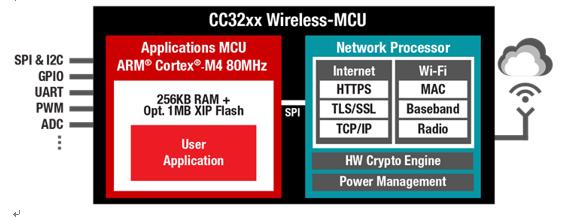
Figure 3: CC3220 proprietary dual-core architecture
Comments
Related news
To make a small, cost-effective Bluetooth speaker
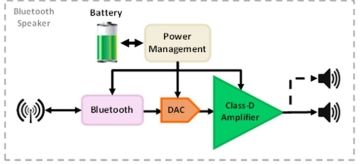
Multiple manufacturers are launching a variety of Bluetooth speakers, ranging from affordable speakers for basic systems to high-end premium models. To develop cost-effective products with competitive performance, design constraints such as solution size, component count, cost, efficiency, and battery capacity must be considered. The basic components inside a Bluetooth speaker can be seen in Figure 1. Batteries are essential in portable applications. The battery must be small and lightweight while providing maximum usage time using cells. The power management block supplies the necessary power to the rest of the circuit. Due to battery limitations, the voltage provided from one or two battery cells is very low. Therefore, a boost converter is required to increase the available voltage for the rest of the system.
2017.04.14by 김지혜 기자

What is important in a battery analysis system is the ADC
As portable devices have proliferated, battery-powered systems have become commonplace. Since battery defects occur frequently, it has become important to identify and replace battery defects early. Whether individual batteries used in mobile phones or battery banks for storing renewable energy, any battery defect can lead to system downtime. A precision analog-to-digital converter (ADC) is used as a key component in battery analysis systems that can assess battery health status. Depending on key specifications of the ADC such as speed, resolution, and latency, battery health status can be analyzed more accurately. Looking at the Randles lead-acid battery model in Figure 1, we can see how critical ADC performance is.
2017.04.18by 김지혜 기자
Do you know how to optimize a voltage monitor?
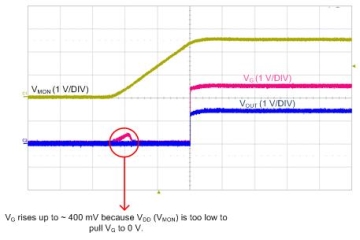
Various applications and systems require voltage supervisors. Voltage supervisors have been monitoring analog voltages in digital circuits. TI's TL7705, the first voltage supervisor released in 1983, consumes 1.8mA, is offered in PDIP (plastic dual-inline package), and is still in use today. Recent products feature diverse characteristics such as ultra-low quiescent current (TPS3839), ultra-compact package (TPS3831), dual channel (TPS3779/80), high accuracy (TPS3702), and multi-channel multi-function power monitoring (TPS386000). By selecting from various product options, voltage supervisor functionality can be optimized with simple circuit additions. Depending on the application, some require wider voltage hysteresis than what standard supervisors provide. One method to increase hysteresis in adjustable supervisors is to add a resistor between the output pin and the input voltage divider.
2017.04.20by 김지혜 기자
Korea Instrument, KOLAS Accredited Calibration Agency First to Simultaneously Acquire ISO/IEC 27,001·27,701
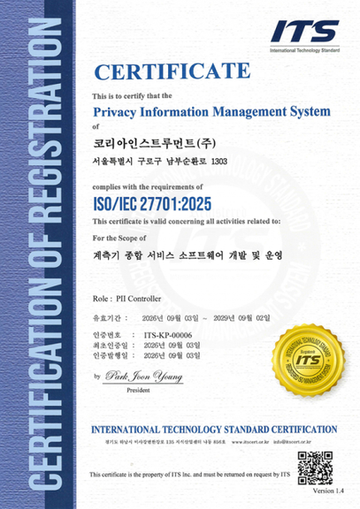
Korea Instrument has become the first among KOLAS accredited calibration agencies to simultaneously acquire ISO/IEC 27,001 and ISO/IEC 27,701 certifications. Through its proprietary platforms CWIZ Enterprise and CWIZ Partners, the company has embedded information security and personal data protection requirements across all business processes including customer information, equipment data, and calibration reports, with plans to continuously advance its management system through regular audits and security inspections.
2026.10.12by 배종인 기자

TeamViewer One, IT Incident Automation Workflow and Resolution Center Enhanced
TeamViewer has added IT incident automation capabilities and an advanced Resolution Center to its integrated digital workplace management platform 'TeamViewer ONE'. Recurrent service disruptions, configuration errors, and capacity shortages are automatically handled according to preset policies, and device status verification through script deployment can be managed in a unified interface, significantly reducing repetitive tasks for IT teams.
2026.10.12by 배종인 기자











