



How to ensure signal integrity in low-power sensitive IoT devices
 Published2017.05.11 06:40
Accurate measurement products are needed to understand interference effects, link budgets, etc.
Power Integrity or Signal Integrity? That is the question.
Recently, with the rapid proliferation of Internet of Things (IoT) devices, the demand for signal integrity along with power integrity has increased, and countermeasures for this have become urgent.
This is because it has become difficult for devices to achieve signal integrity while implementing low current for the longest battery life in the IoT environment. Engineers in the field are faced with the situation where they have to solve the problem of conflicting high-speed signal integrity and the best power integrity for low current implementation in device design.

The signal integrity efficiency of IoT devices in actual design is known to be very sensitive to the voltage and current performance of the battery. Moreover, this problem becomes more serious as the data rate increases to Gbps. As the rate increases, more power is consumed, and to minimize this, engineers rely on topology.
For example, transmitters for high-definition multimedia (HDMI) and many other standards use reverse-matching resistors to minimize mismatch, but this can increase voltage amplitude and result in power loss.
In particular, poor signal integrity can also cause problems with data rates, frequent call drops, and pixel errors on TV screens. Any noise and instability can also cause degradation of high-speed signals. Additionally, high-speed signals are deployed more densely than IoT devices, which can result in problems such as crosstalk and coupling.
Industry officials say RF interference and digital crosstalk are common challenges when so many subsystems coexist in this way, causing interference between them and optimizing one device can have detrimental effects on other parts of the design.
Software should be used to identify, quantify, and validate crosstalk for analysis and design verification.
In other words, addressing radio frequency interference with additional shielding is 'costly' and having to check the interface every time to ensure accurate operation of high-speed signals at different voltages, temperatures, and voltage levels is 'time-consuming'.
Experts point out that to solve this, at a minimum, environmental modeling and link budget measurement and prediction for distributed systems, crosstalk, etc. are necessary.
“Engineers need to understand interference effects and link budgets to successfully design for the Internet of Things,” said Brian Fetz, Keysight Technologies. “This involves testing, probing and analyzing with the right measurement products, quickly identifying crosstalk for analysis, and software solutions that quantify and quickly verify designs.”
IoT/a> Keysight Solutions for Test Assignments – Download Application Note
Comments
Related news

Keysight packs 6 measuring instruments into a single 'small but powerful' oscilloscope
Keysight's newly announced budget oscilloscope, the InfiniiVision 1000 X-Series, is available in 50-100MHz models starting at 610,000 won. Compared to oscilloscopes that typically command several million won, this is literally "ultra-affordable." The company states that despite its low price point, the product delivers professional-grade functionality by integrating industry-leading software analysis and six measurement instrument functions into a single unit.
2017.03.10by 신윤오 기자

Keysight Participates in Embedded World 2017 and Unveils Multiple New Products
Keysight Technologies announced that it will participate in Embedded World 2017 (www.embedded-world.de/en) held in Nuremberg, Germany from the 14th to 16th, showcasing a number of new products. At the exhibition booth, hardware and software-based solution sets such as IoT measurement tools, RF and wireless communication solutions, and low-power and ultra low-power measurement solutions will be on display.
2017.03.14by 김지혜 기자

[Interview] “Vehicle Communications, Where Even Simple Failures Can Threaten Lives—Fix Them with Accurate Testing”
If an accident occurs while driving, you call 119. Even if you witness an accident scene while driving, you call 119. It is the natural course of action. But what happens after the call? How many people would report it accurately, saying "A three-vehicle collision involving an SUV on lane 3 of Route 15 heading from Seoul toward the East Sea"? The European Commission's 2018 April announcement requiring all new vehicles to be equipped with an eCall (emergency call) module stems from this issue. eCall is a calling method in which vehicle type, time, location, direction and other data are transmitted either directly by the driver or by the vehicle itself in case of an accident. This is part of telematics technology, which is called the core of connected cars. We heard about telematics technology and its testing technology from Seung-taek Jang, Manager at Keysight Korea. Q. As autonomous vehicles become reality, the importance of safety directly linked to life is being highlighted. There are various communication technologies applied to vehicle communication such as V2V and V2X. A. Considering the current scope of application, V2I is suitable for cellular technology, while V2V is considered appropriate for WAVE technology due to technical safety, test specification readiness, and latency concerns. Therefore, we need to appropriately leverage the advantages of both cellular and WAVE communications. Q. When 5G, expected as a next-generation communication technology offering short latency, high reliability, and fast data speed, is introduced, the situation will likely be different. It seems testing will not be easy either. A. If all the various characteristics of 5G technology are satisfied, it appears it could replace both existing WAVE and cellular technologies. However, taking mmWave, one of the 5G characteristics, which uses broadband bandwidth as an example, 5G is like sending fast data down a wide highway. Therefore, high-frequency bands in the mmWave range are used. Measurements are conducted through radiated testing using antennas rather than conventional cables. For this reason, accurate understanding of mmWave testing and antenna technology is important.
2017.04.25by 김자영 기자
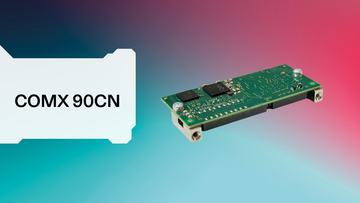
Hilscher Launches 'comX 90CN' Embedded Module Without Connector Integration
Hilscher has launched the 'comX 90CN' embedded communication module without connector integration. Designed in a compact 30×70mm form factor, this module features a structure where network connectors are separately connected to the baseboard, enabling flexible mechanical design for industrial equipment. Based on netX 90, it supports major industrial Ethernet protocols including PROFINET, EtherCAT, and EtherNet/IP, and incorporates security features such as hardware-based encryption and secure boot.
2026.10.19by 배종인 기자
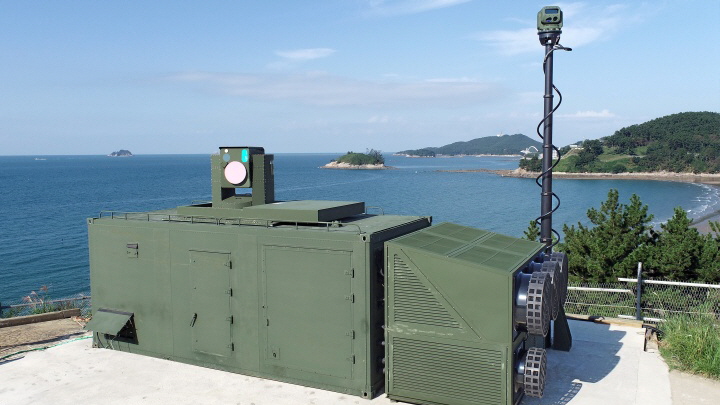
Hanwha Systems' Laser Air Defense Weapon 'Cheonkwang' Achieves 100% Drone Interception Success
Hanwha Systems' laser air defense weapon 'Cheonkwang' demonstrated its operational performance by intercepting 3 drones with 100% success rate during the Army's future warfare training. With an operational cost of approximately 2,000 won per shot, it enables low-cost operation and, when deployed alongside a 30kW high-energy laser gun, is drawing attention as a next-generation air defense measure against the increasing threat of small drones and unmanned aerial vehicles in modern battlefields.
2026.10.15by 배종인 기자











