



The Slow Popularization of VR/AR Can Be Found in Convergence Technology
 Published2017.05.15 17:52
Showcasing convergent technologies capable of practical implementation
An event has been organized to provide a comprehensive overview of the current state of virtual reality (VR), augmented reality (AR), and hologram technologies. Held for the 15th time, this event is KETI’s technology innovation matchmaking, designed to introduce and connect in-house developed technologies with small and medium-sized enterprises.
Various technologies were demonstrated, including a device that appears to be a VR driving game, a TV, and a VR device for ski experiences. The first thing that caught the eye was the 'Smart Substation' technology, which KETI reportedly jointly developed with Korea Electric Power Corporation last February. It allows users to view the equipment environment in real-time AR by scanning and modeling the facility from the first basement level to the third floor above ground in 3D.
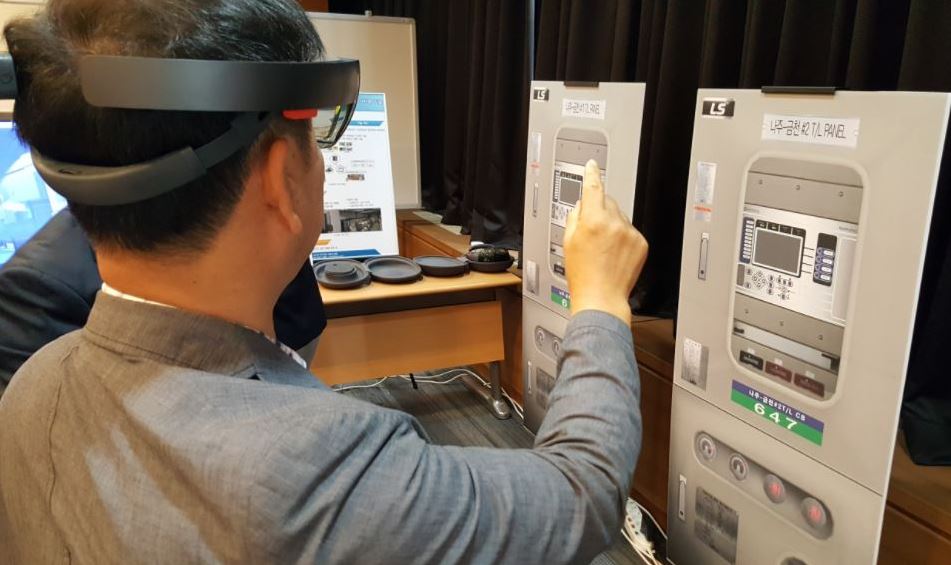
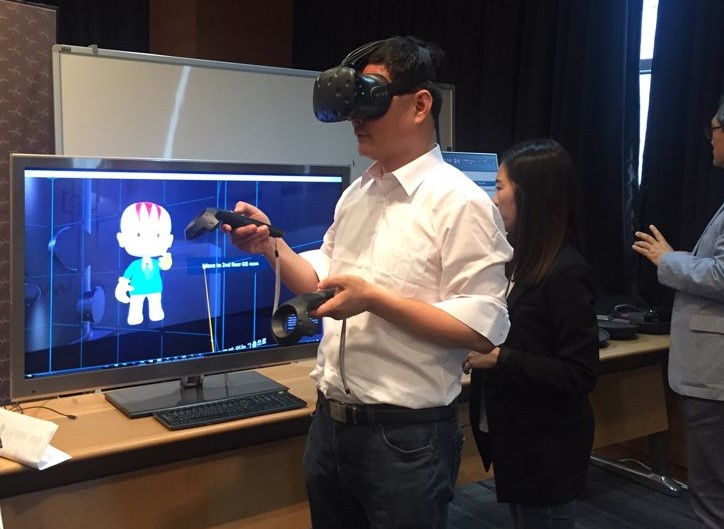
The VR device is equipped with content designed to enhance new employees' field experience and practical response skills. It provides a manual outlining precautions for routine inspections and maintenance in areas where access is restricted and training is difficult, and enhances the sense of realism by simulating actual lighting and equipment placement.
HoloLens can receive real-time information through its built-in computing capabilities. By analyzing and comparing previous inspections with the current status using data regarding equipment that is unavailable within the substation, predictive inspections become possible.
Park Byung-ha, a principal at the VR/AR Research Center, stated, “In particular, HoloLens is suitable because it allows users to check data using only hand gestures when operating a remote control in the field is difficult.” He added, “Currently, HoloLens is an underdeveloped field where Microsoft’s device is the only one available, but as technology advances, equipment-centric visualization and training will become possible for both VR and AR.”
To broaden the scope of 'convergence technology' from smart factories to Joy Robots, it must become hyper-realistic visual content.
The photorealistic/real-scale 3D modeling of the smart substation, created by scanning it in 3D, was done using a power equipment modeling authoring tool. Using a broadband scanner, the scan was completed in one and a half months with an error of 1mm even from 300m away.
3D technology can branch out in many directions through virtual simulation. These range from motion capture researching robot-human interfaces for factory automation to 4K-based stage production used at the Harry Potter experience in London. KETI is conducting research to enable the integrated management of IoT sensing information, big data, and human-machine based interactions on a single screen.
Jang Min-hyeok, a principal researcher at the IT Convergence Components Research Center, stated, “While the existing 3D market may be similar to VR, users found it difficult to use for extended periods due to fatigue caused by focus mismatch issues.” He added, “To be integrated into various industries, it must become hyper-realistic visual content, similar to VR technology.” On the other hand, he revealed that they are researching ways to reduce actual costs and manpower, noting, “Since the development tool DMWorks (Digital Manufacturing Works) is not cost-effective for companies, we are researching technologies that can be created using low-cost production tool environments such as Unity or Unreal Engine.”
Hyundai Motor utilized mapping technology for the construction of its plant when relocating to Mexico. They created PLC designs using 2D CAD to determine wiring routes and connected them in 3D to calculate the necessary cable lines for the factory design. By manufacturing extra cables to prepare for unforeseen circumstances, they were able to reduce the cost of taping.
Not a VR car game, but actual 'vehicle training'
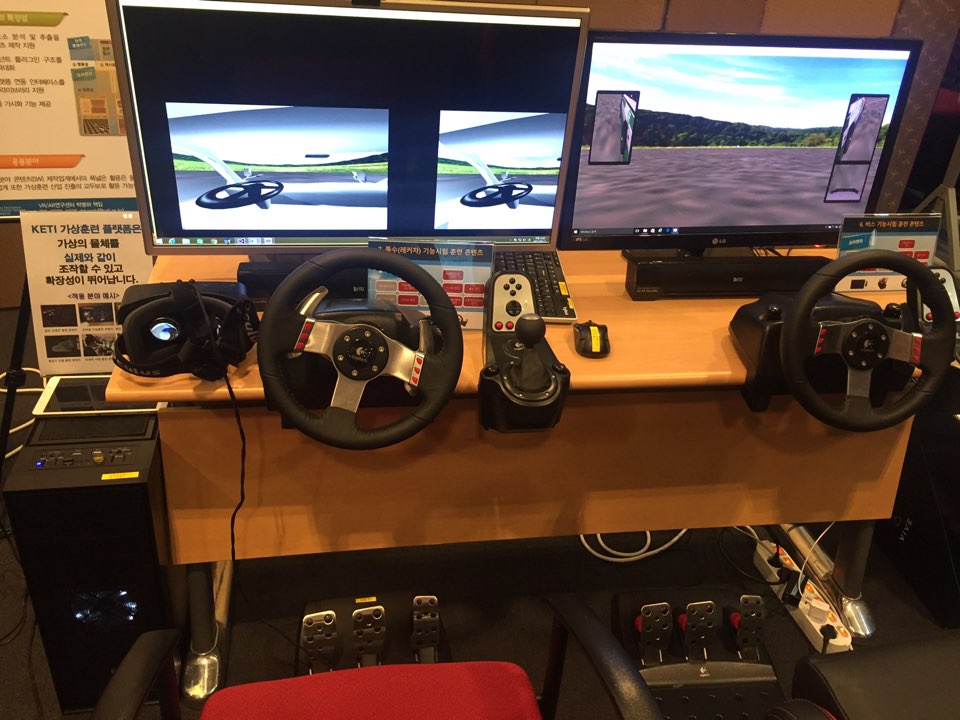
Virtual training technology that overcomes the spatial and temporal constraints of training in a virtual reality environment was also unveiled. Although it appeared to be an ordinary VR device for vehicle games, the researcher explaining the technology stated, “We have developed a ‘platform’ for creating content that can be used not only for vehicle driving but also for flight training, virtual sports training, and the aerospace business.” He added, “We simplified the development of complex technology. We can provide the platform or produce content as needed.” This is an industrial project that has been underway since 2013, and it is currently in the stage of producing a distribution version with the aerospace business to verify the project. If its practicality is recognized, it is expected to be actively utilized for training to obtain certifications.
Remotely adjustable 3D spatial touch
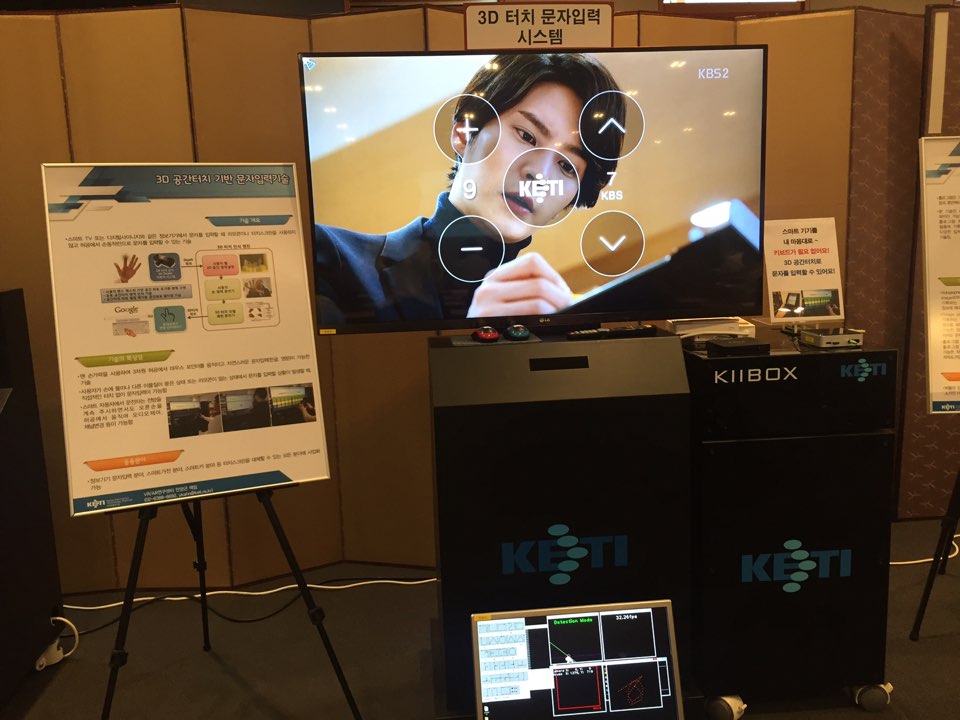
A contactless NUI/NUX was introduced that allows users to input text and change channels on the TV by gesturing without a remote control. According to Principal Researcher Yang-geun Ahn, foreign companies that developed similar technologies, such as Point Grab and Eye Sight, have reached the adoption stage in conjunction with Home IoT, where the device becomes a 'remote control' when the user's eye and fingertip align.
The technology showcased by KETI records characters by drawing patterns in the air with fingertips, utilizing the thumb and index finger to record the beginning and end separately. At the site, we met a researcher vigorously waving their hands in front of a TV. Other technologies include inputting characters in eight different directions and inputting text with both hands on a 3D spatial keyboard. While this can be used for home IoT, it can also be utilized as a mirror-type device deployed in hospitals or public places for infection prevention, or as a smart PC for tasks such as playing PPT videos during meetings.
Comments
Related news
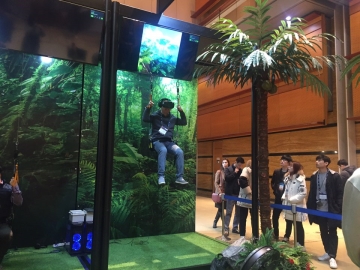
[Experience] We asked the VR experience users what their desired price range would be. How much would it be?
I visited a virtual reality (VR) expo on the 10th. The VR expo, which featured around 40 different booths, showcased the current state of VR technology across gaming, video, healthcare, marketing, and other sectors. However, what caught the eye was the long waiting lines reminiscent of an amusement park, despite being a weekday morning, at the end of which stood VR attractions—amusement ride-type experience devices. I asked participants who had completed the experience whether they encountered any inconveniences, and if charged, what would be an appropriate price point.
2017.03.13by 김자영 기자
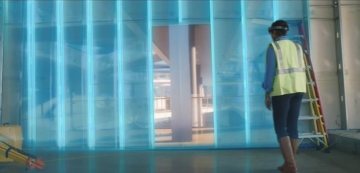
[Shut Up and Try It] Mixed Reality Applied to Architecture, This Is a 'Gem'
On the 27th of last month, Trimble, a specialized company in construction 3D BIM technology, published an article stating plans to introduce wearable holographic technology to the construction industry through collaboration with Microsoft. Based on the number of views and survey responses, it was possible to gauge how intense readers' interest in mixed reality, virtual reality, and augmented reality was. Therefore, this time the reporter set out to experience hologram 'mixed reality' firsthand.
2017.04.10by 김자영 기자
KETI Supports VR/AR Technology Innovation
The Korea Electronics Technology Institute (KETI) announced that it will host a 'Virtual Reality (VR) and Augmented Reality (AR) Technology Innovation Matchmaking' event on the 11th in Sangam. The technology innovation matchmaking was designed to promote the commercialization of public technology by identifying demand enterprises and supporting technology transfer and commercialization. This event was prepared to support the development of the VR/AR industry and provide close business support to companies, and is sponsored by the Technology Credit Guarantee Fund, Korea Electronics Information and Communications Industry Association, Seoul Industrial Promotion Agency, Korea VR Industry Association, and Korea Intellectual Property Strategy Institute.
2017.05.10by 김지혜 기자
ESP32 Development Environment Selection and GPS Application Implementation
The ESP32 is a microcontroller that integrates Wi-Fi, Bluetooth, 12-bit ADC, capacitive touch, PWM, DAC, and UART in a single SoC. However, the abundance of features does not by itself solve the designer's problems. The real challenges lie in selecting the appropriate development environment, determining which pins can be used and which must be avoided, and converting raw data from modules into usable information. This document addresses ESP32 peripheral constraints (ADC2 and Wi-Fi coexistence limitation, UART1 occupancy, ADC non-linear regions), the trade-offs between Arduino IDE and ESP-IDF, and the process from connecting NEO-6M/NEO-M8N GPS modules to UART2, parsing NMEA sentences, and visualizing routes in Google Earth, all organized based on documented references.
2026.10.12by 편집부
MIPI CSI-2, DSI-2, C-PHY, D-PHY Test Solution Technical White Paper
The MIPI interface adopts a burst mode that transitions between low-power (LP) and high-speed (HS) states for low-power consumption, and in return, strict timing rules are imposed on state transitions. Additionally, the high-speed section operates as a packet-based protocol with headers, ECC, and CRC, so verification engineers must handle waveforms and protocols simultaneously. Traditional configurations combining general-purpose oscilloscopes and AWGs reveal limitations in setup complexity, measurement uncertainty, and lack of reproducibility when faced with these requirements. This white paper, based on webinar materials, organizes the structure of this problem and describes how the SV5C-DPTXCPTX generator for receiver testing and SV5C-DPRXCPRX analyzer for transmitter testing integrate state transition testing, stressed eye testing, and protocol analysis into a single bench, along with their application boundaries.
2026.10.12by 편집부











