


Recognizes 1,000 faces in 0.07 seconds using deep learning
 Published2017.05.29 12:27
The Electronics and Telecommunications Research Institute (ETRI) participated in the K-ICT Technology Commercialization Festival held at the World IT Show (WIS) and showcased promising technologies for commercialization. The event was conducted across three fields: Intelligent Information/Bio, IoT Communication Devices, and AR 3D Content/Smart Media. Consultation booths for technology transfer were set up, and a briefing session introducing 15 technologies was also held.
Although some technologies were developed several years ago, their completeness has been enhanced through continuous improvements. We will briefly examine technologies in recently trending fields, ranging from real-time automatic translation and deep learning-based facial recognition systems to proximity communication technology that is up to 8,000 times faster than NFC, and human body communication that communicates via handshakes instead of wires.
Multilingual speech recognition and conversational automatic translation 'GenieTalk'
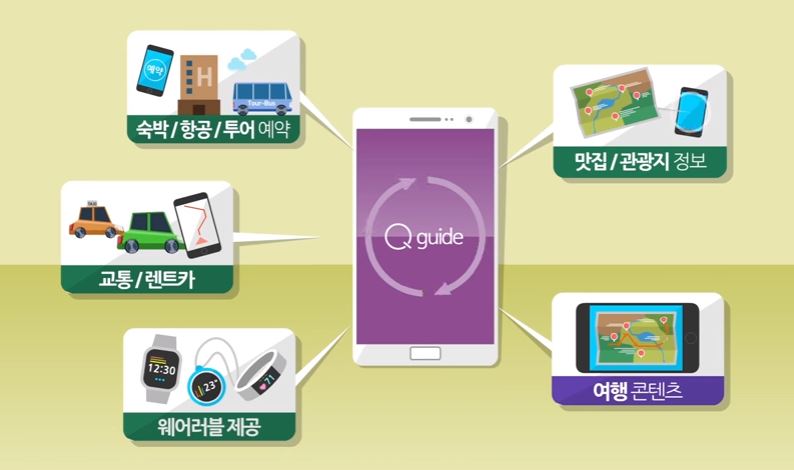
GenieTalk, a multilingual automatic interpretation technology developed in 2012, is an app optimized for Korean translation. In a mobile translation app evaluation conducted by a media outlet in 2016, GenieTalk ranked first in recognition rate, following Google Translate (87%), Samsung Electronics' S Translator (90.7%), and Naver's Papago (86.9%).
The GenieTalk app, which supports simultaneous interpretation, supports 8 languages including Korean-English, Chinese, Japanese, Spanish, French, and Arabic. Currently, it requires an internet connection to use, but a device for offline use is also under development.
The research team stated, “When walking down the street wearing a device (shaped like a Bluetooth headset), if another person wearing the same device approaches, the device recognizes them and enables real-time conversation using their respective languages. It will be used as a pilot service at the 2018 PyeongChang Winter Olympics.”
Development of core security technologies for IoT device operating systems
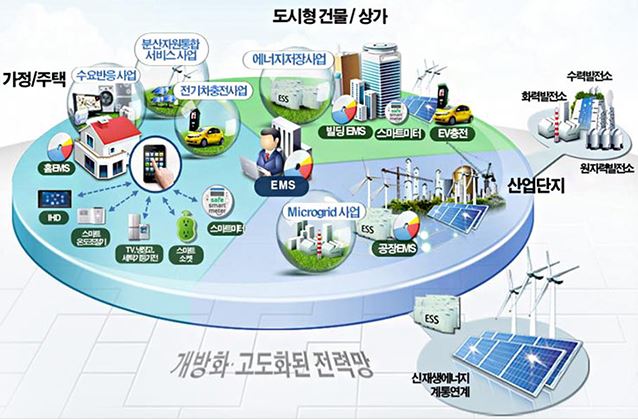
The core technology enables secure IoT service operation through customized security configurations based on device specifications, key management and cryptographic algorithm verification to counter device hacking, and remote device security management based on security policies.
This can be implemented in Advanced Metering Infrastructure (AMI) solutions using commercial IoT communication networks based on LoRa (or NB-IoT). According to the research team, Europe has completed testing for AMI commercialization and is in the verification phase, and the technology is also planned to be introduced in Korea as part of a smart grid security demonstration project.
Deep learning-based face recognition system robust to environmental changes
A facial recognition system was unveiled that detects human faces in video and verifies identity by analyzing gender and age.
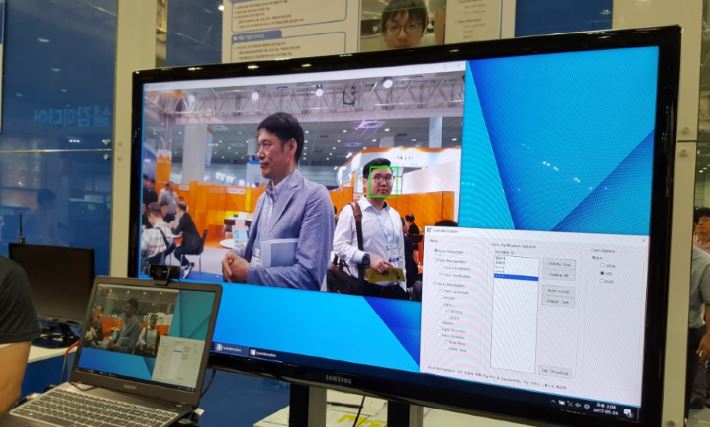
Feature detection in the face recognition process utilizes the GPU, while other parts are processed by the CPU. Without a GPU, processing speed is slower compared to existing technologies, and the total recognition time depends on CPU performance. It takes 0.07 seconds for 1,000 registered users. (See video below)
Researcher Yoon Ho-seop stated, “Technology transfer was carried out in the direction of providing security and personalized advertising.” "There are already three places where technology transfer has been completed, and several companies are in the process," he said.
Ultra-high-speed proximity communication technology ZING
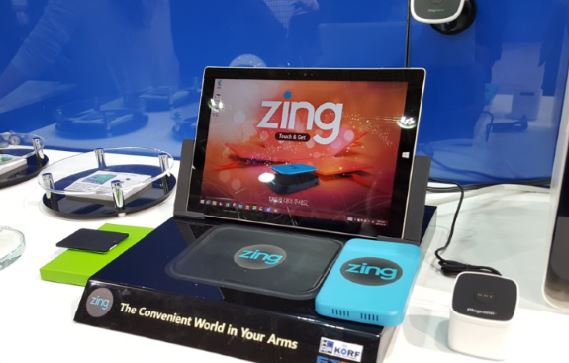 It unveiled 'Zing' technology, an ultra-high-speed proximity communication technology that allows users to download large-capacity content by simply placing it against a device. While the speed of existing proximity communication technology, NFC, was less than 1 Mbps, Zing's speed is 3.5 Gbps, making it up to 8,000 times faster.
With the introduction of this technology, smartphones (or wireless storage devices) will not be limited to wireless charging. Video can be instantly transmitted to a beam projector or TV for playback while charging, and data can be easily exchanged between devices such as dashcams and laptops without any boundaries.
Japan announced that it plans to showcase high-speed proximity communication technology at the 2020 Tokyo Olympics, which allows users to download movies, music, books, etc., from subway ticket gates.
It can be developed in a way that allows users to simply download videos, much like picking up a drink from a vending machine. The research team stated, "We can also expect a system where touching a movie poster on the street plays a trailer or allows users to watch it."
Human body communication technology
Wires are eliminated, and the person becomes the medium. This is human body communication technology, which drew an exceptionally constant stream of visitors to ETRI's booth. Existing wireless communication systems required intermediate frequencies (IF) and radio frequencies (RF) to connect devices, but human body communication has eliminated this. It uses the desired frequency band via Code Division Multiple Access (CDMA) and transmits only digital signals.
The pairing time required to find and set up the device during Bluetooth connection can be replaced by a 'touch'. Additionally, by replicating radio frequencies traveling through the air, it can prevent the vulnerabilities of car smart keys, which were frequently subject to theft, through double security. The smart key can be embedded in another wearable device rather than in the form of a physical key, and the door opens when a person wearing it approaches and 'touches' it.
According to the researchers, if this technology is applied to the medical field, wireless endoscopes will become possible. The method involves using an 'endoscope capsule' to film the inside for 10 hours, after which it is naturally expelled. (See video below)
Comments
Related news
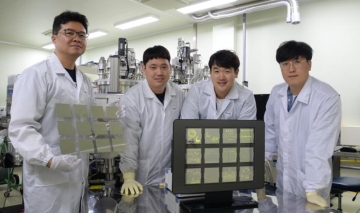
ETRI to Use Graphene Instead of ITO in Displays
ETRI (Electronics and Telecommunications Research Institute) has successfully developed a display by creating electrodes using graphene, referred to as a dream material, instead of indium tin oxide (ITO), which has been widely used as electrodes for conventional OLED displays. The display substrate developed by the research team measures 370mm x 470mm, which is approximately the size of a 19-inch monitor. The graphene electrode thickness is 5 nanometers (nm) or less. ETRI anticipates that combining graphene with a flexible substrate will enable the implementation of thin and flexible displays. If realized, this could serve as a core technology applicable to the manufacturing of wearable devices that can be applied to clothing and skin.
2017.04.17by 김지혜 기자
Will domestic CPU cores bloom in the IoT era?
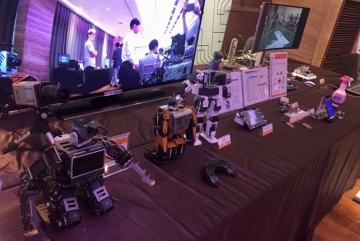
The first phase of domestic CPU development, which began in June 2015, has entered its final stages. On the 19th, the "Second Domestic CPU Core Roadshow" was held to introduce the achievements of the "Domestic CPU Core Commercialization Project." Over one year, what new cores were developed and what results were achieved? Ha Sang-tae, head of the System and Materials Industrial Technology Division at the Korea Institute of Industrial Technology Evaluation and Planning, said, "There are still negative views on domestic CPU development, but various institutions are producing results," adding "positive effects are expected in securing product competitiveness for 'Things' corresponding to IoT (Internet of Things), where hyper-connectivity and intelligence are being realized." Song Yong-ho, director of the Intelligent Semiconductor Promotion Division, said, "We confirmed the potential for domestic CPUs to be utilized in various ways," and "continuous attention must be paid to development." The domestic CPU core roadshow introduced ADchips' ARK (revised name of emCore), ETRI's Aldebaran, and KETI's MENSA core, the same as last year. SoC development cases using cores included low-power mobile healthcare by Hancom GMD (ARK), tampering prevention and security-enhanced smart meters by S&A (Aldebaran), and voice recognition with built-in ultrasonic data communication capability by Emtec Vision (MENSA), discussing the advantages and disadvantages experienced using domestic CPUs.
2017.05.22by 김자영 기자
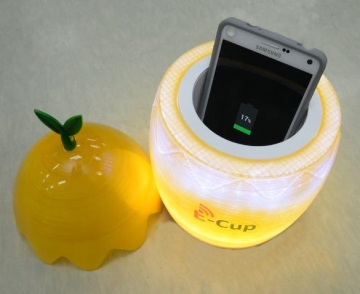
ETRI, Wireless Charging in 3D Space
The current method of wireless charging is a two-dimensional pad-based approach. To charge, a smartphone must be placed directly on the pad, which presents inconvenience in usage. The Electronics and Telecommunications Research Institute (ETRI) announced that it has successfully developed '3D space wireless charging (E-Cup)' technology that maintains consistent charging efficiency regardless of the direction in which a smartphone is placed within a space of approximately 10cm in diameter. This technology was made possible by developing a uniform magnetic field generation technique capable of maintaining uniform distribution of magnetic fields within a specific space, thereby overcoming the limitations of two-dimensional pad-based wireless charging technology.
2017.05.25by 김지혜 기자

[e4ds Tech Day 2026 ⑨] Sim Sang-gyu, Autocrypt CTO: "In the Physical AI Era, Automotive Security Must Extend Beyond the Vehicle"
At e4ds Tech Day 2026, Sim Sang-gyu, CTO of Autocrypt, explained automotive cybersecurity strategies in the era of Physical AI and SDV (Software-Defined Vehicle). Automobiles are evolving as part of an ecosystem connected to AI, cloud, chargers, IoT, and robots, and he emphasized that the scope of security must expand beyond the vehicle interior to the entire connected environment. In particular, AI model tampering, adversarial attacks, OTA updates, and EV charger hacking were identified as major threats. He explained that response measures require zero trust, AI model integrity protection, intrusion detection, Security by Design and Default, and full lifecycle security management, and that proactive security system establishment beyond regulatory compliance is critical for securing future mobility competitiveness.
2026.10.12by 배종인 기자

NVIDIA to Invest $1 Billion in U.S. Science Over Next Five Years
NVIDIA has announced plans to invest $1 billion over the next five years to strengthen U.S. scientific and technological competitiveness. The company will enhance cutting-edge artificial intelligence research and development capabilities in key areas including quantum computing, healthcare, and energy security, while expanding support for higher education research institutions and cloud service providers. NVIDIA is participating as a major industry partner in the White House Office of Science and Technology Policy's Genesis Mission, and is promoting supercomputer construction in collaboration with national laboratories including Argonne and Los Alamos.
2026.10.12by 배종인 기자











