


NI Unveils System Design Software LabVIEW NXG 1.0
 Published2017.05.30 06:32
National Instruments (NI) announced LabVIEW NXG 1.0 as the first version of its next-generation LabVIEW engineering system design software.
LabVIEW NXG introduces an innovative measurement automation method that bridges the gap between configuration-based software and custom programming languages, allowing users to focus on solving real problems rather than using tools.
Jeff Kodosky, co-founder and Business/Technology Fellow at NI, stated, “The initial version of LabVIEW, released 30 years ago, was designed to enable engineers to automate measurement systems without needing to learn complex programming languages. With LabVIEW, it was possible to automate measurement systems in a ‘non-programming’ way.” He continued, “Since then, we have moved beyond the initial goal of supporting easy and fast measurement automation to focus on enabling more tasks to be done with LabVIEW. The newly released LabVIEW NXG is a product that better aligns with this purpose, as it was designed with workflow simplification in mind from the very beginning of its development.” "For general applications, a simple configuration-based approach is used, while for relatively complex applications, the extensible graphics programming capabilities of LabVIEW language G can be used," he said.
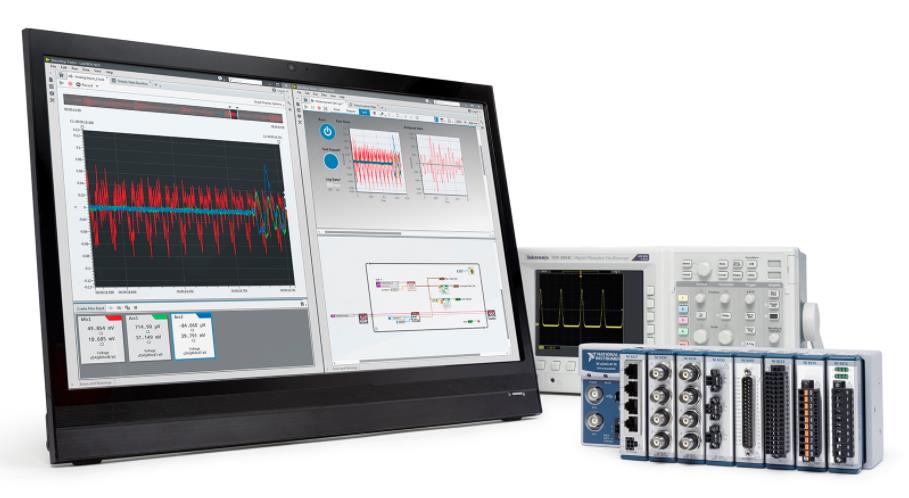
LabVIEW NXG version 1.0 significantly increased the productivity of benchtop measurements through a new non-programming workflow that collects measurement data and iteratively analyzes it. This non-programming workflow simplifies automation tasks by supporting essential code in the background. Additionally, it currently supports only Data Analysis and Qualification (DAQ) and Benchtop Instrument Control, while modular instruments and existing LabVIEW features are scheduled to be provided in NXG version 2.0.
LabVIEW NXG introduces a newly developed editor that incorporates features requested by LabVIEW users across various fields, yet its usage is similar to existing software. The new editor expands LabVIEW's openness to support the integration of a wider range of languages. It enhances programming productivity by simplifying the detailed manipulation of user interface objects based on vector graphics and zoom capabilities.
As LabVIEW NXG 1.0 revolutionized benchtop measurements, the new features in LabVIEW 2017 were developed with a focus on the development, deployment, and management of complex, large-scale distributed tests and embedded applications. These include features that improve interoperability with standard IP and standard communication protocols, including IEC 61131-3, OPC UA, and the secure DDS messaging standard.
Comments
Related news

NI, Automotive Components and Development Engineers, Come Here, 'Automotive Day 2017'
National Instruments announced that it will hold 'NI Automotive Day 2017' at the AT Center in Yangjaedong on the 25th (Tuesday). 'NI Automotive Day' is Korea's largest automotive electrical component engineer conference that shares new technologies through real-world case studies on the theme of reliable automotive components and vehicle development. At this conference, NI plans to introduce the latest technologies that can reduce development costs and time for automobiles while ensuring reliability. To this end, NI will share technical case studies implemented with NI solutions according to themes reflecting automotive industry trends, and conduct educational and hands-on seminars. Additionally, participants will have the opportunity to experience NI solutions firsthand at booths. In sessions with domestic and international experts, case studies related to autonomous vehicles, ADAS, infotainment, and V2X will be introduced, actively reflecting the needs of electrical component engineers. Featured presentations include ▲ the radar simulation implementation case for Audi vehicles from German company Konrad and NI's infotainment testing technology ▲ 5G/LTE-based V2X technology currently under development with SK Telecom's participation ▲ technical presentations on V2X wireless communications using NI's system design software LabVIEW and requirements for automotive component standard mass production inspection platforms. Alongside the sessions, educational and hands-on training will include a CAN seminar on vehicle communication networks for autonomous vehicles. Additionally, the automotive solutions booth prepared by NI and partner companies will exhibit and demonstrate more than 15 solutions to support new customers to NI products in acquiring useful knowledge and information. Kim Jong-woo, head of strategic marketing at Korean NI, stated, "Through this event where real-world cases are shared, automotive developers will be able to confirm the latest trends and technologies in the automotive industry. We hope that these innovative technologies will be widely applied to the development of increasingly intelligent and complex automobiles."
2017.04.20by 김자영 기자
NI and AT&T Establish Collaboration for 5G mmWave Sounder Development
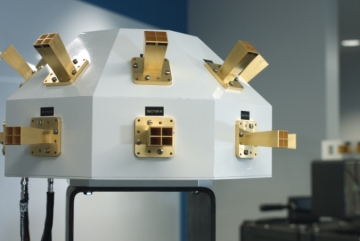
National Instruments and AT&T have announced a collaboration to develop 5G millimeter wave (mmWave) channel characterization tools. mmWave frequencies have already been selected as the standard for 5G mobile networks by the FCC, 3GPP, and other standards bodies, and are expected to play a key role in the 5G field going forward. Channel measurement identifies how wireless signals are affected by the surrounding environment. Using channel measurement, it is possible to determine how signals are reflected or how objects such as trees, buildings, vehicles, and people block the signal. AT&T developed this channel sounder, called "Porcupine," as the first of its kind and holds exclusive rights to it. This channel sounder not only provides real-time channel parameter measurement and monitoring functionality, but also uses an architecture based on the NI mmWave transceiver system. It performs Angle-of-Arrival (AoA) measurement, which typically takes more than 15 minutes when using pan-tilt equipment, within 150 milliseconds and displays the results in real time. Additionally, it collects channel measurement data in a unique way. In other channel sounding methods, raw data is collected and then the channel is characterized through post-processing, with measurements possible only once every 15 minutes. Porcupine can perform approximately 6,000 measurements in the same time period. This is comparable to capturing a 15-minute operation as a video instead of a single still photograph—a photograph shows only a specific moment, but video allows understanding of the full context. James Kimery, NI RF Research and SDR Marketing Director, stated, "The most important factors that enabled AT&T and NI to design and develop a channel measurement system with unmatched performance in the industry are the NI mmWave transceiver system and LabVIEW system design software," and added, "By combining PXIe and LabVIEW FPGA, we were able to secure the bandwidth, data and signal processing capability, and flexibility necessary to rapidly deploy 5G while meeting mmWave requirements."
2017.04.24by 김자영 기자
NI Announces Ethernet Chassis with Time-Based Synchronization
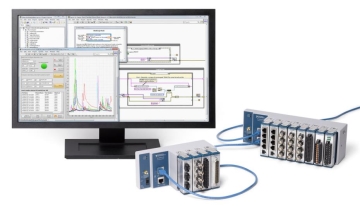
National Instruments (hereinafter NI) announced two new multi-slot Ethernet chassis. The cDAQ-9185 and cDAQ-9189 are products equipped with new time-based synchronization capabilities built on the latest Ethernet standards, providing TSN (Time Sensitive Networking) and robust CompactDAQ hardware to improve the efficiency of distributed measurements. NI is actively collaborating in defining TSN, a next-generation innovative technology of the IEEE 802.1 Ethernet standard, for distributed time synchronization, low latency, convergence of time-sensitive traffic and general network traffic. The cDAQ-9185 and cDAQ-9189 improve the scalability of synchronized distributed systems through tight time synchronization with TSN.
2017.05.26by 김지혜 기자
.jpg)
SalePoint Signs Multi-Year Partnership Agreement with AWS… Promoting Identity Security that Integrates Even AI Agents
Sailpoint has entered into a multi-year strategic partnership agreement with AWS and is moving forward with establishing an integrated governance system that manages both human and non-human identities together. The plan is to consistently manage access permissions in an environment where AI agents are increasing as work execution entities, while applying the principle of least privilege and automated policy enforcement. The two companies plan to jointly expand capabilities to manage the identities of various entities, including AI agents, within a single layer in the AWS environment. This collaboration is interpreted as a move to design security and governance together in corporate environments where AI adoption is expanding.
2026.03.26by 배종인 기자
.png)
Databricks Unveils Open AI Security Monitoring 'Lakewatch'
Databricks entered the security market on March 24 by unveiling LakeWatch, an open-source agentic SIEM. The core functionality of this product is to integrate and analyze security, IT, and business data in a single environment to support AI-based threat detection and investigation. The company explained that it reduces the limitations of existing security operations centers, which have had to forgo some data due to high cost structures, and enables large-scale data analysis and automation based on open formats and ecosystems. LakeWatch is currently offered as a private preview, with Adobe and Dropbox mentioned as early customers. Databricks also announced an expanded partnership with Anthropic as well as the acquisition of Antimatter and SiftD.ai.
2026.03.26by 배종인 기자











