



Will the adoption of flexible displays in HUDs accelerate?
 Published2017.06.05 12:06
Interest in Head-Up Displays (HUDs) is rising as it has been reported that the compact SUV 'Kona,' scheduled to be unveiled by Hyundai Motor on the 13th, will be equipped with a combiner-type HUD. A combiner-type HUD is a form in which the HUD is installed separately in the vehicle rather than being built-in.
A HUD is a device that projects images such as the vehicle's current speed, fuel level, and navigation onto the windshield directly in front of the driver, minimizing the need for the driver to shift their gaze elsewhere while driving. It is a system that can prevent accidents caused by not looking ahead while operating a navigation system or using a smartphone, and is considered safer than an HDD (Head Down Display) because it can prevent blind spots.
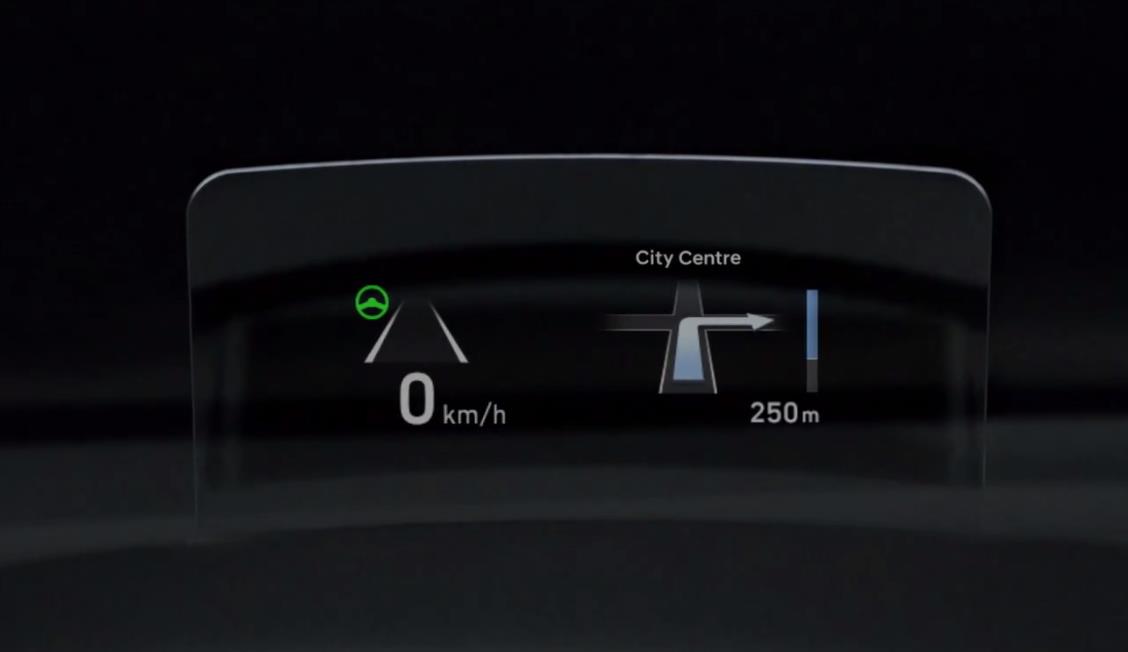
Currently, the display panels used in HUDs are miniaturized versions of Silicon Liquid Crystal Displays (LCoS), MEMS Scanners, LCDs, and OLEDs. With the emergence of Micro LEDs, which have the advantages of high efficiency, transparency, and flexibility, attention is being paid to whether they will be applied to HUDs.
Replacing the panels currently used in HUDs with Micro LEDs can not only increase light efficiency, reliability, and lifespan but also enable sharper images with high brightness. Displays in automotive infotainment systems are increasingly incorporating high-resolution panels. Regarding the view that HUDs also require high resolution, CEO Moon of Eyedis stated, “People say that HUD displays need to be sharp, but that is not necessary. A display viewed while driving needs to be moderately bright. Since driving is the primary focus and the HUD should only play a supporting role, it does not need to be excessively bright or sharp.”
Micro LEDs embedded in vehicles have many advantages
HUD products currently on the market are not built into the vehicle but are purchased separately and installed. There are two main types: one that uses a transparent display, such as an LCD or OLED, mounted on the windshield to project virtual objects for the driver to view, and a laser method that applies a light-emitting material to the windshield and projects the image. The most commonly used method is the projection type, which consists of a light source for displaying information, an optical device for projection, and a transparent screen on which the information is projected. The device is placed on the dashboard and connected to a smartphone for use.
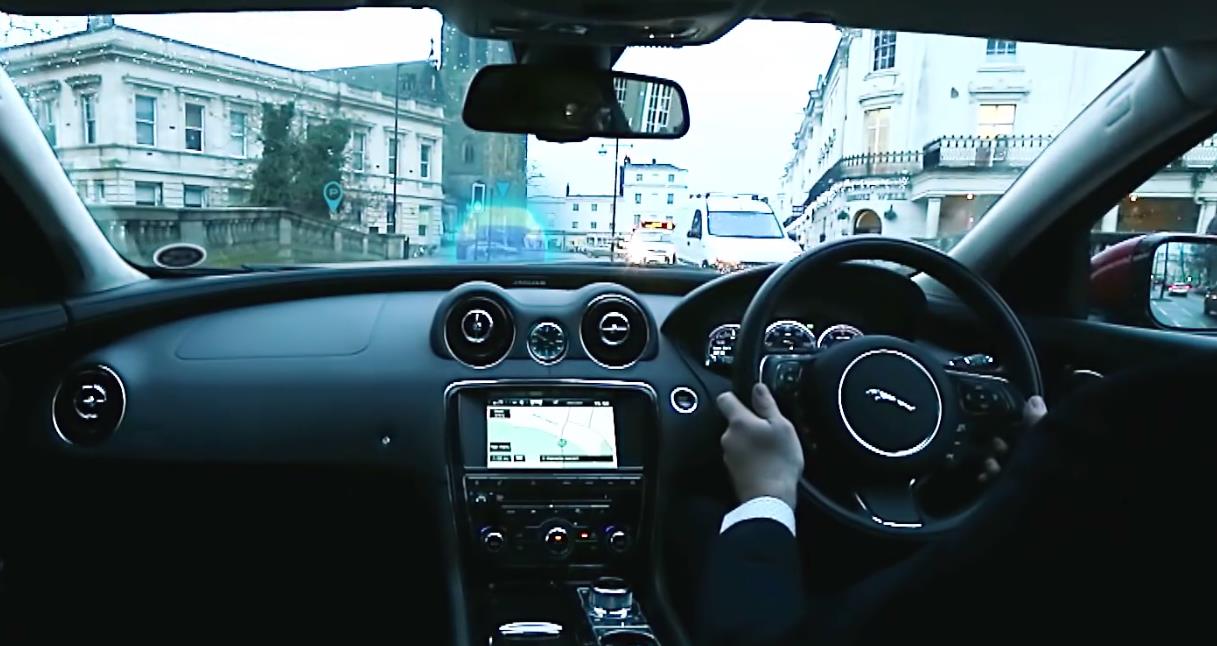
In applications requiring the attachment of additional reflective films or combiners, conventional LCDs or LCoS are sufficient without the need for Micro LEDs. However, if the future trend involves embedding HUDs into vehicle windshields, using standard LCDs becomes impractical due to the curvature of the glass, which causes distortion as it deviates from the center, and the large range of temperature fluctuations. CEO Moon explained that there is a possibility of resolving these issues by utilizing Micro LEDs through transfer technology.
To embed a HUD, issues with the panel or optical system must be resolved.
Regarding the rarity of built-in HUD products, it was stated that issues concerning not only the panel but also the optical system, controller, and interface must be resolved. Emphasizing the importance of experience in the optical system, it was stressed that to eliminate distortion or chromatic aberration, images should be laid out and managed in a coaxial manner during optical design, rather than attempting to find the optimal image using various mirrors.
In addition, he stated, “Since the car has two panes of glass, refraction occurs, resulting in a double image; it is necessary to find a solution to this problem,” adding, “There are also limitations for small and medium-sized enterprises in converting the combiner type to an integrated one.”
Comments
Related news
[Planning-Autonomous Vehicles⑤] 'Running SW' Artificial Intelligence Cars, Software Dominates
Vehicles with electrified systems are commonly referred to as "running semiconductors." However, as the importance of software that drives these electronic devices grows, it may now be appropriate to call automobiles "running software." Whereas the previous trend was to install various functions for vehicle stability and convenience, with accompanying software (SW) to operate them, automobiles are increasingly becoming software-centric. Vehicle software can be divided into electronic component SW platforms and infotainment platforms. In the electronic component SW platform, AUTOSAR (automotive open system architecture), an open-standard automotive software, is at the center. AUTOSAR comprises 9 core partners with approximately 50 member companies, including BMW, Bosch, Continental, Daimler, Ford, GM, Peugeot Citroën, Toyota, and Volkswagen as core partners, consisting of 7 OEM companies and 2 Tier 1 suppliers. The purpose of AUTOSAR is to address the growing complexity of software as electronic devices increase, and to reduce costs by enhancing software reusability.
2017.05.22by 김지혜 기자
LG Electronics has been appointed Vice President of the Automotive Infotainment Software Standards Association.
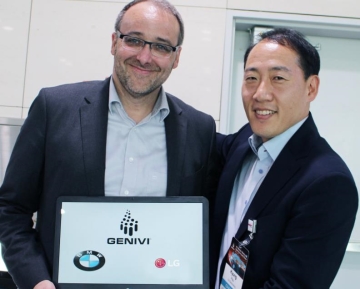
LG Electronics has risen to the position of vice chairman of the GENIVI Alliance, a standards organization for IVI (In Vehicle Infotainment) software platforms that encompasses audio, video, navigation, and other in-vehicle infotainment devices. The GENIVI Alliance unanimously elected Ryu Kyung-dong, executive vice president of LG Electronics' VC Smart SW Platform division, as vice chairman at a board meeting held recently at the ICC (International Convention Centre) in Birmingham, UK. Simultaneously, Peter Schonenberg, BMW's infotainment design director and the alliance's founding chairman, returned to the position of chairman. The GENIVI Alliance's executive officers consist of only four members: chairman, vice chairman, treasurer, and secretary. The GENIVI Alliance is a non-profit organization that develops the GENIVI Platform, a Linux-based software platform standard for IVI, and is leading the revitalization of the IVI ecosystem. Since its establishment in 2009, approximately 150 complete vehicle manufacturers and automotive component companies have participated as member companies. The GENIVI Platform is being applied to IVI products from multiple automotive companies including BMW, Renault-Nissan, Volvo, PSA Peugeot Citroën, and Hyundai-Kia Motors, and is rapidly expanding.
2017.05.22by 김지혜 기자
[Decisive IT Scene] T-Map That Understands User Sense, Equipped with AI
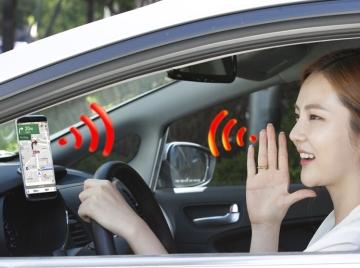
SK Telecom announced plans to launch a service applying artificial intelligence technology to its mobile navigation app T map within the third quarter. When a driver says "Find COEX" while driving, T map automatically searches for the destination and asks the customer whether to set it as the destination before providing navigation. Once voice recognition and artificial intelligence are applied to T map, operation of home IoT devices becomes possible. While driving, it can ask whether the gas valve at home is closed, and if it is not closed, it can close it immediately. In case of an accident, emergency rescue requests can also be made with a single voice command. When a customer shouts "Request emergency rescue," the accident situation is reported to the police station/fire department, and location information is automatically transmitted, enabling rapid rescue operations.
2017.05.25by 김자영 기자

[e4ds Tech Day 2026 ⑨] Sim Sang-gyu, Autocrypt CTO: "In the Physical AI Era, Automotive Security Must Extend Beyond the Vehicle"
At e4ds Tech Day 2026, Sim Sang-gyu, CTO of Autocrypt, explained automotive cybersecurity strategies in the era of Physical AI and SDV (Software-Defined Vehicle). Automobiles are evolving as part of an ecosystem connected to AI, cloud, chargers, IoT, and robots, and he emphasized that the scope of security must expand beyond the vehicle interior to the entire connected environment. In particular, AI model tampering, adversarial attacks, OTA updates, and EV charger hacking were identified as major threats. He explained that response measures require zero trust, AI model integrity protection, intrusion detection, Security by Design and Default, and full lifecycle security management, and that proactive security system establishment beyond regulatory compliance is critical for securing future mobility competitiveness.
2026.10.12by 배종인 기자

Practical HIL Construction Strategy for Automotive and Off-Highway Controller Validation
As vehicle E/E architecture transitions to zonal structures and shifts to software-defined vehicles (SDV), the number of controllers (ECUs) requiring validation and software complexity are surging dramatically. Meanwhile, real vehicle testing cannot provide repeated verification under identical conditions and entails lead time and safety concerns. This white paper explains the principles of HIL (Hardware-in-the-Loop) validation and the structure of the NI platform composed of PXI, SLSC, and VeriStand, and through two actual implementation cases—Camera Record & Replay HIL for In-Cabin Monitoring Controller (ICMU) and Forklift Controller (VCU) HILS—describes how controller-level regression testing becomes possible. Additionally, it explicitly states application boundaries and limitations, such as lack of A2B support.
2026.10.12by 편집부











