


Proposes an international standard for corrosion measurement methods of 3D printed products.
 Published2017.06.07 09:45
It will help improve product reliability and secure export competitiveness.
The Korean Agency for Technology and Standards (KATS) under the Ministry of Trade, Industry and Energy will propose a method for measuring corrosion of 3D printed products as an international standard at the General Assembly of the International Organization for Standardization (ISO/TC156).
The general assembly will be held in Jeju from the 5th to the 9th and will proceed with a total of 13 groups, including subcommittees, 10 working groups such as stress corrosion cracking, and special/advisory committees. About 100 people from 12 countries, including Germany, the United States, France, and China, will attend.
Among the 29 international standards discussed at this meeting, the major issues attracting attention include 'methods for measuring stress corrosion cracking in magnesium alloys used for automobile lightweighting,' 'methods for measuring stress corrosion cracking in nuclear reactor power generation facilities,' and 'methods for evaluating atmospheric corrosion in offshore plants, etc.'
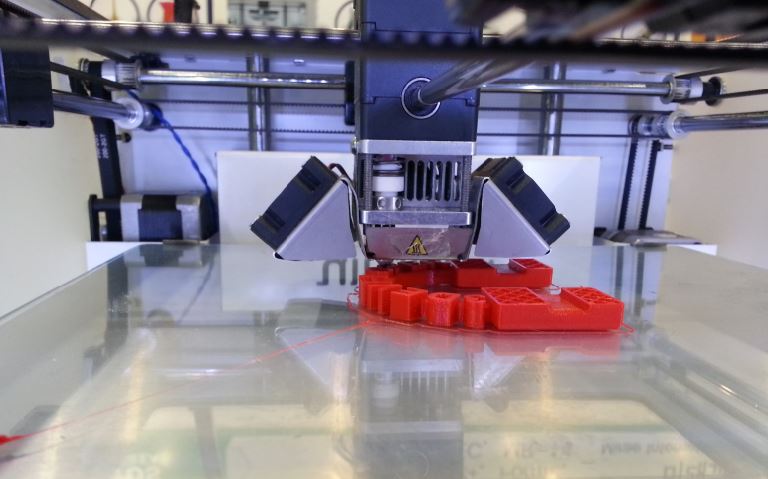
In particular, the standard for 'measurement of electrochemical critical local corrosion temperature of titanium alloys manufactured by additive manufacturing' to be proposed by Korea is attracting great interest from various countries as it is the world's first electrochemical corrosion measurement method for 3D printed products.
In the case of 3D printed products, there are many internal holes and layered surfaces that are susceptible to corrosion, so the newly proposed standard enables accurate measurement results by standardizing the corrosion environment and test procedures that cause corrosion in these areas first.
The Korean Agency for Technology and Standards announced that it will expand national standards in the field and actively support the development of standard technologies and international standardization activities of small and medium-sized enterprises related to 3D printing in order to promote the practical application of 3D printing, which is expected to bring innovation to the manufacturing industry in the era of the Fourth Industrial Revolution.
Comments
Related news
Stratasys Hosts Asia's Largest Annual 3D Printing Forum
Stratasys will host the 'Stratasys Asia Pacific 3D Printing Forum 2016 (hereinafter 'Stratasys 3D Printing Forum')' on September 9th at the Grand Ballroom of COEX in Samseong-dong, Seoul. The Stratasys 3D Printing Forum, which Stratasys hosts annually, has already been held in Shenzhen, China (September 2nd), Tokyo, Japan (September 6th), and Shanghai, China (September 7th). Following the Seoul event, it will also be held in Taiwan over two days on September 20th and 22nd.
2016.09.06by 신윤오 기자
MakerBot Launches 3D Printer That Meets Requirements of Experts and Educators
MakerBot, a desktop 3D printing specialist, has announced its latest 3D printer products and solutions that meet the broad requirements of professionals and educators. The latest MakerBot Replicator+ and MakerBot Replicator Mini+ printers, along with MakerBot Print and mobile applications, the latest Slate Gray Tough PLA Filament Bundle, and Thingiverse Education for educators, enable professionals to easily integrate MakerBot into their workflows and allow educators to readily introduce 3D printing to their students.
2016.09.21by 홍보라 기자

ESP32 Development Environment Selection and GPS Application Implementation
The ESP32 is a microcontroller that integrates Wi-Fi, Bluetooth, 12-bit ADC, capacitive touch, PWM, DAC, and UART in a single SoC. However, the abundance of features does not by itself solve the designer's problems. The real challenges lie in selecting the appropriate development environment, determining which pins can be used and which must be avoided, and converting raw data from modules into usable information. This document addresses ESP32 peripheral constraints (ADC2 and Wi-Fi coexistence limitation, UART1 occupancy, ADC non-linear regions), the trade-offs between Arduino IDE and ESP-IDF, and the process from connecting NEO-6M/NEO-M8N GPS modules to UART2, parsing NMEA sentences, and visualizing routes in Google Earth, all organized based on documented references.
2026.10.12by 편집부
MIPI CSI-2, DSI-2, C-PHY, D-PHY Test Solution Technical White Paper
The MIPI interface adopts a burst mode that transitions between low-power (LP) and high-speed (HS) states for low-power consumption, and in return, strict timing rules are imposed on state transitions. Additionally, the high-speed section operates as a packet-based protocol with headers, ECC, and CRC, so verification engineers must handle waveforms and protocols simultaneously. Traditional configurations combining general-purpose oscilloscopes and AWGs reveal limitations in setup complexity, measurement uncertainty, and lack of reproducibility when faced with these requirements. This white paper, based on webinar materials, organizes the structure of this problem and describes how the SV5C-DPTXCPTX generator for receiver testing and SV5C-DPRXCPRX analyzer for transmitter testing integrate state transition testing, stressed eye testing, and protocol analysis into a single bench, along with their application boundaries.
2026.10.12by 편집부

NVIDIA to Invest $1 Billion in U.S. Science Over Next Five Years
NVIDIA has announced plans to invest $1 billion over the next five years to strengthen U.S. scientific and technological competitiveness. The company will enhance cutting-edge artificial intelligence research and development capabilities in key areas including quantum computing, healthcare, and energy security, while expanding support for higher education research institutions and cloud service providers. NVIDIA is participating as a major industry partner in the White House Office of Science and Technology Policy's Genesis Mission, and is promoting supercomputer construction in collaboration with national laboratories including Argonne and Los Alamos.
2026.10.12by 배종인 기자











