


[Technical Contribution] How to Optimize Battery Runtime for MCUs
 Published2017.06.12 14:22
Power budget
First, calculate the theoretical power budget for the device. Refer to the MCU datasheet and manual to review the entire cycle of events, such as waking the device from sleep mode, data collection, data processing, turning on wireless functions, transmitting data, turning off wireless functions, and returning to sleep mode. Multiply the current by the time of each step and add the values to calculate the estimated total for a typical operating cycle.
The power consumed by the device during prolonged power-saving modes must also be included, as even a current of nanoamperes (nA) can amount to a significant sum over an extended period. MCU manufacturers may provide software capable of measuring current drains related to various operational variables, and the accuracy of the expected values can be ensured by using a DC power analyzer, a digital multimeter (DMM), or a device current waveform analyzer.
Hardware configuration
We begin by optimizing the clock speed at which the MCU operates. The current consumption of many MCUs is expressed in µA/MHz, which indicates that processors with lower clock speeds consume less current than those with higher clock speeds. However, a processor operating at 100% performance consumes the same amount of energy at 10 MHz as it does at 20 MHz, because a 20 MHz processor consumes twice the current during that half-time period. Consequently, current can be saved by making the MCU operate more slowly during code segments, when the processor is primarily in an idle state.
The next step is to optimize the settings related to data sampling. These settings include the frequency at which the sensor wakes up to collect data, the number of selected samples, and the ADC sampling rate. Since there is often a trade-off between measurement accuracy and these sampling variables, accuracy must be ensured while setting the sampling variables to minimize current drain. Similarly, the frequency at which the MCU updates the device's display, requests data from the sensor, and turns on LEDs or wireless functions can also be changed.
Finally, we will examine in detail the various idle states, snooze, and power-saving modes supported by the MCU. For example, some MCUs have the ability to disable the Real-Time Clock (RTC), and disabling the RTC can reduce current consumption in power-saving mode to less than 1/6. Of course, if you do this, some settings may be required to restore the date and time, for example, through a base station.
Firmware options
Design the program to quickly complete each step so that the MCU returns to sleep mode. Configure sensors and other peripherals to be powered only when necessary. When powering sensors, remember the power-on stabilization time to ensure that measurement accuracy is not affected. For ultra-low power modes, especially when powering the MCU at multiple voltage levels, it is recommended to use a sophisticated Source Measure Unit (SMU) to perform highly accurate current measurements.
We are reviewing the use of relatively low-power integrated peripheral modules to replace software functions performed by the MCU. For example, timer peripherals can automatically generate Pulse Width Modulation (PWM) and receive external timing signals.
In addition, appropriate programming settings are performed, such as setting constants outside of loops, excluding unnecessary variable declarations, unrolling small loops, and replacing some integer operations with bit shifts.
Test and learning
Finally, while writing MCU code, actual current consumption is frequently analyzed using instrument software tools. These tools include Complementary Cumulative Distribution Functions (CCDF) or automatic current profiles, which provide information for calculating more accurate power budgets. Observe and record the impact of coding decisions on power consumption to optimize current programs and get a head start on future projects.
Keysight Solutions for IoT Test Tasks – Download Application Note
Comments
Related news

How to ensure signal integrity in low-power sensitive IoT devices
Power Integrity or Signal Integrity! Is This the Problem? Recently, as Internet of Things (IoT) devices have proliferated rapidly, the demands for both power integrity and signal integrity have increased, and countermeasures have become urgent. This is because devices implementing low current consumption to maintain maximum battery life in IoT environments have made it difficult to achieve signal integrity. Field engineers are now faced with the challenge of resolving conflicts between achieving optimal power integrity for low current implementation and high-speed signal integrity in device design.
2017.05.11by 신윤오 기자
Keysight Launches Battery Drain Analysis Solution
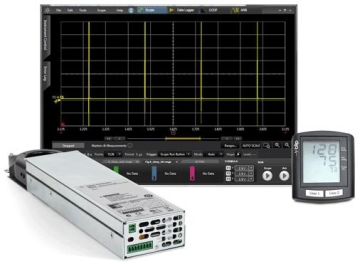
Keysight Technologies has announced a battery drain analysis solution that provides insights into critical applications related to the energy, automotive, and medical device industries. Medical device manufacturers need to maximize the battery life of monitors and sensors that track the human body. Energy companies also remotely deploy battery-powered devices to collect information from water, gas, and electricity meters. Automotive engineers must ensure that onboard monitoring equipment operates safely and without defects over the course of several years.
2017.05.23by 김지혜 기자

The Three Telecom Operators Compete Fiercely to Secure Home IoT Partners
LG U+ announced that it has signed a home IoT system construction agreement with Hoban Construction and will cooperate mutually in building a home IoT platform within new apartment complexes supplied by Hoban Construction. LG U+ plans to build a home IoT platform in 824 units of Hoban Construction's 'Pohang Chokok Hoban Verudium' to be supplied in the Chokok district, northern Pohang by June, and will also install outdoor IoT air quality measurement devices.
2017.06.12by 김자영 기자
Hilscher Launches 'comX 90CN' Embedded Module Without Connector Integration
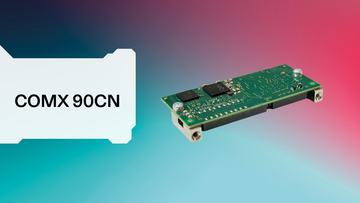
Hilscher has launched the 'comX 90CN' embedded communication module without connector integration. Designed in a compact 30×70mm form factor, this module features a structure where network connectors are separately connected to the baseboard, enabling flexible mechanical design for industrial equipment. Based on netX 90, it supports major industrial Ethernet protocols including PROFINET, EtherCAT, and EtherNet/IP, and incorporates security features such as hardware-based encryption and secure boot.
2026.10.19by 배종인 기자
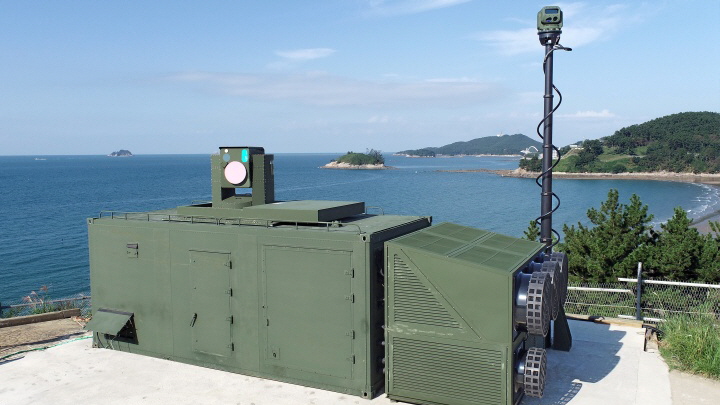
Hanwha Systems' Laser Air Defense Weapon 'Cheonkwang' Achieves 100% Drone Interception Success
Hanwha Systems' laser air defense weapon 'Cheonkwang' demonstrated its operational performance by intercepting 3 drones with 100% success rate during the Army's future warfare training. With an operational cost of approximately 2,000 won per shot, it enables low-cost operation and, when deployed alongside a 30kW high-energy laser gun, is drawing attention as a next-generation air defense measure against the increasing threat of small drones and unmanned aerial vehicles in modern battlefields.
2026.10.15by 배종인 기자











