


Wind River and Ohio State University Begin Self-Driving Car Testing
 Published2017.06.13 10:15
It is also expected to contribute to the development of specialized personnel in the automotive industry.
Wind River announced a collaboration with Ohio State University, the city of Dublin, Ohio, and the Transportation Research Center (TRC), the largest automotive research institute in the United States, to develop smart, connected vehicles and autonomous driving technologies.
“Ohio is an emerging hub for smart city and smart vehicle technology, and this new collaborative model between academia, the public sector, and the technology industry will set a new standard for mobility innovation and establish best practices for vehicle development and deployment,” said Marques McCammon, General Manager of Connected Vehicles at Wind River. “The widespread adoption of autonomous driving technology requires multifaceted collaboration and shared consensus, and this research builds on that premise.”
In addition, “as software becomes the core of the automotive industry and automobiles play an important role in our society, research on autonomous driving must be supported by comprehensive cooperation. “In particular, Dublin is one of the regions in the United States where smart connected technologies are widely applied, and we expect that this collaboration will bear meaningful fruit,” he said.
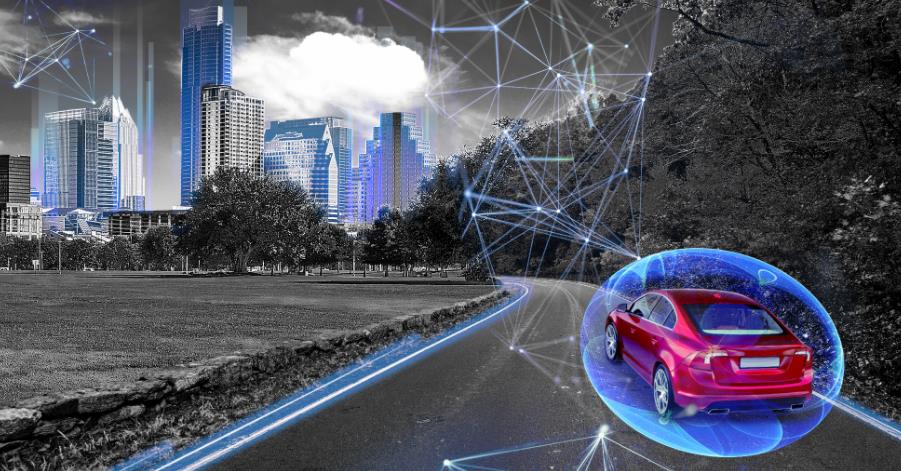
Going forward, the four institutions plan to test technologies related to autonomous driving, including vehicle-to-vehicle and vehicle-to-infrastructure communication technologies, software for cockpits—integrated display systems that provide drivers with essential information in connected cars—smart sensors and mapping, and related data collection. This project will also contribute to the development of the next generation of automotive professionals, with Ohio State students, researchers, and faculty playing a key role.
A key goal of the project's initial phase is to implement autonomous vehicles as a "rolling laboratory" for collaborative development and testing. Wind River, with its expertise in the aerospace, defense, industrial, and automotive markets, will lead the project, spearheading software development for safety-critical systems.
TRC is the largest independent research institute in the United States dedicated to vehicle and terrain testing. As a core unit of the National Highway Traffic Safety Administration's Vehicle Research and Test Center, it plays a central role in one-stop research and development for the automotive industry. TRC, with its expertise in areas such as vehicle crash, emissions and durability testing, will lead the vehicle validation process for this project and provide a rigorous testing hub on 4,500 acres of road and approximately 7.5 miles of high-speed course.
Comments
Related news
Wind River Launches IIoT Platform to Efficiently Revitalize Old Systems
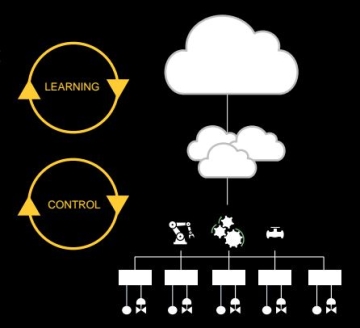
Wind River Launches "Wind River Titanium Control," a Software Virtualization Platform for Cost-Effective Enhancement of Legacy Control Systems Without IoT Connectivity Wind River announced the launch of "Wind River Titanium Control," a software virtualization platform for Intelligent Industrial Internet (IIoT). The product enables core infrastructure enterprises to cost-effectively modernize aging legacy control systems that do not support existing IoT connectivity, while supporting optimization of industrial processes through next-generation on-premises analytics.
2017.03.17by 김자영 기자
Wind River Wins Innovation Award for IoT Device Management Platform
Wind River announced that its IoT device management platform "Wind River Helix Device Cloud" has won the IoT Innovation Award at the IoT Excellence Awards. The IoT Excellence Awards evaluate and select products that support deduction and inference of information collected from sensors, systems, and various devices, thereby contributing to business and decision-making. Wind River announced that its IoT device management platform "Wind River Helix Device Cloud" has won the IoT Innovation Award at the IoT Excellence Awards. The IoT Excellence Awards evaluate and select products that support deduction and inference of information collected from sensors, systems, and various devices, thereby contributing to business and decision-making.
2017.04.27by 김지혜 기자
Wind River Supplies 'Device Cloud' for Remote Fire Truck Management
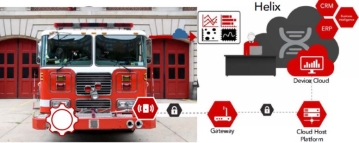
Wind River, a software leader for the Internet of Things (IoT), announced today that fire pump manufacturer Waterous has unveiled "Tellurus," the industry's first intelligent digital touchscreen control panel for water and foam pump regulation based on Wind River's technology. Tellurus significantly simplifies and shortens the preparation work of firefighters, ensuring that response times for life rescue and property protection in emergency situations are not delayed. Major fire departments in major cities across North America are operating Tellurus equipped on their fire trucks, and Waterous has adopted Wind River Helix Device Cloud to remotely update software, provide technical support for troubleshooting, and support device configuration for this innovation. Jonathan Gamble, Chief Product Engineer at Waterous, explained, "Our customer service group can now monitor and track each asset used in the field. We can see when each device is activated and operational, and as each device is assigned a unique serial number, we can maintain a complete history of every fire truck. As a result, we can ensure optimal performance through the remote service capabilities of the Device Cloud without having to dispatch service engineers to the field."
2017.06.01by 김자영 기자

[e4ds Tech Day 2026 ⑨] Sim Sang-gyu, Autocrypt CTO: "In the Physical AI Era, Automotive Security Must Extend Beyond the Vehicle"
At e4ds Tech Day 2026, Sim Sang-gyu, CTO of Autocrypt, explained automotive cybersecurity strategies in the era of Physical AI and SDV (Software-Defined Vehicle). Automobiles are evolving as part of an ecosystem connected to AI, cloud, chargers, IoT, and robots, and he emphasized that the scope of security must expand beyond the vehicle interior to the entire connected environment. In particular, AI model tampering, adversarial attacks, OTA updates, and EV charger hacking were identified as major threats. He explained that response measures require zero trust, AI model integrity protection, intrusion detection, Security by Design and Default, and full lifecycle security management, and that proactive security system establishment beyond regulatory compliance is critical for securing future mobility competitiveness.
2026.10.12by 배종인 기자

Practical HIL Construction Strategy for Automotive and Off-Highway Controller Validation
As vehicle E/E architecture transitions to zonal structures and shifts to software-defined vehicles (SDV), the number of controllers (ECUs) requiring validation and software complexity are surging dramatically. Meanwhile, real vehicle testing cannot provide repeated verification under identical conditions and entails lead time and safety concerns. This white paper explains the principles of HIL (Hardware-in-the-Loop) validation and the structure of the NI platform composed of PXI, SLSC, and VeriStand, and through two actual implementation cases—Camera Record & Replay HIL for In-Cabin Monitoring Controller (ICMU) and Forklift Controller (VCU) HILS—describes how controller-level regression testing becomes possible. Additionally, it explicitly states application boundaries and limitations, such as lack of A2B support.
2026.10.12by 편집부











