



Seminar Showcasing 'A to Z' of Autonomous Vehicle Technology Held
 Published2017.06.16 10:22
Seminar Hub held a seminar on June 14th (Wednesday) on the technology trends and future response strategies for autonomous vehicles in accordance with the Fourth Industrial Revolution. The event, sponsored by Autovein and ICN, ran from morning through afternoon.
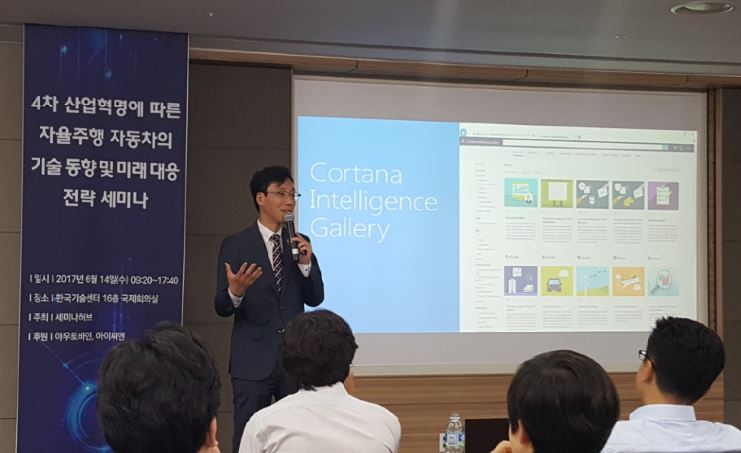
In the morning session, presentations were made on ▲value chain analysis and market analysis of core component technologies for autonomous vehicles ▲government policies and R&D status ▲ADAS development trends ▲5G communication technology trends.
Park In-woo, an analyst at automotive parts/autonomous driving, who gave the first presentation, explained the overall market from the concept of autonomous vehicles, technology composition, core technologies (radar/lidar/camera sensors, recording devices, V2X communication, precision maps, actuators, IVN-based integrated DCU, etc.), to business models.
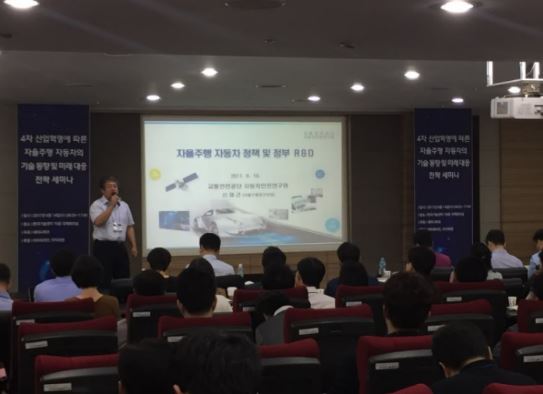
Dr. Shin from the Automobile Safety Research Institute of the Korea Transportation Safety Authority introduced the ongoing projects, stating, "The concern of whether we can reduce traffic fatality caused by driver responsibility has expanded into policies for strengthening vehicle safety standards and applying advanced safety devices."
Dr. Shin explained the Automated Command Steering Function (ACSF) and revealed that research is underway on the safety of "control handover" in a convergence form of Automated Lane Keeping (B2 ACSF), where the driver initiates but the vehicle maintains lane without commands/confirmation, and Automated Lane Change (E ACSF). Additionally, K-CITY, scheduled for first public release in the second half of this year, is a test bed that constructs conditions such as pedestrians and bus-only lanes, enabling repeated scenario reproduction.
In the afternoon session, the agenda covered ▲infotainment integrated system platform technology development trends ▲ADAS sensor semiconductor technology development trends ▲digital transformation strategy utilizing artificial intelligence and big data ▲future of AI-based autonomous vehicles ▲autonomous driving function safety system technical issues and response strategies.
"New Technology Needed to Reduce Traffic Accidents Caused by Human Factors"
Cha Jung-hoon, Executive Director at NVIDIA, who presented the future of AI-based autonomous vehicles, introduced the NVIDIA Drive PX platform (Drive PX2) equipped with the Xavier processor. While conventional supercomputers utilizing artificial intelligence are large enough to fill a trunk, the PX platform is about the size of a palm and capable of performing deep learning calculations of 30 trillion operations per second.
Data generated from cameras, lidar, radar, and various other sensors are combined. Subsequently, utilizing artificial intelligence, the 360-degree environment around the vehicle is identified, the vehicle's position on the HD map is determined, and potential risks that may occur during driving are predicted. Additionally, the system software is updated via OTA (Over the air) method, becoming smarter as time progresses.
The final presentation was given by Yeon Gyou-bong, Center Director at the Automotive Parts Research Institute, who introduced IVN (In-Vehicle Network) and Wireless Connectivity, as well as ISO 26262 functional safety issues. He emphasized, "The importance of multi-domain controllers is growing for the functional safety/high-safety systems of autonomous vehicles," stressing that securing reliability through joint cooperation among IVN, module suppliers, and OEMs is critical for application in vehicle safety systems.
Comments
Related news
[Planning-Autonomous Vehicles①] Domestic Technology 'Cannot Stand Alone' - Strategic Collaboration Ecosystem Must Be Established
The most striking aspect of the 2017 Seoul Motor Show that concluded last week was the first-time participation of NAVER, a leading domestic IT company. While IT companies developing automobiles is no longer an unfamiliar sight, the appearance of a leading domestic IT company at Korea's representative auto show holds significant symbolic meaning for the automotive sector. NAVER became the first domestic IT company to receive temporary road-driving approval from the Ministry of Land, Infrastructure and Transport for autonomous vehicles. Presenting a Level 3 autonomous vehicle, NAVER is developing autonomous vehicles as part of environmental implementation with 'living environment intelligence' as its technological direction. Prior to this, Hyundai Motor presented a Level 4 vehicle where the system can safely operate without driver intervention. Hyundai achieved autonomous driving by adding only minimal sensors such as radar and LiDAR to sensors already applied in mass-production vehicles.
2017.04.10by 김지혜 기자
[Reporter's Notebook] The World Uber Dreams Of and the World We Only Dream Of
Uber has been internally recruiting talent and investing in technology companies for several years to move into the autonomous driving market, and externally building its own maps to compete with rivals such as Google, Apple, Audi, BMW, and Daimler. In March 2015, the company acquired French mapping company deCarta, and in June of the same year acquired mapping technology and location information company Bing, absorbing approximately 100 Microsoft employees who were working in image collection and data analysis.
2017.04.10by 신윤오 기자
[Planning - Autonomous Vehicles ③] Camera, Lidar “Cars finally have eyes”
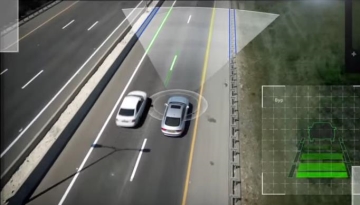
As commercialization of Level 3 autonomous driving technology begins, interest in advanced driver assistance systems is also increasing. ADAS systems serve as a foundation for autonomous vehicles, and while they initially primarily functioned to inform drivers of road conditions through notifications, they have recently advanced to the level of automatically controlling the steering wheel, brakes, and other components. The Genesis EQ900 is equipped with advanced driver assistance systems (ADAS) including Advanced Smart Cruise Control (ASCC), Blind Spot Detection (BSD), Autonomous Emergency Braking (AEB), Driver Attention Alert (DAA), Smart High Beam (SHBA), and front seat pre-active seatbelts. The new i30 wagon incorporates ADAS technologies such as Adaptive Cruise Control (ACC), AEB, and Lane Keeping Assist System. For these ADAS systems to operate, detection through cameras, lidar, and radar sensors is essential. When examining ADAS system installation by vehicle type, except for some small vehicles, either cameras alone or a combination of radar and stereo cameras are applied. Cameras can cover a range of up to 100m ahead, surround view, and rear areas. They function in a role that provides intuitive assistance to drivers by enabling actual visual observation. For autonomous driving, a minimum of 5 or more camera sensors per vehicle must be installed to achieve 360-degree full coverage detection.
2017.04.24by 김지혜 기자
MathWorks Provides TUV SUD Certification Guidelines for Agentic AI Workflows
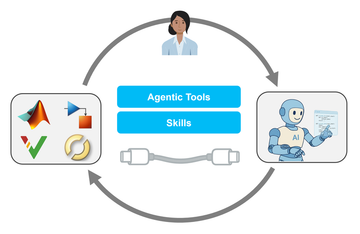
MathWorks has formalized certification guidelines for agentic AI workflows for safety-critical industries such as automotive and aerospace. This initiative, which includes AI tool classification guidelines based on ISO 26,262, presents methods to comply with functional safety standards while improving development efficiency through the use of Simulink Agentic Toolkit and Polyspace Agentic Toolkit.
2026.10.15by 배종인 기자
Chemical Economics Research Institute Holds Future Mobility and Robotics Materials Technology Seminar
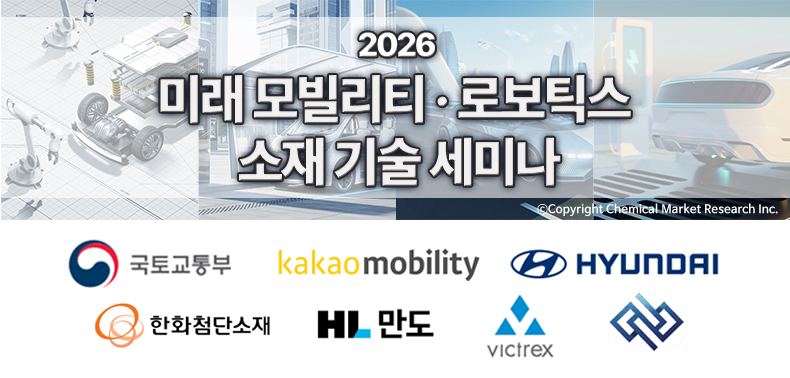
The Chemical Economics Research Institute will hold the "2026 Future Mobility and Robotics Materials Technology Seminar" on October 30 in Yeouido, Seoul. Government and private sector experts including the Ministry of Land, Infrastructure and Transport, Hyundai Motor, Kakao Mobility, HL Mondo, and Hanwha Advanced Materials will participate to share the current status and future direction of materials technology required for autonomous driving and robotics industries.
2026.10.13by 배종인 기자











