



[Issue] Healthcare Influence Concentrated on Doctors: Must We Abandon Domestic B2C?
 Published2017.06.19 15:54
It is pointed out that the 'smart healthcare' industry, one of the promising businesses of the Fourth Industrial Revolution era, remains stagnant due to being held back by domestic laws and regulations and insufficient standardization.
At the forum on 'Response Measures for the Healthcare Industry to Prepare for the 4th Industrial Revolution,' held on the 12th and hosted by the Korea u-Health Association and the Korea Testing Laboratory, participants voiced a consensus that legal systems must be improved and the market expanded through private sector leadership to expand smart healthcare services.
In the presentations preceding the discussion, Attorney Koo Tae-eon of Tech & Law spoke about the current framework of the Health Information Protection Act and the issues regarding legal and institutional improvements needed to expand healthcare services, while Professor Shin Soo-yong of the Department of Computer Engineering at Kyung Hee University introduced the 'Standardization Roadmap for Healthcare Artificial Intelligence.' At the event, Professor Shin emphasized the importance of standardization, stating, “We need to combine the healthcare data we possess, and to do so, standardization is essential. We must unify data storage methods and make them publicly available.”
During the expert panel discussion, a more in-depth discussion took place regarding the obstacles hindering the revitalization of the smart healthcare industry.
Voices were reiterated emphasizing that legal frameworks and technical standards must be resolved for healthcare technology to create new markets. Attorney Gu pointed out that the government's policy to eliminate regulations is merely lip service. He noted that while legal and technical experts should collaborate to research how to modify regulations, such efforts have not been consistently made. He urged that countermeasures must be devised jointly by the public and private sectors, as government-led efforts alone are insufficient to keep pace with technological advancements.
The issue of standardization has also come under scrutiny again. Professor Shin emphasized that standards are a matter of how data is handled. He noted that standards are not being used because data cannot be shared within the domestic medical system, and viewed it as the government's role to "ensure compliance with standards." The problem is that there are as many as five or six healthcare committees, making it chaotic, and since each ministry proceeds independently, it is difficult to share information with one another. It has also been argued that due to such strict regulations and insufficient standardization, it is difficult for B2C (Business to Consumer) to thrive in the healthcare sector.
Hong Seung-yong, Vice President of Neofect, expressed the difficulties of the domestic B2C healthcare market. He pointed out the reality that while it is legal for physical therapists and rehabilitation therapists to provide home visits in the United States, medical practice in Korea is illegal outside of hospitals because therapists are subordinate to doctors. Furthermore, he noted that due to privacy concerns regarding personal medical information, it is difficult to access and utilize accumulated patient data in Korea. For these reasons, he stated that despite being a domestically based company, they have no choice but to apply their services to the U.S. first and then seek market opportunities there.
Professor Shin argued, speaking on the premise that this is his personal opinion, that it is appropriate to abandon B2C in the medical field in Korea due to the Medical Act. To make this possible, we must move toward B2B2C, but there is another obstacle. Since it takes 3 to 4 years to obtain certification, one inevitably misses the timing for market launch.
Vice President Hong also agreed that doing so in Korea would not be easy. He suggested a solution, stating that too much influence in healthcare is currently concentrated in doctors and that the power held by doctors must be transferred to private companies.
Fortunately, there is a hopeful atmosphere regarding the fact that many regulations surrounding artificial intelligence have been relaxed following the Go match between Lee Sedol and AlphaGo last year, as interest in the field has grown. For instance, medical data can be collected and used with individual consent, and the scope of utilization expands even further if the cloud storage for this data is located in Korea. Opinions were also expressed that large corporations, rather than startups, should take the lead in establishing precedents for the healthcare business.
As the fact that the new government is putting the Fourth Industrial Revolution at the forefront is also being seen as a positive sign, more attention is being focused on solutions for smart healthcare regulations.
Comments
Related news
Will Biometrics Become the Killer Application for Healthcare Wearable Devices?
MIT Technology Review reported that China is leading the way in facial recognition technology, which is attracting attention as a next-generation biometric technology. China stated that it has already been able to distinguish people entering buildings using facial recognition, track criminals, and even process payments.
2017.03.20by 김지혜 기자
Apple and Google: Who Will Be First to Introduce a Healthcare Smartwatch?
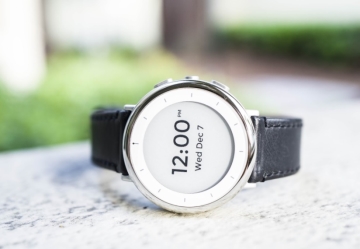
According to trends announced by DigiEco, Apple is developing a smartwatch capable of blood glucose monitoring without blood draws. If a non-invasive blood glucose monitoring sensor is developed, it is expected to usher in an era of smartwatches capable of collecting health data. U.S. CNBC reported that blood glucose monitoring sensor development has been planned since Steve Jobs' time, has undergone testing at clinical testing facilities, and is showing progress to the extent of recruiting experts to assist with legal certification procedures. Google has also unveiled Study Watch, a smartwatch for apparel research purposes. Verily, a life sciences subsidiary of Alphabet, announced the formal implementation of the Baseline Project for establishing biomarkers. This project collected data samples encompassing everything from cellular tissues to tears, urine, and other test results, conducting phase one testing on 175 subjects in the summer of 2014, and plans to expand it. Verily plans to conduct testing on 10,000 participants in collaboration with Duke Medical School and Stanford Medical School. The plan is to collect health-related data by providing sensors monitoring heart rate, skin electrical activity, and activity level; smartwatches capable of recording electrocardiogram data; terminals capable of monitoring sleep habits; and hub terminals necessary for data reception and transmission. Fourth quarter 2016 smartwatch shipments increased 16.9% compared to fourth quarter 2015. While terminals are increasing, they remain primarily low-cost fitness devices. Upon completion of Apple's and Google's projects, a new era of wearable terminals is expected to open, with shipments anticipated to increase substantially.
2017.04.21by 김자영 기자
KT, Healthcare Solutions in Africa… Expected to Eliminate Medical Blind Spots
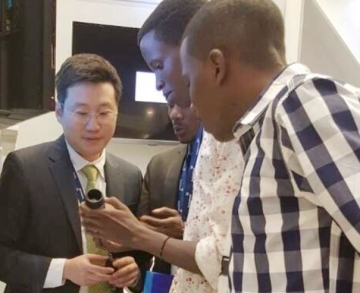
KT announced that it showcased Korean-style digital healthcare solutions at TAS 2017 (Transform Africa Summit 2017), which is being held in Kigali, the capital of Rwanda, from May 10 to 12. TAS is an international IT conference held once every two years following the Smart Africa Manifesto declaration. Since 2013, it has been co-hosted by the Rwandan government and ITU (International Telecommunications Union), with African leaders and major IT companies in attendance. This year, with smart cities as the theme, approximately 300 government and business officials from major African countries participated.
2017.05.11by 김자영 기자
ESP32 Development Environment Selection and GPS Application Implementation
The ESP32 is a microcontroller that integrates Wi-Fi, Bluetooth, 12-bit ADC, capacitive touch, PWM, DAC, and UART in a single SoC. However, the abundance of features does not by itself solve the designer's problems. The real challenges lie in selecting the appropriate development environment, determining which pins can be used and which must be avoided, and converting raw data from modules into usable information. This document addresses ESP32 peripheral constraints (ADC2 and Wi-Fi coexistence limitation, UART1 occupancy, ADC non-linear regions), the trade-offs between Arduino IDE and ESP-IDF, and the process from connecting NEO-6M/NEO-M8N GPS modules to UART2, parsing NMEA sentences, and visualizing routes in Google Earth, all organized based on documented references.
2026.10.12by 편집부

MIPI CSI-2, DSI-2, C-PHY, D-PHY Test Solution Technical White Paper
The MIPI interface adopts a burst mode that transitions between low-power (LP) and high-speed (HS) states for low-power consumption, and in return, strict timing rules are imposed on state transitions. Additionally, the high-speed section operates as a packet-based protocol with headers, ECC, and CRC, so verification engineers must handle waveforms and protocols simultaneously. Traditional configurations combining general-purpose oscilloscopes and AWGs reveal limitations in setup complexity, measurement uncertainty, and lack of reproducibility when faced with these requirements. This white paper, based on webinar materials, organizes the structure of this problem and describes how the SV5C-DPTXCPTX generator for receiver testing and SV5C-DPRXCPRX analyzer for transmitter testing integrate state transition testing, stressed eye testing, and protocol analysis into a single bench, along with their application boundaries.
2026.10.12by 편집부











