



[Discussion] "The Future: Coexistence of Mixed Reality and New Media, HMD Devices Must Be Actively Developed"
 Published2017.06.26 11:30
The Fourth Industrial Revolution will be a hybrid of mixed reality (MR) and new media.
A symposium titled "The Fourth Industrial Revolution and Technology - Augmented Reality" was held on the 23rd. Presenters and discussants included Yoo Beom-jae, a senior researcher at the Korea Institute of Science and Technology (KIST), and Yoon Shin-young, editor-in-chief of Science Dong-A.
Yoo Beom-jae, the head of the new media department, described it as a coexistence space, an expanded space through real-world interaction and human interaction. "Real-virtual-remote space" becomes a single space. Users expand this space through immersive interaction and human interaction with others through avatars or smart devices.
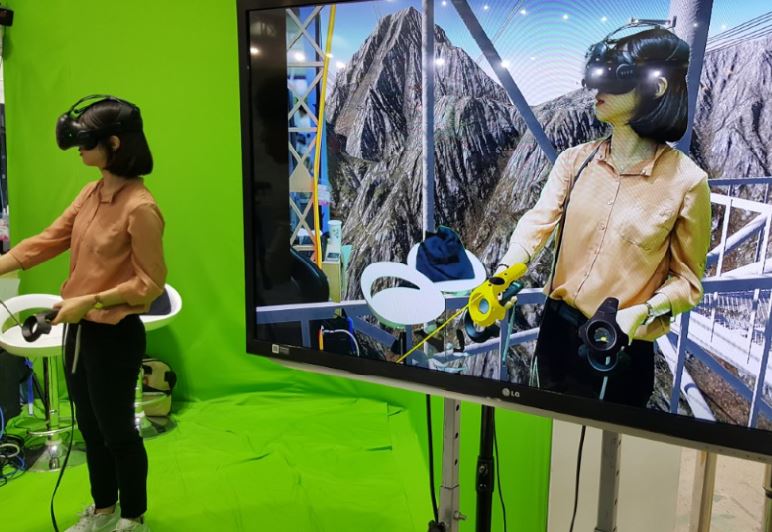
The reason he began studying coexistence space is the same reason why the smartphone market has quickly become established. Although the number of single-person households is increasing, the value of "alone and together" is becoming increasingly widespread on social media platforms, and this is what is driving the second smartphone market.
Facebook's Social VR, announced earlier this year, sees participants wearing Oculus HMDs and engaging in card games or swordfights in a virtual space. On Wednesday, the 21st, Google announced the "XE23" update, which adds Bluetooth support to Google Glass, three years after its launch. This demonstrates Facebook and Google's ongoing research into coexisting reality. Researcher Yoo said that although there is an HMD (Head Mounted Display) device and controller as an interface, ▲4D+ real-time modeling and expression technology of human avatars and objects ▲real-time 4D+ interaction and collaboration technology between users, virtual objects, and users ▲real-time modeling and expression technology of indoor environments are needed to expand realistic interaction.
Domestic researchers, including KIST and KAIST, are developing related technologies, including a 'Haptic Ring' that can be worn like a ring and a technology that recognizes movement intentions based on skin electromyography signals by wearing a band on the forearm. Additionally, data on coexistence spaces such as KINTEX and Gangnam Station was collected using lidar sensors.
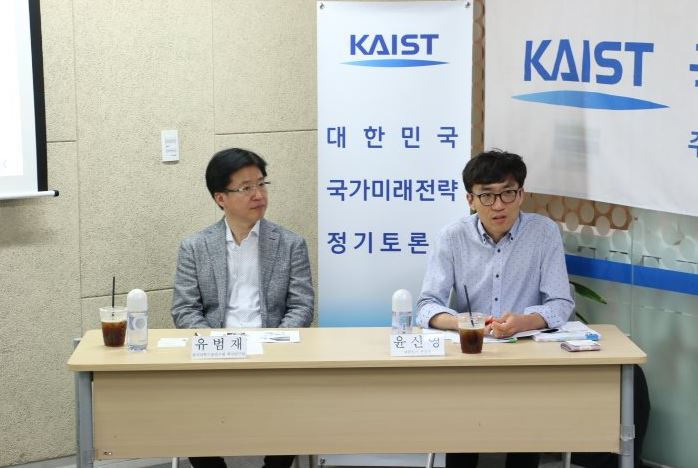
After the presentation, questions and suggestions were raised about the practical application of virtual reality, how to address it, and the changing nature of our lives and values. Editor-in-Chief Yoon Shin-young stated, "Devices have evolved to provide assistance to humans," expressing her hope that coexistence reality could address social issues such as single-person households and rural marginalization.
When asked about promising business areas, he acknowledged the potential value, but pointed out the passive HMD device development market and mentioned Hololens, which is currently under development by American startups (Dagri, ODG).
“To reach the practical stage, 10 functions must be implemented in a compressed form, such as rendering graphic data, interpreting the camera in real time, compressing and transmitting information, and interacting. There are doubts such as ‘Can this be possible for a startup?’”, but he urged active participation, saying, “There must be failures to think about the next step.”
The National Future Strategy regular discussion meeting is held every Friday, and this week's discussion topic (the 30th) is wearable devices.
Comments
Related news
[Shut Up and Try It] Mixed Reality Applied to Architecture, This Is a 'Gem'
On the 27th of last month, Trimble, a specialized company in construction 3D BIM technology, published an article stating plans to introduce wearable holographic technology to the construction industry through collaboration with Microsoft. Based on the number of views and survey responses, it was possible to gauge how intense readers' interest in mixed reality, virtual reality, and augmented reality was. Therefore, this time the reporter set out to experience hologram 'mixed reality' firsthand.
2017.04.10by 김자영 기자
KETI Supports VR/AR Technology Innovation
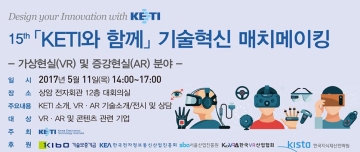
The Korea Electronics Technology Institute (KETI) announced that it will host a 'Virtual Reality (VR) and Augmented Reality (AR) Technology Innovation Matchmaking' event on the 11th in Sangam. The technology innovation matchmaking was designed to promote the commercialization of public technology by identifying demand enterprises and supporting technology transfer and commercialization. This event was prepared to support the development of the VR/AR industry and provide close business support to companies, and is sponsored by the Technology Credit Guarantee Fund, Korea Electronics Information and Communications Industry Association, Seoul Industrial Promotion Agency, Korea VR Industry Association, and Korea Intellectual Property Strategy Institute.
2017.05.10by 김지혜 기자
The Slow Popularization of VR/AR Can Be Found in Convergence Technology
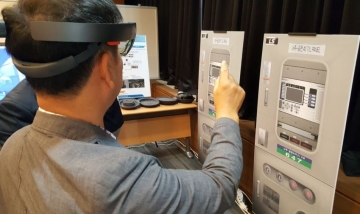
A venue has been established to view at a glance the current state of VR and AR technologies as well as hologram technology. This is the 15th Technology Innovation Matchmaking event hosted by KETI, which connects technologies developed with small and medium-sized enterprises. The Electronics and Telecommunications Research Institute (KETI) introduced nine related technologies: ▲hologram printing ▲experiential sportainment VR ▲power facility visualization using VR/AR ▲virtual training collaborative platform ▲non-contact NUI/NUX ▲3D convergence performance evaluation and VR/AR demonstration technology ▲3D virtual digital manufacturing. Various technologies were demonstrated, including a device that appears as a VR driving game, TVs, and ski VR equipment. The first technology that caught attention was the 'smart substation' technology that KETI jointly developed with Korea Electric Power Corporation in February. It can 3D scan from basement level 1 to above-ground floor 3 and view the modeled facility environment in real-time AR.
2017.05.15by 김자영 기자

ESP32 Development Environment Selection and GPS Application Implementation
The ESP32 is a microcontroller that integrates Wi-Fi, Bluetooth, 12-bit ADC, capacitive touch, PWM, DAC, and UART in a single SoC. However, the abundance of features does not by itself solve the designer's problems. The real challenges lie in selecting the appropriate development environment, determining which pins can be used and which must be avoided, and converting raw data from modules into usable information. This document addresses ESP32 peripheral constraints (ADC2 and Wi-Fi coexistence limitation, UART1 occupancy, ADC non-linear regions), the trade-offs between Arduino IDE and ESP-IDF, and the process from connecting NEO-6M/NEO-M8N GPS modules to UART2, parsing NMEA sentences, and visualizing routes in Google Earth, all organized based on documented references.
2026.10.12by 편집부
MIPI CSI-2, DSI-2, C-PHY, D-PHY Test Solution Technical White Paper
The MIPI interface adopts a burst mode that transitions between low-power (LP) and high-speed (HS) states for low-power consumption, and in return, strict timing rules are imposed on state transitions. Additionally, the high-speed section operates as a packet-based protocol with headers, ECC, and CRC, so verification engineers must handle waveforms and protocols simultaneously. Traditional configurations combining general-purpose oscilloscopes and AWGs reveal limitations in setup complexity, measurement uncertainty, and lack of reproducibility when faced with these requirements. This white paper, based on webinar materials, organizes the structure of this problem and describes how the SV5C-DPTXCPTX generator for receiver testing and SV5C-DPRXCPRX analyzer for transmitter testing integrate state transition testing, stressed eye testing, and protocol analysis into a single bench, along with their application boundaries.
2026.10.12by 편집부











