



Sundol drones, leave the pesticide spraying to us.
 Published2017.07.04 17:19
As drone technology advances, agriculture is the most widely utilized sector. According to the Association for Unmanned Vehicle Systems International (AUVSI), agricultural drones are projected to account for 80% of the future commercial drone market.
By attaching a camera to a drone, it is possible to obtain real-time growth information, conduct surveys to analyze soil conditions, and even scan the ground surface to adjust the altitude to spray precise amounts of pesticides.
Sundol Drone is an agricultural drone used to spray pesticides and fertilizers. Its fully autonomous system not only enables autonomous flight, but also automates direction changes, spraying, and even returning to the field. If spraying is interrupted by a run-off of pesticide, the drone automatically detects the spray and returns to its original position. After re-application, the drone detects the spray and returns to its original position without the need for re-adjustment, preventing repeated spraying.
Equipped with an altitude sensor, it maintains its altitude above the crop and uses downward wind to create a vortex on the ground, ensuring even distribution of pesticides. Simply change the nozzle according to the crop, and it can be used anywhere, including rice fields, orchards, and fields.
It has been certified as suitable by the Practical Application Foundation, which tests the quality and suitability of machines, and has also established an after-sales service network with 9 regional headquarters and 35 regional sales offices across the country.
A representative of Sundol Drone said, “The advantage of Sundol is that it is easy to operate. “Anyone, even a beginner, can learn and operate it in a week,” he said. “Another competitive edge is the price. Since it’s a drone, there are cases where it falls, but even if it does, the wings or body are not damaged, but the legs are broken.”
When the battery is charged to 95% capacity, it can fly for 30-40 minutes, and the drone weighs 13.5 kg (excluding the battery and medicine), ensuring easy portability. Drone training is also available for beginners. While an "ultralight aircraft license" is required to fly a drone, a license is not required for non-commercial purposes, such as spraying pesticides in rice paddies or fields, regardless of drone weight.
Comments
Related news
[Just Try It Out] After Watching a Drone Battle, I Tried Piloting a Drone Myself
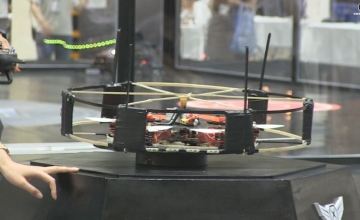
If the aircraft crashes to the ground due to collision with another aircraft and cannot resume flight, it's a K.O. If the aircraft cannot fly due to a malfunction before the match starts, it's a TKO. Penalties are imposed if a participant avoids engagement without attacking. After the round ends, penalty recovery can also result in a judgment victory. If ground combat between robots is BattleBots, then aerial combat is "Drone Clash." On the 23rd (Friday), drones clashed at the COEX Smart Tech Show. "Please pay attention. The match can end the moment of collision." Along with the announcer's commentary, participants took the stage. It was a showdown between drone developers. Participant Park Ho-jun, holding a lightsaber, appeared with an LED-decorated drone called "Fancy Fox." His opponent, Hyung Myung-gil, calmly took the stage with his drone "Striker." (See video below) Park Ho-jun, who suffered a loss in the match, said, "It seems I put a lot of effort into the design. Next time, I will build the aircraft for combat and challenge again," throwing down the gauntlet, and Hyung Myung-gil responded with, "I'll be waiting anytime."
2017.06.26by 김자영 기자
Future Growth Industries: Robots and Drones, How Far Have We Come?
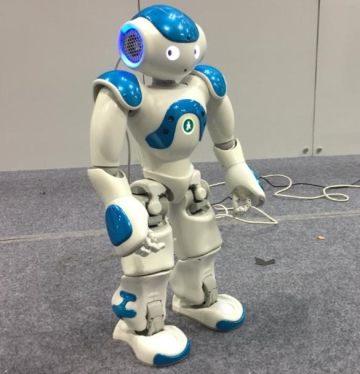
An opportunity has been created to see at a glance how robots and drones are being used across various fields. The 'RoboUniverse & K Drone Summit' will be held at Ilsan KINTEX from the 28th to the 30th. The RoboUniverse Summit is an international exhibition that tours seven cities worldwide, comprehensively covering IOE (Internet Of Everything)-based robot technology, marking the second edition following last year. This year will feature the Mayor of Jeonju Cup National Drone Soccer Tournament, KT Drone Racing Tournament, robot competition and other events, as well as exhibitions of various drones and robots including agricultural drones, maritime drones, and unmanned delivery drones. Over four days, conferences will be held on the themes of artificial intelligence, robots and drones.
2017.06.28by 김지혜 기자
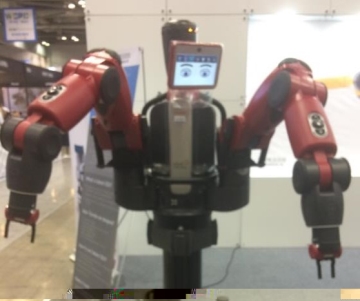
Collaborative robots can be operated manually without programming.
The Robo Universe & Drone Exhibition featured not only domestic robots, but also collaborative robots applicable in manufacturing plants. Gaiyetech Korea's collaborative robot 'Baxter' is a safe robot that can work in close proximity to humans without protective barriers in production environments. Baxter can be trained easily in just a few minutes without specialized knowledge of software or robotics. It can recognize its work environment autonomously and automatically adjust according to changes. The key features are a 360-degree sonar sensor that can detect human presence, a front-facing camera, and torque-sensing joints that enable it to work in the same space alongside people for collaborative tasks.
2017.07.04by 김지혜 기자
ESP32 Development Environment Selection and GPS Application Implementation
The ESP32 is a microcontroller that integrates Wi-Fi, Bluetooth, 12-bit ADC, capacitive touch, PWM, DAC, and UART in a single SoC. However, the abundance of features does not by itself solve the designer's problems. The real challenges lie in selecting the appropriate development environment, determining which pins can be used and which must be avoided, and converting raw data from modules into usable information. This document addresses ESP32 peripheral constraints (ADC2 and Wi-Fi coexistence limitation, UART1 occupancy, ADC non-linear regions), the trade-offs between Arduino IDE and ESP-IDF, and the process from connecting NEO-6M/NEO-M8N GPS modules to UART2, parsing NMEA sentences, and visualizing routes in Google Earth, all organized based on documented references.
2026.10.12by 편집부
MIPI CSI-2, DSI-2, C-PHY, D-PHY Test Solution Technical White Paper
The MIPI interface adopts a burst mode that transitions between low-power (LP) and high-speed (HS) states for low-power consumption, and in return, strict timing rules are imposed on state transitions. Additionally, the high-speed section operates as a packet-based protocol with headers, ECC, and CRC, so verification engineers must handle waveforms and protocols simultaneously. Traditional configurations combining general-purpose oscilloscopes and AWGs reveal limitations in setup complexity, measurement uncertainty, and lack of reproducibility when faced with these requirements. This white paper, based on webinar materials, organizes the structure of this problem and describes how the SV5C-DPTXCPTX generator for receiver testing and SV5C-DPRXCPRX analyzer for transmitter testing integrate state transition testing, stressed eye testing, and protocol analysis into a single bench, along with their application boundaries.
2026.10.12by 편집부











