


[Planning - Autonomous Vehicles⑧] Cybersecurity is the key to preventing autonomous vehicles from becoming "running weapons."
 Published2017.07.17 06:33
하드웨어는 키 관리, 소프트웨어는 인증서, 물리적 보안도 고민해봐야 해
꿈이 현실이 됐다, 라는 말이 가장 잘 어울리는 기술이 있다면 바로 그것은 자율주행 자동차일 것이다. 자동차를 부르면 알아서 달려오고, 또 스스로 목적지까지 주행한다. 자율차는 주행 중 장애물을 인식해 피하고 주인에게 각종 편의와 정보를 제공한다. 완전 자율주행차의 상용화는 좀 시간이 걸리겠지만 소위 말하는 ‘반 자율주행차’ 기술은 갈수록 고도화되고 있다. 이제 자율주행 기능을 갖춘 자동차 광고도 쉽게 볼 수 있을 정도로 우리 생활 깊숙이 다가왔다. 본지는 앞으로 11회에 걸쳐 자율주행차 기획을 연재한다. 자율주행차 산업 트렌드를 시작으로 레이더, 라이다, 카메라센서 등 반도체 부품, 통신, 정밀지도, SW플랫폼, 인공지능, 보안, K-City 서비스 등을 다룬다. 독자 여러분의 많은 성원을 부탁 드린다. <편집자 주>
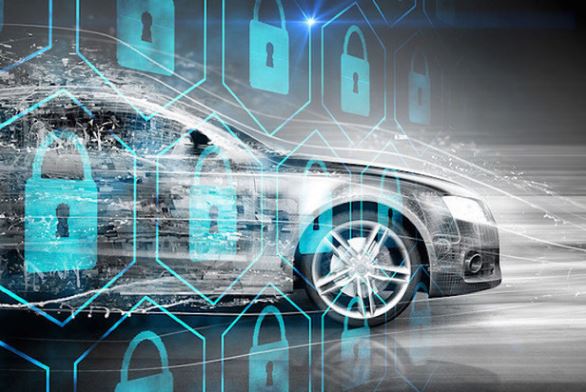
사진출처: 펜타시큐리티
운전자의 제어권을 차량으로 넘기는, 자율주행 기술 레벨 4단계 이상을 실현하기 위해서는 더욱 강력한 보안 기술이 요구된다. 운전자에게 차량 시스템 오류나 해커의 접속 등 자율주행차가 위협요인에 노출되더라도 안전하다는 신뢰를 주어야 하기 때문이다.
차량 반도체 업체 르네사스, 인피니언, NXP, 맥심 등은 일찍이 하드웨어 보안 모듈(Hardware Security Module: HSM)을 적용해왔다. HSM은 중앙에서 키를 두고 암호화해 전달하는 키 관리 역할을 지원한다.
HSM은 2008년~2011년까지 운영한 EVITA(E-safety Vehicle Intrusion proTected Applications)가 스마트카와 커넥티드카가 발전하며 취약한 ECU 보안에 대해 규정한 모듈로 ECU용 보안인 1단계, 차내 ECU간 통신보안인 2단계, 외부 통신 간 보안인 3단계로 구분된다.
지난해 삼성이 인수한 하만의 보안업체 타워섹(Toursec)은 텔레메트릭스를 지원하는TCU(telecommunication control unit)에 직접 소프트웨어 방어막을 설치하는 솔루션을 내놓기도 했다.
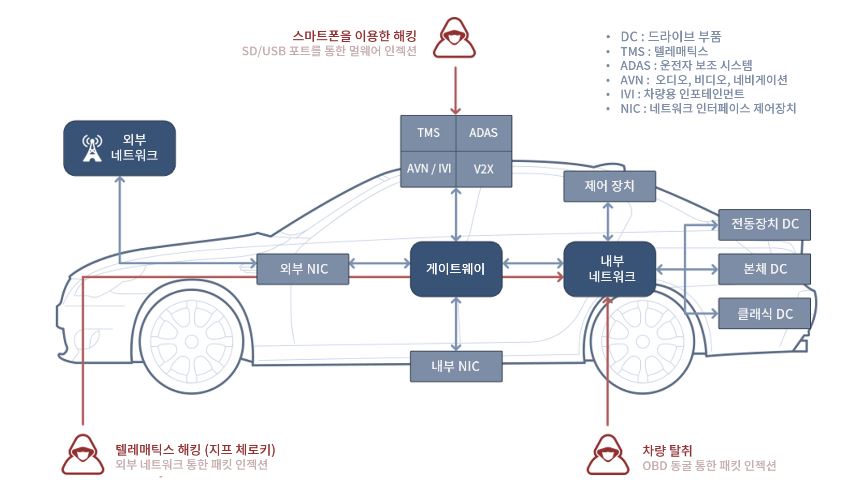
사진출처: 펜타시큐리티
차량 ECU 해킹사례는 유례가 없지만, 사이버 보안은 이미 해킹사례가 나왔다. 테슬라S는 OTA(Over-the-Air)로 패치를 제공했지만, 피아트크라이슬러와 GM은 보안위협으로 리콜까지 강행해야 했다.
NXP와 현대모비스는 올해 2월 Auto-ISAC(Automotive Information Sharing and Analysis Center)에 가입해 사이버보안 강화에 나섰다. 차량 관련 OEM들이 참여하는 협의체인 Auto-ISAC에는 보쉬, LG전자, 허니웰 등이 가입해 활동 중이다.
자동차의 컴퓨터화, 자동차 보안은 결국 사이버 보안
사이버 보안은 SAE J3061이 국제 표준으로 통용되고 있다. OEM과 보안업체별 솔루션의 차이가 있지만, 국내 업체 중 펜타시큐리티는 3단계로 보안 솔루션을 제공하고 있다. ▲차량 내 게이트웨이에 설치해 겉모습과 속성을 판별해 차단하는 방화벽(Firewall) ▲ECU 간 통신에 활용되는 키 관리(Key Management System: KMS), ▲외부 통신 보안에 프라이버시를 보장하는 인증서관리기술(PKI)로 구성된 아우토크립트(AutoCrypt)다.
특히 자율주행은 달리며 자신의 위치를 주변에 ‘뿌리는’ 형태로 프라이버시에 대한 우려가 심각한데, 이를 5분마다 20개의 인증서를 랜덤하게 사용하는 PKI 인증서로 예방한다. 20개의 인증서는 일주일 간격으로 교체해 1년간 약 1천개의 인증서를 사용한다. 미국 CAMP VSC와 SCMS(Security Credential Management System) 규격을 충족시킨 인증서 관리 기술이다. V2X통신 보안은 IEEE1609.2가 정의하는 글로벌 표준을 따랐다.
■ 인터뷰
심상규 공학박사 / 펜타 시큐리티 IoT융합보안 연구소 소장
"완전한 보안은 몇천만 원, 실제 가능한 비용은 몇천 원…
자율주행차 보안 화이트리스트로 구축하게 될 것"
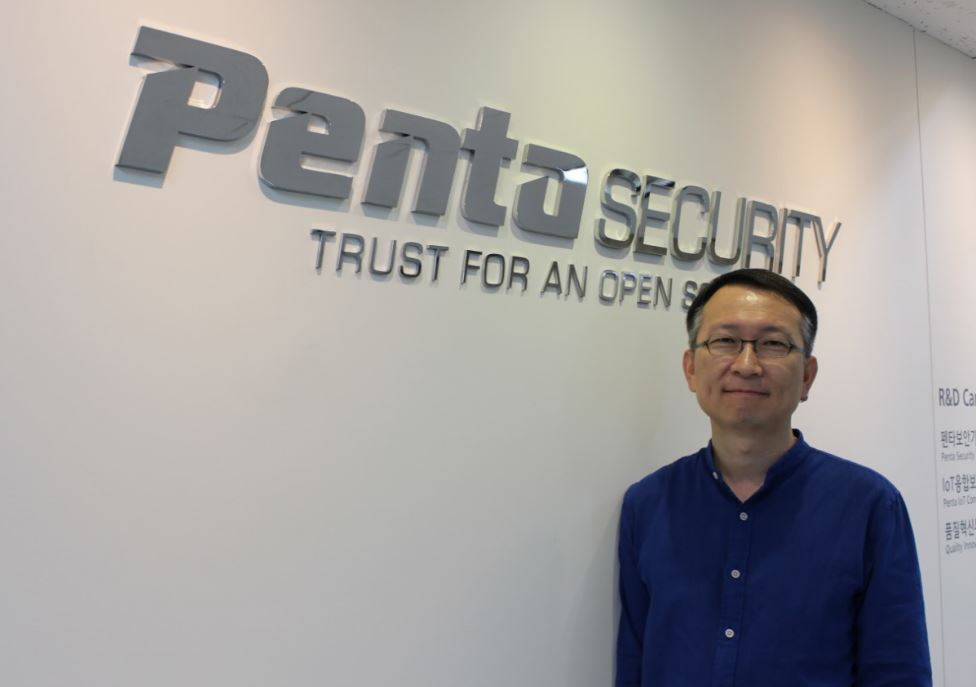
Q. 차량 회사에서 ECU 단계에서 보안을 강화하고, 사이버 보안을 지원하면, 보안은 안전한 것이라 볼 수 있나?
“기존에는 문을 못 열게 하는 데만 집중하지 않았나. 물리적 보안이 추가로 필요하다. 보이지 않는 곳에 구멍을 뚫어 차량 네트워크에 해킹시스템을 붙이게 되면 속수무책으로 당할 수밖에 없다.
게이트웨이 방화벽이 외부통신에서 차량 내부로 유입되는 보안위협을 막아내는 기술이라면 내부통신을 안전하게 하는 보안 기술을 고민해볼 필요가 있다. 예로, 차량 내부 네트워크를 암호화한다든지, 인가되지 않은 기기가 네트워크에 참여하는 것을 감지하는 기술들이 있다"
Q. 보안을 안전하게 갖추려면 얼마정도 필요한가?
"차량마다 하드웨어와 소프트웨어 보안을 모두 충족하려면 한 대당 몇천만 원정도다. 미국의 도로교통안전국(NHTSA)의 NPRM 문서는 V2X통신을 차량마다 135달러~ 301달러로 의무화하겠다는 내용을 담았는데 여기서 보안은 많아 봐야 10%다. 단가로 보면 몇천 원 정도다. 결국, 허용한 리스트 내에서만 프로토콜을 허용하는 화이트리스트 방식의 보안이 폭넓게 적용될 것으로 예상된다”
Q. 운전자의 비용 부담을 줄이려면 V2X인포테인먼트나 관련 산업을 활성화해 기업의 투자가 이뤄지는 방안으로 진행하면 되지 않나
"V2X통신을 활용한 관련 산업은 무궁무진하다. 이미 나오고 있는 것도 많고. 외국에는 운전자 패턴을 저장했다가 온라인 보험사에 전송해 보험료를 깎아 주는 시큐어 스토리지를 추진하고 있다. 또, 차량 OEM에서도 초기 1세대 제품을 출시할 때 OTA방식을 고려하고 있다. 버그를 실시간으로 점검할 수 있어 리콜을 막는 수단으로 V2X통신을 활성화할 수 있다"
Q. 정부 정책은 자율주행 보안에 대해 어떻게 추진하고 있나?
“현재로서 자동차 보안은 차량 제조사에 달려있다. 국토부는 스마트 도로를 구축하고 있지만, 내부통신까지 관여하고 있지는 않다. 오히려 산업통상자원부에서 제조사를 통해 관여할 수도 있다. 정부는 스마트 도로가 구축되고 나면 그 위를 달리는 자동차에 대해 고민할 때 보안을 의무화하는 방향으로 추진하게 될 것으로 본다.”
Comments
Related news
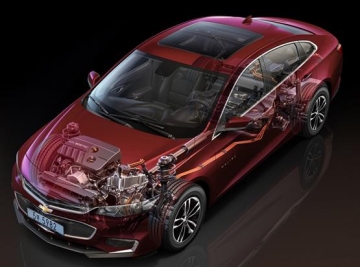
[Planning-Autonomous Vehicles⑤] 'Running SW' Artificial Intelligence Cars, Software Dominates
Vehicles with electrified systems are commonly referred to as "running semiconductors." However, as the importance of software that drives these electronic devices grows, it may now be appropriate to call automobiles "running software." Whereas the previous trend was to install various functions for vehicle stability and convenience, with accompanying software (SW) to operate them, automobiles are increasingly becoming software-centric. Vehicle software can be divided into electronic component SW platforms and infotainment platforms. In the electronic component SW platform, AUTOSAR (automotive open system architecture), an open-standard automotive software, is at the center. AUTOSAR comprises 9 core partners with approximately 50 member companies, including BMW, Bosch, Continental, Daimler, Ford, GM, Peugeot Citroën, Toyota, and Volkswagen as core partners, consisting of 7 OEM companies and 2 Tier 1 suppliers. The purpose of AUTOSAR is to address the growing complexity of software as electronic devices increase, and to reduce costs by enhancing software reusability.
2017.05.22by 김지혜 기자
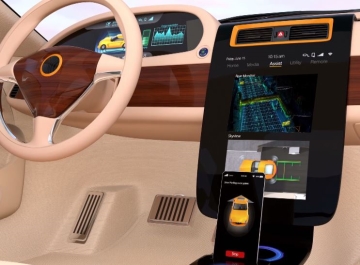
[Planning - Autonomous Vehicles⑥] Precision Road Maps, the Last Puzzle Piece for the Autonomous Vehicle Era
Germany's three premium automakers—BMW, Mercedes-Benz (Daimler), and Audi—joined forces to acquire a company called HERE. At the 2017 CES, Hyundai Motor showcased an autonomous vehicle and evaluated that "this" played the largest role in autonomous driving technology. There is also commentary that Tesla, which caused a fatality with an autonomous vehicle last year, could have prevented the accident if it had "this." What is the common point in the actions taken by these companies representing the current automotive industry? It is "maps." HERE is a representative digital map specialist company, the best technology that Hyundai Motor praised itself for is maps, and Tesla also pointed out the limitations of 3D maps. Recently, cutting-edge "sensor" technologies such as lidar and radar are rapidly advancing, so why is the necessity of "high-precision maps" for autonomous driving being raised? The industry refers to maps as "another sensor" that can serve as a lifeline when cameras, communications, and sensors all fail simultaneously.
2017.06.05by 김자영 기자
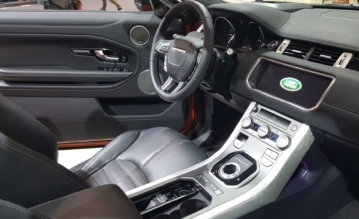
[Planning-Autonomous Vehicles ⑦] ISO 26262: Now a Necessity, Not an Option—Is Korea Ready?
"When autonomous vehicles become widespread, traffic accident rates can drop close to 0%." This is the assertion of Chen Liu, former Policy and Strategy Planning Director at the U.S. National Highway Traffic Safety Administration (NHTSA). According to U.S. traffic accident statistics, 94% of traffic accidents result from driver error. He viewed autonomous vehicles as a solution to accidents caused by human factors such as drunk driving, speeding, and drowsy driving. While there are positive assessments that autonomous vehicles reduce traffic accident risk, there are also negative perspectives. According to a survey by Sungkyunkwan University's SSK Risk Communication Research Group, when anxiety about autonomous vehicles was rated on a scale of 100, it scored 48.5 points—the closer to 0, the "very anxious." The factors causing anxiety ranked highest for malfunction concerns, followed by response to emergencies, external hacking, pedestrian accidents, personal information leaks, and rear-end collisions, with most concerns related to safety and security.
2017.06.26by 김지혜 기자

[e4ds Tech Day 2026 ⑨] Sim Sang-gyu, Autocrypt CTO: "In the Physical AI Era, Automotive Security Must Extend Beyond the Vehicle"
At e4ds Tech Day 2026, Sim Sang-gyu, CTO of Autocrypt, explained automotive cybersecurity strategies in the era of Physical AI and SDV (Software-Defined Vehicle). Automobiles are evolving as part of an ecosystem connected to AI, cloud, chargers, IoT, and robots, and he emphasized that the scope of security must expand beyond the vehicle interior to the entire connected environment. In particular, AI model tampering, adversarial attacks, OTA updates, and EV charger hacking were identified as major threats. He explained that response measures require zero trust, AI model integrity protection, intrusion detection, Security by Design and Default, and full lifecycle security management, and that proactive security system establishment beyond regulatory compliance is critical for securing future mobility competitiveness.
2026.10.12by 배종인 기자

Practical HIL Construction Strategy for Automotive and Off-Highway Controller Validation
As vehicle E/E architecture transitions to zonal structures and shifts to software-defined vehicles (SDV), the number of controllers (ECUs) requiring validation and software complexity are surging dramatically. Meanwhile, real vehicle testing cannot provide repeated verification under identical conditions and entails lead time and safety concerns. This white paper explains the principles of HIL (Hardware-in-the-Loop) validation and the structure of the NI platform composed of PXI, SLSC, and VeriStand, and through two actual implementation cases—Camera Record & Replay HIL for In-Cabin Monitoring Controller (ICMU) and Forklift Controller (VCU) HILS—describes how controller-level regression testing becomes possible. Additionally, it explicitly states application boundaries and limitations, such as lack of A2B support.
2026.10.12by 편집부











