


[Interview] TI's Driver Assistance SoC Provides Everything You Need for ADAS Design
 Published2017.07.17 14:25
Support for SoC, software, and reference
As a number of recent collisions involving large buses have occurred due to drowsy drivers, calls for mandatory installation of advanced driver assistance systems (ADAS) are growing louder.
The "Enforcement Decree and Enforcement Rules of the Traffic Safety Act," partially revised in April, will take effect on the 18th of this month. This mandates the installation of a Lane Keeping Assist System (LDWS) on large commercial vehicles, such as buses and cargo trucks, to warn drivers of unintentional lane departures, such as those caused by drowsy driving.
ADAS encompasses six systems: LDWS, Forward Collision Warning Systems (FCWS), Intelligent Parking Assist Systems (IPAS), Computational Navigation Systems (CNS), Rear Park Assist Systems (RPAS), and Pedestrian Detection Systems (PCWS). Because ADAS technology relies on cameras to recognize situations, performance varies by product.
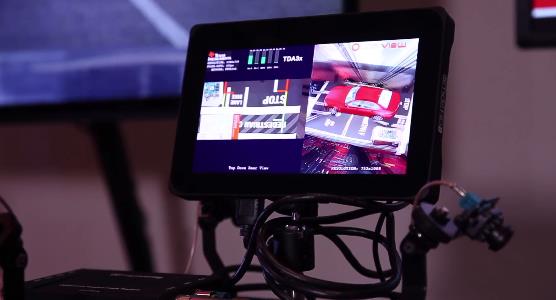
Automotive companies want to leverage existing hardware components and software without compromising system performance. Heterogeneous architectures allow for increased functionality within a single platform. To address this, Texas Instruments (TI) offers a multi-OS, multi-domain software architecture.
TI offers the TDA driver assistance SoC as an ADAS solution. This product family provides open, scalable solutions based on a common hardware and software architecture for ADAS applications such as camera-based front, rear, surround view, night vision systems, multi-range radar, and sensor fusion systems.
The TDAx SoC features a heterogeneous architecture that integrates specialized hardware accelerators (HWAs) such as an Image Signal Processor (ISP), an Embedded Vision Engine (EVE), and a Digital Signal Processor (DSP). The TDA2x comprises dual Cortex-M4 cores, each with two ARM Cortex-A15s running at 200MHz, and four EVEs.
“This SoC allows for simultaneous execution of front camera applications and implementation of parking assistance applications, including intelligent 2D/3D surround view and rear collision warning,” said Jongpil Park, Senior Researcher at WT Technology FAE. “It is designed to execute low- to mid-level image processing functions.”
The TDA3x offers lower-level processing than the TDA2x and does not include an ARM Cortex-A15 processor. It can accept four camera inputs and has an EMIF (External Memory Interface) that connects to DDR memory. Safety-related modules supporting ASIL B level are also provided.
It is suitable for ADAS applications such as 3D surround view, smart rear camera, radar, camera mirror replacement, driver monitoring, and lidar without using GPU. It also provides a vision software development kit (SDK) that allows ADAS functions to be implemented in the same platform environment, from compact cars to large luxury vehicles, through various built-in software libraries.
Senior Researcher Jongpil Park said, “We provide the appropriate tools and software support, DSP, EVE example programs, and references necessary to realize ADAS functions,” adding, “Compared to other products, our performance is high for the price.”
Comments
Related news
TI Launches Automotive-Standard Hub IC for Designing ADAS Applications
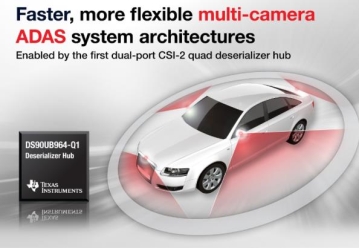
TI announced that it is launching the industry's first dual-port quad deserializer hub product that meets the MIPI Camera Serial Interface 2 (CSI-2) specification. This new automotive-grade hub IC can simultaneously aggregate and replicate high-resolution data from up to four cameras. Additionally, autonomous driving and sensor fusion-based ADAS systems such as surround view systems, rear-view cameras, driver monitoring cameras, camera monitoring systems, front-view camera systems, and satellite radar equipment require high data throughput and precision.
2016.10.19by 홍보라 기자
u-blox Deploys V2X Module Enabling ADAS
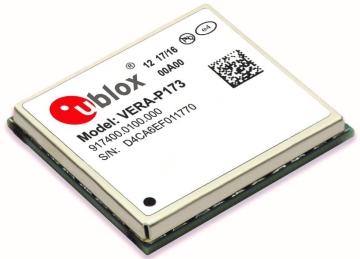
The VERA-P1 module is the latest version in u-blox's series of automotive-grade transceiver modules compliant with the IEEE 802.11p standard, enabling next-generation Advanced Driver Assistance Systems (ADAS) that will deliver autonomous driving experience. Costas Meimetis, Director of Product Strategy for Short-Range Wireless Technology at u-blox, stated, "With the introduction of the VERA-P1 module, we will be able to focus more intensely on this volatile emerging market. This is the latest generation V2X transceiver module for u-blox and its customers. Built on the basis of the best-in-class RF subsystem used in the THEO V2X module, VERA delivers the same performance at a smaller size and lower cost."
2017.06.19by 김지혜 기자
LG Electronics Supplies Next-Generation ADAS Front Monocams to German Automakers
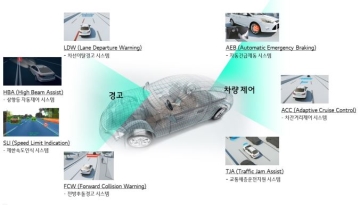
LG Electronics will supply next-generation ADAS cameras to a German premium automaker. LG Electronics has recently secured an order for supplying 'next-generation ADAS (Intelligent Driver Assistance System) forward-facing mono camera' to a German premium automaker. Through this contract, LG Electronics will supply forward-facing mono camera modules and software to be installed in the automaker's next-generation vehicle models.
2017.06.29by 신윤오 기자

[e4ds Tech Day 2026 ⑨] Sim Sang-gyu, Autocrypt CTO: "In the Physical AI Era, Automotive Security Must Extend Beyond the Vehicle"
At e4ds Tech Day 2026, Sim Sang-gyu, CTO of Autocrypt, explained automotive cybersecurity strategies in the era of Physical AI and SDV (Software-Defined Vehicle). Automobiles are evolving as part of an ecosystem connected to AI, cloud, chargers, IoT, and robots, and he emphasized that the scope of security must expand beyond the vehicle interior to the entire connected environment. In particular, AI model tampering, adversarial attacks, OTA updates, and EV charger hacking were identified as major threats. He explained that response measures require zero trust, AI model integrity protection, intrusion detection, Security by Design and Default, and full lifecycle security management, and that proactive security system establishment beyond regulatory compliance is critical for securing future mobility competitiveness.
2026.10.12by 배종인 기자

Practical HIL Construction Strategy for Automotive and Off-Highway Controller Validation
As vehicle E/E architecture transitions to zonal structures and shifts to software-defined vehicles (SDV), the number of controllers (ECUs) requiring validation and software complexity are surging dramatically. Meanwhile, real vehicle testing cannot provide repeated verification under identical conditions and entails lead time and safety concerns. This white paper explains the principles of HIL (Hardware-in-the-Loop) validation and the structure of the NI platform composed of PXI, SLSC, and VeriStand, and through two actual implementation cases—Camera Record & Replay HIL for In-Cabin Monitoring Controller (ICMU) and Forklift Controller (VCU) HILS—describes how controller-level regression testing becomes possible. Additionally, it explicitly states application boundaries and limitations, such as lack of A2B support.
2026.10.12by 편집부











