



The reason the open source software community emphasizes open online courses, 'MOOCs', is
 Published2017.07.18 18:15
The number of professors must be increased by establishing an appropriate evaluation and compensation system.
It is anticipated that the Fourth Industrial Revolution will create a massive number of jobs in the software industry. While the demand for software talent is increasing, entry into the field is difficult without the necessary competencies, rendering the creation of jobs largely ineffective. Consequently, there are movements to establish educational courses and introduce certifications, yet concerns remain regarding a lack of practical skills.
Koh Kun, a distinguished professor at Ewha Womans University, spoke about the issues in software education, stating, “Open source is key to the Fourth Industrial Revolution. As we move toward a hyper-connected society, the trend is toward opening up source code.” He added, “As open software becomes increasingly important, source code must be available and licenses must be free to cultivate talent.”
In software education, theoretical instruction is sufficient with available study materials and textbooks. New theories do not emerge frequently, making the subject semi-permanent, and it offers an advantage in terms of the number of research papers. On the other hand, practical education requires establishing a dedicated practice environment and creating teaching materials independently, which puts it at a disadvantage in terms of research papers. Unlike in the past, the number of courses is also increasing as students are required to learn a variety of languages rather than just one or two. The scarcity of professors compared to the number of courses is one of the difficulties facing domestic software practical education.
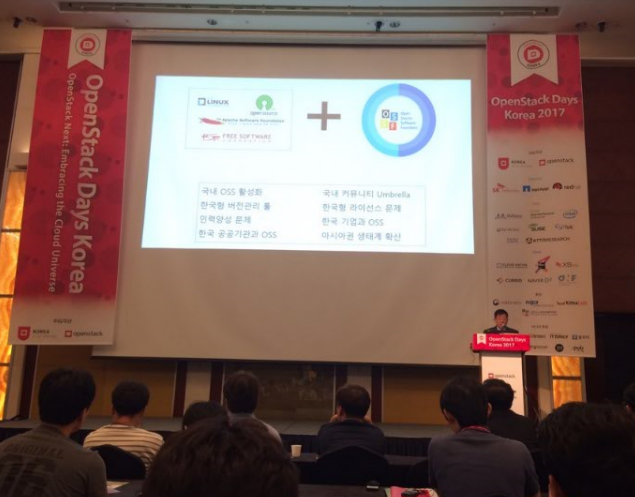
As a solution to this problem, Professor Ko explained, “We need to enable people working in companies to receive practical training. In addition, there must be a system to recognize and reward open source software as an achievement,” adding, “We need to establish a new department.”
China changed its standard curriculum from a theory-oriented approach to a practice-oriented approach in 2004, as the number of applicants for computer science departments decreased by 10,000 annually starting in 2000 and theoretical education faced limitations in the field.
Professor Ko stated, “Open source is not something only students learn; graduates must also learn throughout their lives. Since the number of professors is small, a system is needed for nationwide sharing,” and suggested the need to revitalize MOOCs (Massive Open Online Courses). MOOCs are already well-established abroad. While utilizing foreign lectures is beneficial, he also mentioned the need for domestic implementation strategies to address issues such as language barriers and costs.
Stating that while the number of open source software courses is increasing due to its growing importance, there are many cases where classes are canceled due to a lack of students, he remarked, “Open source software is more difficult and time-consuming to study than applied software. In contrast, there is a tendency to avoid it because the compensation is insufficient.” He added, “At Stanford University, developing open source software is recognized like a research paper, provides opportunities for promotion, and guarantees tenure.” "We need to provide compensation in this way domestically as well," he said.
In addition, he added that there must be accurate evaluation and compensation for professors' achievements to increase the number of professors, and that taking courses at other universities or recognizing MOOCs for academic credit is necessary.
Professor Koh Geon also serves as the Chairman of the Open Source Software Foundation (OSSF). He emphasized, “The Linux Foundation in the United States works to promote open source software in the U.S.,” adding, “This foundation was established to research and develop Korean-style licenses. This is a task that should be undertaken by the private sector, not a public institution.”
Comments
Related news
It is time for the domestic software industry to foster practical talent.
While discussions about the Fourth Industrial Revolution continue, domestic software development is engaged in low-cost competition. An opportunity has been created to share opinions on the problems of the domestic software industry and directions for its reinvigoration. A seminar titled "Domestic Business Application Trends and Activation Strategies" was held on the 6th at the Construction Mutual Aid Association, hosted by Noonbe Software, a startup that develops business application platforms. Professor Sohn Byung-hee from Inha Technical College, who served as moderator for the event, stated, "The core of the Fourth Industrial Revolution is software. Hardware is visible, so we can understand the direction of evolution and trends, but software is not visible, so we cannot. Since human thought goes into software, it is capable of infinite expansion. This is the time to find how we should respond at the present moment."
2017.07.06by 김지혜 기자
To prepare for advanced cyber threats, it is urgent to cultivate talents strong in both theory and technology.
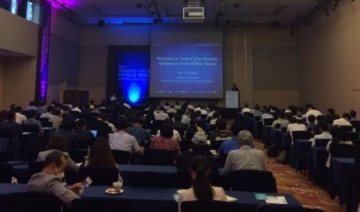
With the rise of cyber threats, the 6th Information Protection Day commemoration ceremony and International Information Protection Conference were held on the 12th at The K Hotel in Yangjae to raise public awareness. The event was jointly hosted by the Ministry of Public Administration and Security, the National Intelligence Service, and the Korea Communications Commission, with the Korea Internet & Security Agency serving as the organizer. Since 2012, the government has designated July as Information Protection Month and has held the "Information Protection Day" commemoration ceremony every second Wednesday of July. Choi Dong-won, Director of the Cyber Threat Response Division at the Ministry of Science, ICT and Future Planning, stated, "Cyber attacks are spreading with clear objectives. While attacks in the past occurred only in cyberspace, they now directly occur in the physical world, posing threats to our bodies and property."
2017.07.12by 김지혜 기자
Human-centered cognitive software will create more jobs
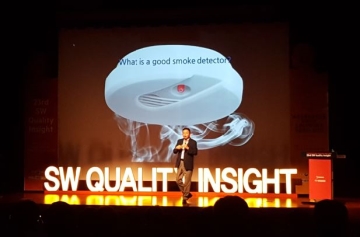
The 23rd Software Quality Insight was held on the 12th at the International Conference Room of Nuri Dream Square in Sangam-dong, focusing on technology innovation and job creation in drone and autonomous vehicle fields through software engineering. Hosted by the Ministry of Future Creation and Science and organized by the National IT Industry Promotion Agency (NIPA), the event attracted approximately 700 participants and demonstrated keen interest in drones and autonomous vehicles. The event proceeded with separate drone and autonomous vehicle (autonomous driving) tracks, led by a special lecture by Professor Cho Kwang-soo of Yonsei University on "Human-Centered Cognitive Software for Drones and Autonomous Vehicles."
2017.07.12by 신윤오 기자
.jpg)
SalePoint Signs Multi-Year Partnership Agreement with AWS… Promoting Identity Security that Integrates Even AI Agents
Sailpoint has entered into a multi-year strategic partnership agreement with AWS and is moving forward with establishing an integrated governance system that manages both human and non-human identities together. The plan is to consistently manage access permissions in an environment where AI agents are increasing as work execution entities, while applying the principle of least privilege and automated policy enforcement. The two companies plan to jointly expand capabilities to manage the identities of various entities, including AI agents, within a single layer in the AWS environment. This collaboration is interpreted as a move to design security and governance together in corporate environments where AI adoption is expanding.
2026.03.26by 배종인 기자
.png)
Databricks Unveils Open AI Security Monitoring 'Lakewatch'
Databricks entered the security market on March 24 by unveiling LakeWatch, an open-source agentic SIEM. The core functionality of this product is to integrate and analyze security, IT, and business data in a single environment to support AI-based threat detection and investigation. The company explained that it reduces the limitations of existing security operations centers, which have had to forgo some data due to high cost structures, and enables large-scale data analysis and automation based on open formats and ecosystems. LakeWatch is currently offered as a private preview, with Adobe and Dropbox mentioned as early customers. Databricks also announced an expanded partnership with Anthropic as well as the acquisition of Antimatter and SiftD.ai.
2026.03.26by 배종인 기자











