



Easy and fast connectivity is key to IoT healthcare as well; how is standardization progressing?
 Published2017.07.18 18:33
Technology growth stages in the healthcare sector in Japan, the US, and Korea
A meeting to discuss smart healthcare was held at the Science and Technology Hall on the 18th.
At the event 'Healthcare IoT Technology for the 4th Industrial Revolution,' hosted by the Ministry of Food and Drug Safety and organized by the Electronics and Telecommunications Research Institute, discussions were held on △cloud for healthcare IoT application development △healthcare IoT device development processes and Web RTC technology for remote healthcare services △OCF standards △healthcare patent trends and the status of demonstration projects.
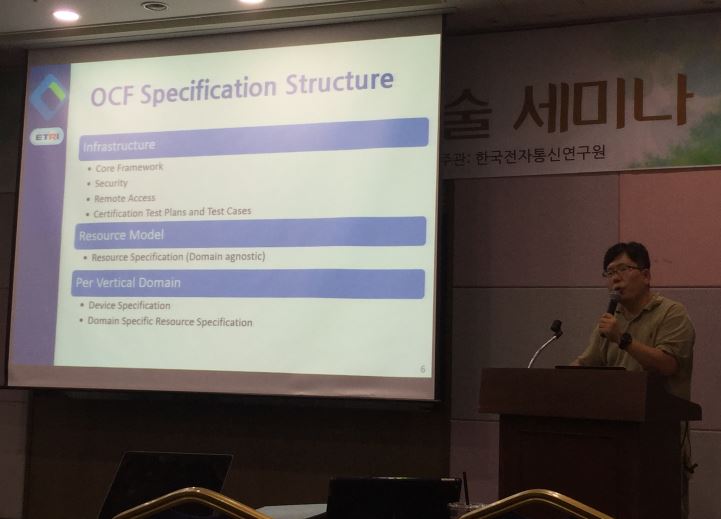
Researcher Jong-Hong Jeong of ETRI
Jeon Jong-hong, a researcher at ETRI who presented on the OCF IoT technology standard for healthcare and fitness, technically divided healthcare into four major fields: medical data monitoring, healthcare monitors, smartwatches that receive notifications, and wearable controls. Mentioning the advantages of OCF in ensuring connectivity, he stated, “For IoT to be realized in healthcare, easy and fast connectivity is crucial,” adding, “I cannot be certain about standardization, but there will likely be advantages to the technology.”
Researcher Jeon further stated that ETRI is currently conducting Open Connectivity Foundation (OCF) standardization work in cooperation with international organizations (PCH, IEEE) and has consolidated about 40 healthcare devices into about 20. In addition, since existing healthcare devices are connected via Bluetooth, standardization was difficult; therefore, the process was carried out by creating a bridging server to establish the connection.
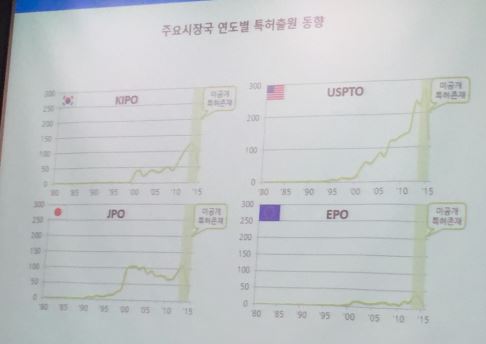
'Technology Growth Stages' in the Healthcare Sectors of Japan, the US, and Korea
The patents are diverse, ranging from devices that transmit eye drops according to a patient's condition to machines that measure body weight while sitting on a toilet and check health based on stool consistency, and platforms that remotely provide medical information via wireless communication.
As of 2016, there were 4,666 internationally registered IoT healthcare patents.
Compared to other fields, research and development in the healthcare sector was being conducted simultaneously across various countries. While patent registrations surged in 2000, centered on Japan, they occurred simultaneously worldwide in 2011.
In addition, the number of patent applications ranked by company included Siemens, Toshiba, Panasonic, Hitachi, Samsung Electronics, Philips, GE, NEC, ETRI, etc. It is worth noting that the increase in applications over the past five years was active at IBM, FITBIT, SK, and others outside the top 10.
Patent Attorney Oh Su-hwan stated that unlike overseas markets centered on corporations, the domestic market “is characterized by prominent patent applications from research institutes and universities. This needs improvement.” He added, “Since 2013, data management security regarding the period before and after diagnosis and treatment has not been implemented. If we target these untapped areas, the Korean market could also gain an advantage.”
Comments
Related news

IoT Standards Organizations Converge on OCF: Is 'Open Source' Becoming Mainstream?
In an atmosphere where Internet of Things standardization organizations are consolidating, the open source initiatives put forth by these bodies are expected to spread rapidly. OCF (OPEN Connectivity Foundation), an IoT standardization organization, announced on the 10th that it will merge with the IoT Consortium and AllSeen Alliance, which had been a competing organization. Until now, it has been the general view in the IoT industry that OIC (Open Interconnect Consortium), the predecessor of OCF, represents the Samsung Electronics and Intel-centered camp, while AllSeen represents the LG Electronics and Qualcomm-centered IoT camp. However, the situation has changed dramatically recently as OCF has merged with AllSeen and major home appliance manufacturers such as LG Electronics have joined as board members. This marks the birth of the most representative consortium creating international standards related to IoT (with 310 member companies as of October 13).
2016.10.24by 신윤오 기자
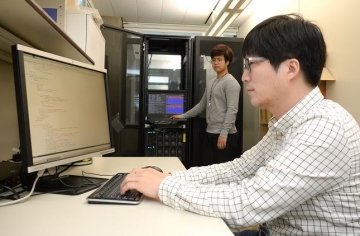
ETRI Establishes Dedicated Organization to Support Open Source Activities
ETRI (Electronics and Telecommunications Research Institute), a government-funded research institute, has launched its first dedicated open source software organization. Open source software refers to software whose source code is publicly disclosed and can be modified and adapted by anyone. The institute plans to oversee open source policy establishment and response management, which will become increasingly important in the future through this organizational expansion. ETRI announced the establishment of the "Open Source Center," a dedicated organization capable of addressing and supporting open source activities. With the recent shift toward an open paradigm, the influence of open source has grown significantly, and there is a trend of expanding applications across all ICT fields. Representative examples of open source software include Linux and Android. At the government level, active efforts are being made to recommend open sourcing of research results to improve technology utilization rates and commercialization success rates relative to budget investments in national R&D projects. In fact, strategies utilizing open source are becoming increasingly prominent in the actual market. Particularly in fields such as the Internet of Things (IoT), open source is being developed alongside standards and employed as a global business strategy to accelerate early market penetration.
2017.06.27by 김자영 기자
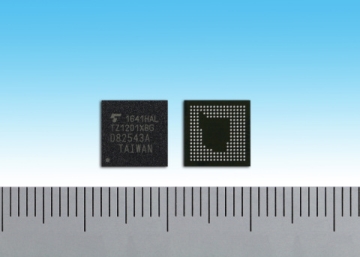
Toshiba Begins Mass Production of Graphics Processors for Wearables and IoT
Toshiba Electronic Devices & Storage Corporation has announced the beginning of mass production of the TZ1201XBG ApP Lite™ processor product family for Internet of Things (IoT) devices, including wearable products. The compact TZ1201XBG graphics processor is based on a high-performance 32-bit ARM Cortex-M4F processor capable of operating at 96MHz (up to 120MHz during overclocking). The combination of the ARM core and on-chip power management provides the TZ1201XBG with low power consumption of 70μA/MHz in active mode. With a 350mAh battery and always-on display, the second-hand clock application can operate for approximately one month per charge, while the minute-hand clock can operate for approximately two months.
2017.07.11by 신윤오 기자
Nvidia invests $5 billion in Intel
NVIDIA and Intel, leaders in global AI computing technology, are now forging ahead in providing cutting-edge solutions through NVLink-based architecture integration. NVIDIA and Intel have officially announced a strategic partnership and stated that they will jointly develop customized data center and personal computing products to accelerate diverse applications and workloads ranging from hyperscale to enterprise and consumer markets, thereby laying the foundation for the next generation computing era.
2025.09.22by 배종인 기자
.jpg)
Applied Materials Launches Environmental Protection Campaign to Mark World Cleanup Day
Applied Materials Korea (CEO Park Kwang-seon) is carrying out environmental cleanup activities with employees and their families around the Dongtan Sinricheon area on the occasion of World Cleanup Day, evolving into a company that engages with the local community beyond technological innovation.
2025.09.22by 명세환 기자











