



How to raise the lagging domestic drone industry to the world's top 5
 Published2017.07.20 06:22
A candid forum has been created to discuss ways to develop the drone industry.
The Ministry of Land, Infrastructure and Transport, together with the Korea Transport Institute and the Korea Aerospace Research Institute, held a public hearing to collect opinions on the ‘Basic Plan for Drone Industry Development.’
At the event that day, a plan was put forward to lead the drone industry for the next 10 years, with the goal of increasing the current market size of 70.4 billion won to 4.1 trillion won by 2026, entering the top 5 in technological competitiveness in the world, and commercializing 60,000 industrial drones.
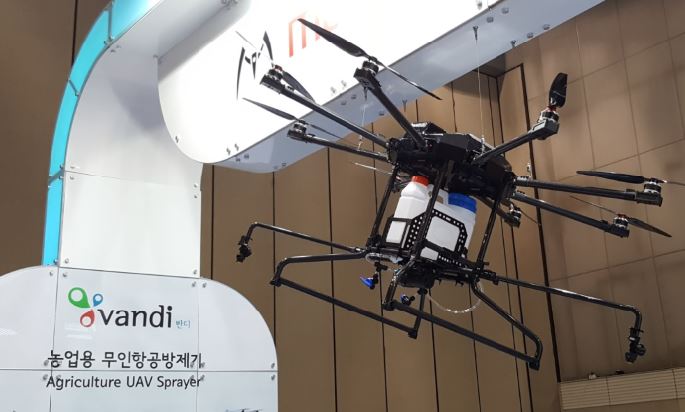
On the 18th, as part of efforts to establish institutional support for the drone industry, the National Assembly passed the revision bills to the Aviation Safety Act and the Aviation Business Act. This will allow drones to fly for commercial purposes at night and beyond the line of sight, which had been prohibited until now.
The global drone market size is expected to reach 6 billion dollars (about 6.8697 trillion won) this year and grow to over 11.2 billion dollars (about 12.8288 trillion won) by 2020, with China accounting for 90% of the small drone market. In comparison, domestic drone industrialization is lagging behind.
Lee Chang-woon, president of the Korea Transport Institute, said, “The global drone market is still at a stage where we can challenge ourselves. We are leading in ICT technology and have sufficient technological fundamentals in the drone industry.” He added, “The future drone market will be led by image observation, transportation, logistics, and agriculture. If we want to conquer the world, now is the right time.”
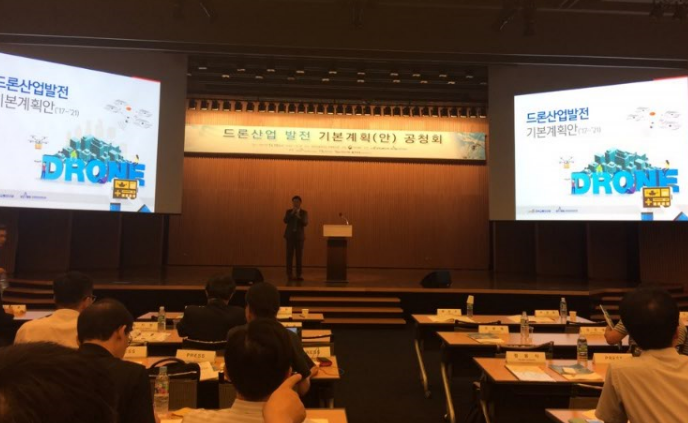
The tasks that need to be prepared for conquering the global market include fostering the manufacturing industry, creating a service market, establishing a drone life-cycle safety management system, and securing core technologies.
Cho Jeong-sik, chairman of the Land, Infrastructure and Transport Committee, said, “Among the future food technologies of the 4th industrial revolution, the most essential and life-related field is drones,” and added, “We need to prepare for the golden age of drones. China is dominating the small drone market, but it does not mean that our technology is lacking. We need to work hard on industrialization, where we are lagging behind.”
This was followed by a presentation by Song Ki-han, head of the Korea Transport Institute, on the goals and strategies for drone industry development, major tasks to be promoted, and expected effects, followed by a discussion with experts and a Q&A session.
The expert discussion was attended by Vice President Kim Yeon-myeong of the Korea Transport Institute, Director Kim Eung-tae of the Korea Aerospace Research Institute, Professor Shim Hyeon-cheol of KAIST, Professor Yoon Kwang-jun of Konkuk University, CEO Song Jae-geun of Ucon Systems, former President Park Chun-bae of Inha University, Editorial Writer Kim Dong-ho of JoongAng Ilbo, and Director Jeong Yong-sik of the Advanced Aviation Division of the Ministry of Land, Infrastructure and Transport, who shared opinions from academia, industry and research.
Comments
Related news
Sundol drones, leave the pesticide spraying to us.
As drone technology advances, agriculture has become the most widely utilized field. According to the Association for Unmanned Vehicle Systems International (AUVSI), forecasts indicate that agricultural drones will account for 80% of the future commercial drone market. By equipping drones with cameras, it is possible to acquire crop growth information in real-time, conduct surveys to analyze soil conditions, and scan the ground surface to adjust altitude and apply precise quantities of pesticides. Sundol Drone is an agricultural drone used for spraying pesticides and fertilizers. Featuring a fully automatic system, it performs automatic flight, directional changes, spraying, and return operations automatically. Should the spraying be interrupted due to pesticide depletion mid-operation, it automatically detects this and returns home. After replenishing the pesticide, the detection system guides the drone back to the interrupted location without manual adjustment, preventing duplicate spraying.
2017.07.04by 김지혜 기자
SKT Conducts Disaster Rescue Operations Through Drone Video Relay
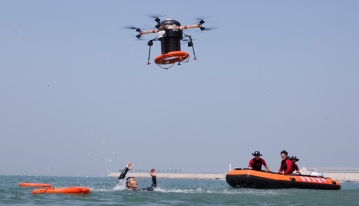
SK Telecom announced that it has unveiled a video disaster rescue system combining its ultra-compact video live streaming equipment with drones from Soombi, a drone specialist company. The system presented by both companies enables seamless real-time viewing of ultra-high definition (Full HD) video footage captured from Soombi's industrial drones, which are resistant to rain and wind, through the LTE network from anywhere on the ground without interruption. Most existing drone video transmission methods use Radio Frequency technology, which is employed in remote-controlled vehicle operations, making relay impossible when the distance between the drone and controller exceeds approximately 1-3 km.
2017.07.17by 김지혜 기자
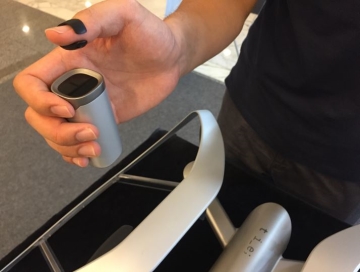
This Is Engineering is working on an easy-to-control drone controller.
Operating a drone is not an easy skill. You grip the remote controller with both hands and your head is set on "straight ahead," yet the aircraft barely moves forward. Since you've already bought it, it's too early to give up. You tell yourself that "the practice process is also fun." At this point, there's good news that an intuitive controller operable with just one hand has been developed. By moving a ring equipped with sensor functionality over the main controller, you can control the drone's takeoff, landing, and direction. DisDisEngineering plans to launch a toy drone in the second half of this year and a professional drone extension in the first half of next year.
2017.07.19by 김자영 기자
Nvidia invests $5 billion in Intel
NVIDIA and Intel, leaders in global AI computing technology, are now forging ahead in providing cutting-edge solutions through NVLink-based architecture integration. NVIDIA and Intel have officially announced a strategic partnership and stated that they will jointly develop customized data center and personal computing products to accelerate diverse applications and workloads ranging from hyperscale to enterprise and consumer markets, thereby laying the foundation for the next generation computing era.
2025.09.22by 배종인 기자
.jpg)
Applied Materials Launches Environmental Protection Campaign to Mark World Cleanup Day
Applied Materials Korea (CEO Park Kwang-seon) is carrying out environmental cleanup activities with employees and their families around the Dongtan Sinricheon area on the occasion of World Cleanup Day, evolving into a company that engages with the local community beyond technological innovation.
2025.09.22by 명세환 기자











