



"If we follow China's lead in small drones, we will fail." The Korean industrial drones that we should focus on are
 Published2017.07.24 06:45
Public demand and industrial markets are prioritized in this strategy... Voices are calling for preferential purchase of domestic products.
"Drones are crucial in developing core technologies for the future aviation industry. Therefore, a national master plan is necessary."
Song Ki-han, director of the Korea Transport Institute, made these remarks at a public hearing on the basic plan for drone industry development held on the 19th. He explained the current state of the domestic drone industry, its market outlook, development goals, and strategies. The hearing proceeded with industry, academia, and research representatives providing input on areas that needed to be supplemented within the plan.
The content of the drone industry basic plan is that the drone industry, which is still a growing market, needs government-wide support according to a mid- to long-term master plan, and the goal is to increase the market size to 4.1 trillion won by 2026, enter the world's top 5 in technological competitiveness, and commercialize 60,000 industrial drones.
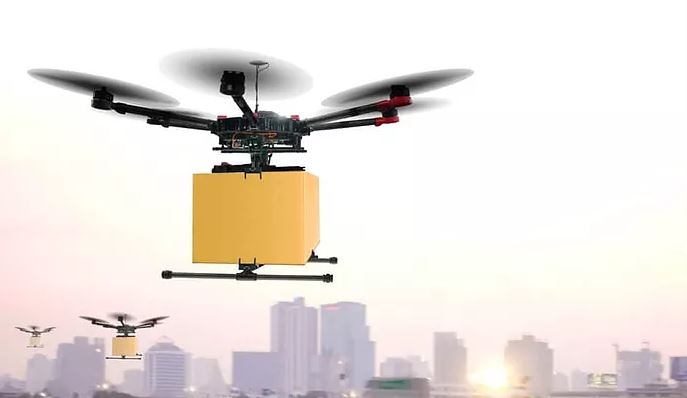
The domestic drone market is experiencing a surge in civilian demand, particularly for videography and agricultural applications. However, its scale remains small and its technology is limited. In particular, the lack of specialized suppliers in the parts ecosystem has led to a reliance on overseas suppliers. Regulations are similar to those in the US, China, and Japan, and while the number of people obtaining pilot licenses is on the rise, there is a shortage of professional personnel, and there are only seven places where drones can be flown for pilot projects.
In this situation, to achieve the goal in 10 years, the Ministry of Land, Infrastructure and Transport has put forward seven tasks to be promoted: △ fostering an industrial-focused manufacturing industry, △ establishing a parts and ecosystem, △ fostering a drone utilization market based on public demand, △ establishing a safe operating environment, △ building global-level infrastructure, △ leading the global market by strengthening technological competitiveness, and △ establishing a promotion foundation.
To be competitive, we must create Korean drones using domestic manufacturing technology.
First, the manufacturing industry was discussed. Song Jae-geun, CEO of Yukon Systems, stated, "From a company's perspective, drones are different today and tomorrow, so we don't know what functions they'll have and how they'll be used in three years. The industry itself needs to evolve. Simply developing a single component doesn't guarantee competitiveness." He added, "Rather than focusing on expanding the application market, I hope the plan is revised to ensure the survival of companies that manufacture with domestically produced technology."
"In reality, the market is being created under the leadership of public institutions, but it's regrettable that companies that import and assemble products from overseas seem to benefit more than those that manufacture them domestically. I hope you'll pay attention to this as well," he added.
Professor Yoon Kwang-jun of Konkuk University said, "If you look at the drone designs being developed by Google, Amazon, and DHL, you can see a shift. They are shifting to better suit all-weather flight in high winds." He added, "To remain competitive, future Korean drones must incorporate aviation technology. He argued that “instead of trying to catch up with China in the small drone market, we should focus on developing Korean drones.”
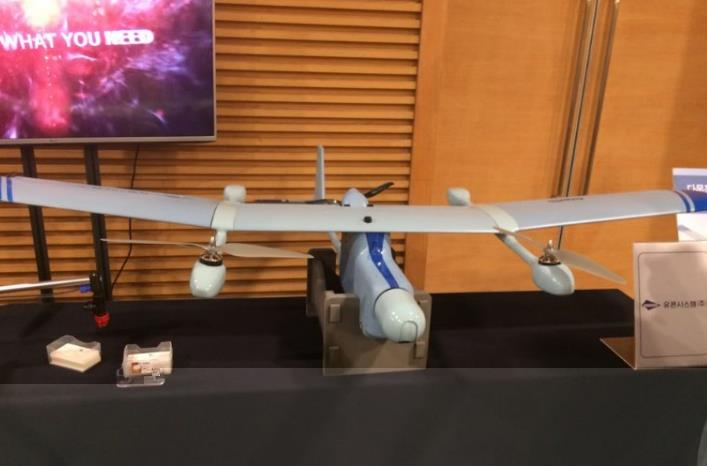
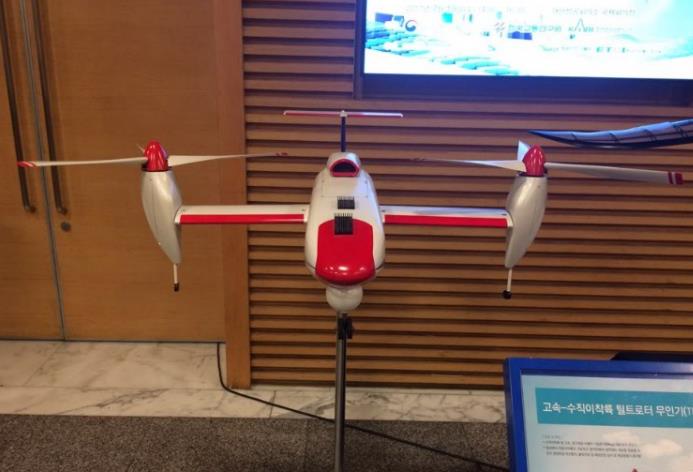
He said that IT and automation technologies should be applied to the drone industry, citing the fact that parts manufacturers that have succeeded in automated production are reviving, and pointed out that “the roadmaps of the Ministry of Trade, Industry and Energy and the Ministry of Science, ICT and Future Planning will be shared and reinforced between ministries.”
Kim Eung-tae, head of the Korea Aerospace Research Institute (KARI), who participated in the basic plan, stated, "Only one of the 56 drones used by public institutions is a domestic product. I believe the government should implement support policies to encourage public institutions to use domestic products first." He added, "To create a service that utilizes these products, modifications must be possible. Track records and feedback data on their use must be continuously updated to maintain technological competitiveness."
We need to strengthen regulations, certification systems, and qualification requirements with a focus on safety.
Some have voiced concerns that domestic drone regulations, which focus solely on weight and purpose, are inadequate for safety. Drones are unable to follow air traffic control, preventing them from entering manned aircraft routes. Furthermore, the stringent regulations on unmanned aerial vehicles (UAVs) prevent drones from being flown anywhere.
Regarding this, former Inha University President Park Chun-bae said, “Drones that are not properly equipped with quality suitable for flight safety are causing accidents. "We have a flight safety system and a quality certification system," he said. "Quality certification should be in place to protect consumers, but it's progressing too slowly. The industry will only develop when quality certification comes first." He also mentioned that drone qualifications are focused solely on piloting skills, overlooking safety.
Although the qualification system is operated in accordance with international standards for unmanned aerial vehicles, there are also opinions that it should be divided according to the characteristics of each aircraft and application from a safety perspective.
There was also criticism that the plan focused solely on the industrial market. One attendee said, "In terms of automobiles, industrial use is trucks, and personal use is private cars. The personal use market is much larger, so it's incomprehensible to exclude the recreational market." Another question was whether there would be any regulations on filming with drones without a permit or license.
In response, Jeong Yong-sik, Director of the Advanced Aviation Division at the Ministry of Land, Infrastructure and Transport, stated, "The basic plan is indeed focused on industrial use," adding, "We are unable to keep up with the system and improvements due to a lack of administrative capacity. We will establish a foundation for comprehensive control." He also expressed his intention to incorporate the opinions shared at the public hearing.
Comments
Related news
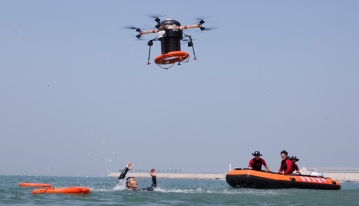
SKT Conducts Disaster Rescue Operations Through Drone Video Relay
SK Telecom announced that it has unveiled a video disaster rescue system combining its ultra-compact video live streaming equipment with drones from Soombi, a drone specialist company. The system presented by both companies enables seamless real-time viewing of ultra-high definition (Full HD) video footage captured from Soombi's industrial drones, which are resistant to rain and wind, through the LTE network from anywhere on the ground without interruption. Most existing drone video transmission methods use Radio Frequency technology, which is employed in remote-controlled vehicle operations, making relay impossible when the distance between the drone and controller exceeds approximately 1-3 km.
2017.07.17by 김지혜 기자
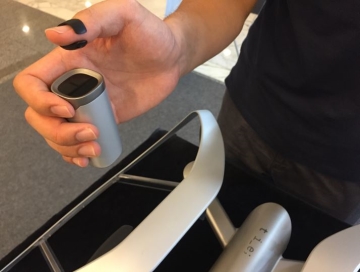
This Is Engineering is working on an easy-to-control drone controller.
Operating a drone is not an easy skill. You grip the remote controller with both hands and your head is set on "straight ahead," yet the aircraft barely moves forward. Since you've already bought it, it's too early to give up. You tell yourself that "the practice process is also fun." At this point, there's good news that an intuitive controller operable with just one hand has been developed. By moving a ring equipped with sensor functionality over the main controller, you can control the drone's takeoff, landing, and direction. DisDisEngineering plans to launch a toy drone in the second half of this year and a professional drone extension in the first half of next year.
2017.07.19by 김자영 기자
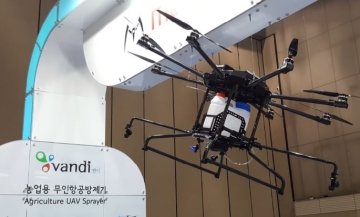
How to raise the lagging domestic drone industry to the world's top 5
On the 18th, amendments to the Aviation Safety Act and Aviation Business Act were passed through the National Assembly as part of efforts to establish institutional support for drone industry development. As a result, commercial nighttime flights and beyond-visual-line-of-sight operations, which had previously been prohibited, will now be possible. With the global drone market size expected to reach 6 billion dollars (approximately 6.87 trillion won) this year and grow to over 11.2 billion dollars (approximately 12.83 trillion won) by 2020, China currently dominates 90% of the small drone market. In contrast, South Korea's drone industry commercialization remains behind. The Ministry of Land, Infrastructure and Transport held a public hearing with the Korea Transport Institute and the Korea Aerospace Research Institute to gather opinions on the 'Basic Plan for Drone Industry Development.'
2017.07.20by 김지혜 기자

Nvidia invests $5 billion in Intel
NVIDIA and Intel, leaders in global AI computing technology, are now forging ahead in providing cutting-edge solutions through NVLink-based architecture integration. NVIDIA and Intel have officially announced a strategic partnership and stated that they will jointly develop customized data center and personal computing products to accelerate diverse applications and workloads ranging from hyperscale to enterprise and consumer markets, thereby laying the foundation for the next generation computing era.
2025.09.22by 배종인 기자
.jpg)
Applied Materials Launches Environmental Protection Campaign to Mark World Cleanup Day
Applied Materials Korea (CEO Park Kwang-seon) is carrying out environmental cleanup activities with employees and their families around the Dongtan Sinricheon area on the occasion of World Cleanup Day, evolving into a company that engages with the local community beyond technological innovation.
2025.09.22by 명세환 기자











