



If you were to define the smart factory keyword in one word, it would be ( ).
 Published2017.07.31 09:12
"Smart factories are (the return of the king)."
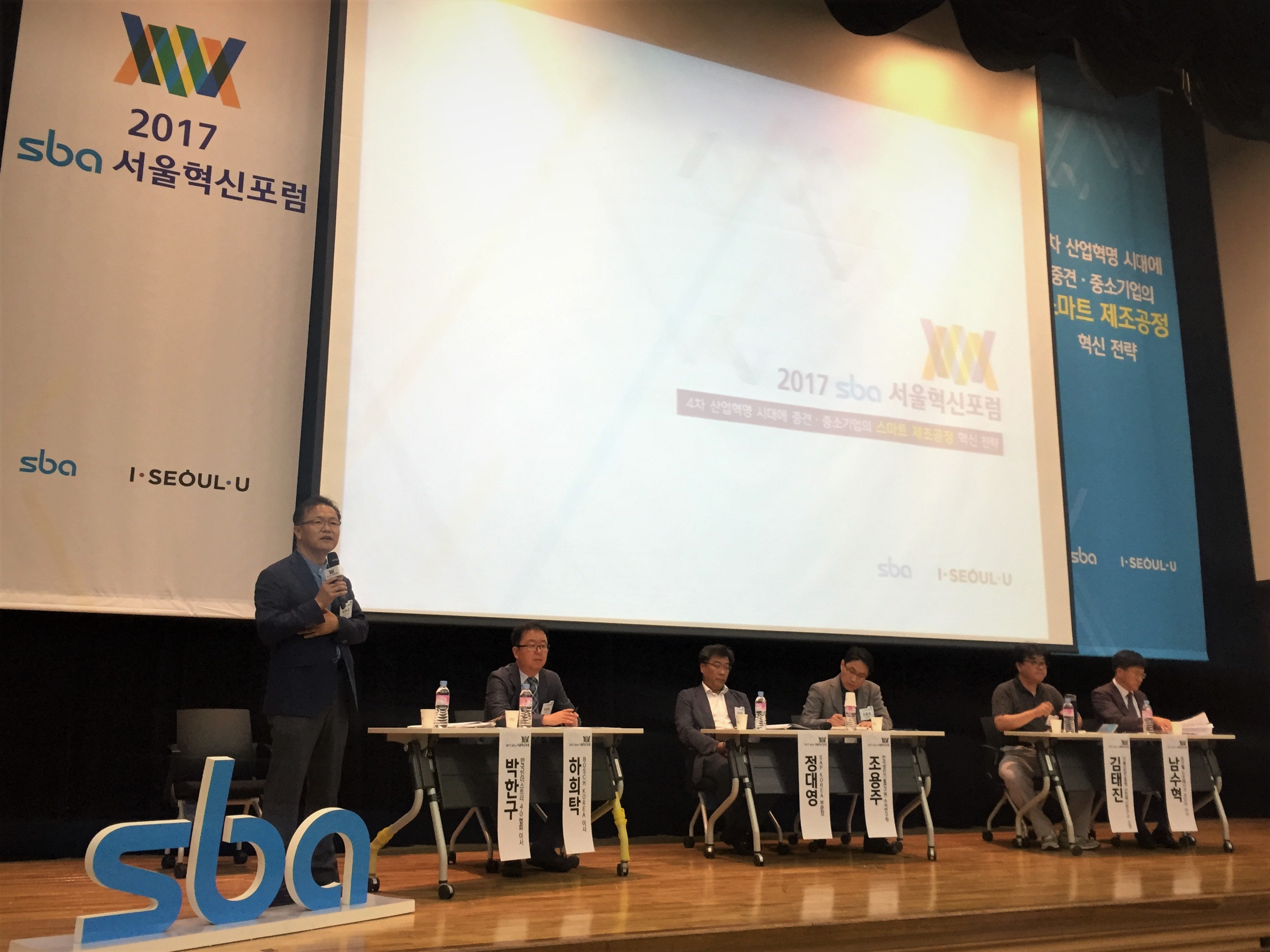
Ha Hee-tak, Director of Bosch Korea
Manufacturing, once a dominant industry, seemed to be temporarily neglected. It was busy moving overseas. However, shifts in the technology market are at the heart of the Fourth Industrial Revolution. Consider how to leverage widespread technology. Factories will become more customizable, simpler, and easier to operate. This is an opportunity for manufacturing plants to return to Korea. The approaches are endless.
"Smart factories are (scenarios)"
Yong-ju Cho, Senior Researcher at the Korea Institute of Industrial Technology
While it's beneficial to approach things from the bottom up, you need to be able to see the big picture. Whether you're a small or medium-sized business, the approach is the same. The government and businesses have different roles. The government should develop a big picture for each industry, while business owners should proactively take the initiative and visualize the entire process from the sensor level. This way, even if you fail immediately, the big picture will be completed in the long run.
"Smart factories are ( start small, fail fast )."
Daeyoung Jeong, Head of SAP Korea
"Best practices" have dominated the market for a long time, following established precedents. Now, there are no companies with the best track record to follow. Don't be afraid of change. Rather, you'll be sweating it out at the Vietnamese or Chinese companies you outsourced. Start small and see for yourself how difficult, yet how easy, it is. You'll fail once, but you won't make the same mistake twice.
Previously, building software required significant investment, but with cloud access, things are different. It's shifting to a pay-as-you-go model, and it's easy to switch to other methods. This is also why in-house startups are thriving.
"Smart factories are destiny."
Kim Tae-jin, Director of the Industrial Innovation Research Institute at the Seoul Business Agency
Responding to rapid change is a matter of either viewing it as an opportunity or a concern. As long as it's profitable, someone will develop and adopt the technology. If you remain in the latter category and fall behind your competitors, you'll have to accept it. If you're a small business hesitant to adopt, consider "just following a step behind." Keep a close eye on your competitors, and if they've adopted it, be sure to take a closer look. The price of the device may have come down and its uses may have expanded, so it's not too late to follow suit.
"Smart factories are (convergence)."
Nam Su-hyeok, Director of Rockwell Automation Korea
Going forward, data technology will become increasingly important. We must proactively move forward. While automation was the primary focus in the past, now we need to establish an infrastructure network that integrates advanced MES systems and security. However, if field workers rely on external support when problems arise, success will be difficult. Korea, Japan, and Germany are all facing similar challenges. Even if we're a step behind, cultivating IT data experts is crucial to preparing for these new challenges.
Comments
Related news
Smart factory is not an option but a necessity in the Fourth Industrial Revolution era
"The keyword of the Fourth Industrial Revolution is manufacturing." At the keynote address of the Korean manufacturing smart factory roadmap conference, Professor Park Hee-jae from Seoul National University stated, "Manufacturing consists of two aspects: the product that needs to be made and the process of making the product. Making these two aspects smart is the direction that manufacturing must take in response to the Fourth Industrial Revolution." The event was held on the 4th at Geomungo Hall at The K Hotel Yangjae, hosted by the Korea Management Certification Institute, with presentations centered on the core hardware and software strategies of smart factory. Smart factory is gaining attention as an essential condition not for choice but for survival in the Fourth Industrial Revolution era.
2017.07.04by 김지혜 기자
Real-time networking TSN, technology development is active as standardization gains momentum
Factories are advancing beyond smart factories into full automation, while healthcare is enhancing stability through remote capabilities. As technology progresses, user requirements continue to expand. A network environment that simply enables fast, high-volume data uploads is insufficient. This is why 'real-time networking'—which analyzes and processes data in real time while controlling network latency—is drawing attention as the next-generation network. While networks have evolved to enable fast, high-volume data uploads, Time Sensitive Networking (TSN) is a technology that transmits information in real time and can even predict measurement data within predictable time parameters.
2017.07.10by 김자영 기자
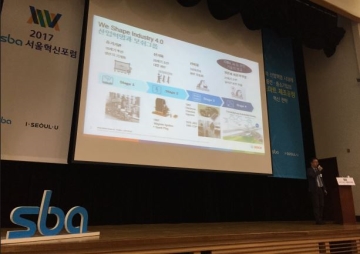
Manufacturing Smart Factories: "We Need to Consider Service Models Too"
Seoul City and the Seoul Industrial Promotion Agency held the third SBA Seoul Innovation Forum on the 25th, with the theme of smart manufacturing process innovation strategies for small and medium-sized enterprises. Ha Hee-tak, Director of BOSCH Korea, explained manufacturing process innovation in machining and assembly utilizing data, using BOSCH as an example. BOSCH is realizing the fourth industrial revolution through three stages, and emphasized that the keywords are connectivity, transparency, and flexibility. He further stated, "If we start with small investments right away and apply practical smart solutions, we will be able to achieve the effect of 'improved productivity.'"
2017.07.26by 김자영 기자
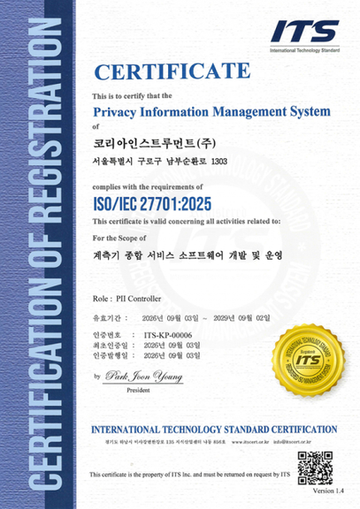
Korea Instrument, KOLAS Accredited Calibration Agency First to Simultaneously Acquire ISO/IEC 27,001·27,701
Korea Instrument has become the first among KOLAS accredited calibration agencies to simultaneously acquire ISO/IEC 27,001 and ISO/IEC 27,701 certifications. Through its proprietary platforms CWIZ Enterprise and CWIZ Partners, the company has embedded information security and personal data protection requirements across all business processes including customer information, equipment data, and calibration reports, with plans to continuously advance its management system through regular audits and security inspections.
2026.10.12by 배종인 기자
TeamViewer One, IT Incident Automation Workflow and Resolution Center Enhanced
TeamViewer has added IT incident automation capabilities and an advanced Resolution Center to its integrated digital workplace management platform 'TeamViewer ONE'. Recurrent service disruptions, configuration errors, and capacity shortages are automatically handled according to preset policies, and device status verification through script deployment can be managed in a unified interface, significantly reducing repetitive tasks for IT teams.
2026.10.12by 배종인 기자











