


[Country Analysis] Fintech Overseas Expansion: Which Countries Are Advantageous?
 Published2017.08.02 11:26
A platform has been created to help domestic fintech companies expand overseas.
The Korea Internet & Security Agency's Fintech Security/Certification Technology Support Center analyzes market conditions in overseas markets and recruits companies seeking to enter the market, providing both pre-market and on-site support. On the 31st, the center held a forum to share analysis data on the fintech landscape in Vietnam, Indonesia, Thailand, the Philippines, and Myanmar to support entry into the Southeast Asian market.
Companies wishing to expand into five Southeast Asian countries will be asked to select two. Regarding the selection of Vietnam, Indonesia, Thailand, the Philippines, and Myanmar as candidates, Bridging Group Korea Director Choi Jin-heon explained, "We replaced Malaysia with Myanmar among the five Southeast Asian countries." "Malaysia is an Islamic country, so its financial system is different from ours. “Domestic companies are also excluding Malaysia,” he said, explaining the current state of the fintech industry, government policies, key players, and entry strategies in each country.
Only 30% of the population has a bank account... Growth potential is high, mostly through smartphones.
Vietnam boasts internet users reaching 50% of its population. The mobile payment sector, currently valued at 18 billion won, is projected to reach 170 billion won by 2021. The proliferation of Cash on Delivery (COD) services, which allow customers to pay after receiving goods, is fueling the growth of mobile payment usage. Store modernization is accelerating, and the government has announced plans to increase the proportion of non-cash payments to 50% in major cities.
Currently, approximately 40 fintech companies are providing services in Vietnam, including payments, remittances, financing, and financial management. Government-run organizations include the Vietnam E-Commerce Information Technology Institute and the Vietnam Postal Service, while the State Bank of Vietnam, the Vietnam Chamber of Commerce and Industry, and the Vietnam Payments Institute offer simple payment, remittance, and P2P lending services. Shinhan Bank is providing O2O services through 'Sunny Bank', and Woori Bank has signed a business agreement with M_Service, a local Vietnamese company, to provide a simple remittance service to Vietnamese workers in Korea and their families in Vietnam.
While only 30% of the local population has a bank account, most have internet access via smartphones, offering significant growth potential for services targeting the unbanked. The e-commerce market is also growing rapidly and is expected to remain so for the foreseeable future, suggesting ample demand for fintech technologies and services. The presence of numerous domestic companies and banks in the region also contributes to the favorable environment and infrastructure.
#Indonesia
With so many islands and limited access to banks, fintech has potential for growth, driven by the high smartphone penetration rate.
In a country where credit is non-existent, prepaid cards and smartphones are commonplace. While smartphone penetration is lower than in other Asian countries, its population of 260 million and rapid growth in smartphone penetration suggest significant growth potential for the fintech sector.
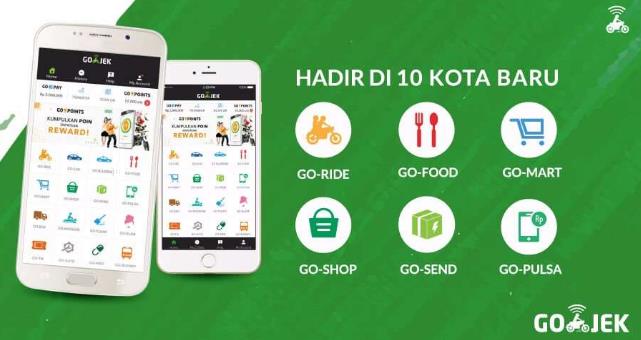
The Indonesian government, with its numerous islands and largely undeveloped areas, struggles to access banking. To address this, the Indonesian government is actively supporting simple mobile payment systems for B2C consumers. Key players include the Indonesia Financial Services Supervisory Authority (FISA), a government agency; Fintech Indonesia (a financial institution); and private companies Mandara Bank and BCA (Bank of Central Asia). Services currently in operation include simple payment, remittance, and asset management. Go-Jek, a motorcycle sharing service provider, has expanded its services by partnering with derivative service industries such as restaurants, beauty salons, spas, and hospitals, following its initial offering of payment integration services through prepaid mobile phone top-ups.
Major domestic banks, such as Hana Bank and Woori Bank, have successfully established themselves in the local market, and Hana Bank, in particular, is cited as a local success story for its "1Q Transfer" service, which provides overseas remittance services through a mobile app.
With over 100 million internet users, a quarter of them are young people aged 25-29. Given the low bank account ownership rate and the low number of bank branches, the mobile finance market, powered by smartphones, is expected to grow. Banks, telecommunications companies, and startups are actively seeking to enter the market, and the government is implementing policies to promote the fintech industry, suggesting high potential for future growth.
Priority will be given to targeting the working class, who lack access to financial services due to geographical limitations. Given the lack of relevant systems and regulations, it's crucial to verify information through communication with local regulatory authorities and local businesses.
#thailand
With mobile users exceeding 50% of the population, it is advantageous for the development of the e-commerce market.
Currently, 4G is widely available and the country has a higher smartphone penetration rate than the internet, so the fintech infrastructure is sufficiently developed. The banking population is high, and mobile users exceed 50% of the population. The Board of Investment (BOI) is focusing on fostering the digital services industry, offering tax exemptions for corporate income when collaborating with Thai companies in areas previously closed to foreign capital and companies.
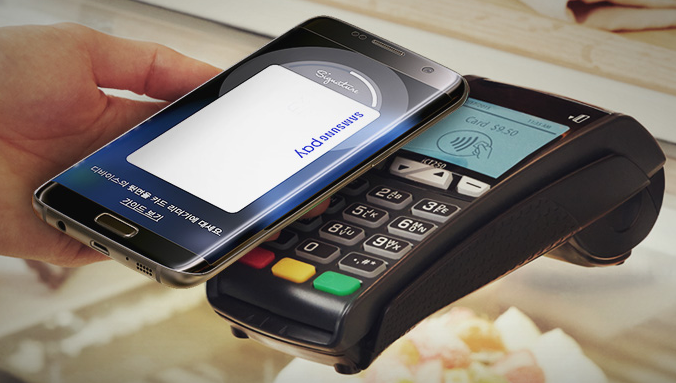
Claim Di is a service that facilitates auto insurance claims between drivers and insurance companies. In Korea, major corporations like Naver and Samsung are leading the way in fintech services. Line, Thailand's most popular messenger app, has partnered with BTS to offer the Rabbit Card, a rechargeable prepaid card. Samsung has also officially launched Samsung Pay.
With its high level of global financial literacy, rapid ICT development, and high 4G subscriber base, Thailand is expected to be advantageous for the development of the software industry and e-commerce market. Thailand, a central economic zone encompassing neighboring countries (Myanmar, Laos, and Cambodia), presents an easy opportunity for domestic fintech companies to expand into Southeast Asia. However, its economic scale and low per capita income make it uncertain whether the current market is the optimal time to enter the market. As telecommunications companies collaborate with banks to lead fintech, collaboration with local telecommunications companies and banks is essential.
#Philippines
87% of mobile phone users switch to smartphones, and mobile payments are growing rapidly.
The country has seen the fastest growth in internet users over the past five years, with 87% of mobile phone users rapidly switching to smartphones. The mobile payment market is also experiencing rapid growth. As the world's third largest recipient of foreign currency remittances, the process of sending foreign currency to the country involves high fees for exchange, brokerage, and receiving, and the processing time takes 2-3 days.
While the 2014 revision of the Banking Act allowed foreign banks to enter the market, it initially limited their total number of banks, effectively blocking their entry. Now, with foreign capital now permitted to own 100% of banks and business scope restrictions lifted, the potential for fintech expansion is gaining traction. This year, the Central Bank of the Philippines announced regulations to prevent overseas money laundering through mobile foreign exchange and remittances, adding a requirement that businesses must be conducted in the Philippines through a subsidiary of a local corporation, making the process for foreign companies to enter the fintech market more complex.
SCI, whose largest shareholder is K Venture Group, is offering a Bitcoin-based remittance service with reduced processing times and fees. A startup owned by telecommunications company Globe Telecom operates mobile micropayments and microloan services. Sentbe is also attempting to enter the Filipino market by targeting workers with a Bitcoin-based remittance service with reduced fees. Woori Bank is also gaining access to the Philippine market through investments in local savings banks.
The financial sector operates under strict government regulation, and an approach that takes into account factors such as the country's still-underdeveloped GDP is necessary. Geographically, many islands and residents living in remote areas present challenges in accessing banks, highlighting the potential of mobile-centric fintech. However, it should be noted that the market structure in which most large banks are affiliates of conglomerates makes it difficult to enter the market.
#Myanmar
47% of the population is under 24 years old and have a high level of understanding of the mobile environment.
Although the country's IT infrastructure is still underdeveloped, it has surpassed the PC stage and entered the mobile era since the launch of its first 4G service in 2016. Over 80% of the population uses smartphones. However, the mobile payment market infrastructure and systems are still not fully developed.
The government is sparing no effort in investing and supporting overall infrastructure, including IT infrastructure, and has taken the lead in increasing smartphone penetration. There is also a trend toward easing regulations on foreign corporate capital activities.
Thailand's MyPAY acquired fintech company fastacash to expand its market presence and is expanding its influence through a partnership with a Myanmar social networking company. In the mobile finance sector, Norwegian telecommunications company Telenor is developing systems and services in collaboration with local bank YOMA.
Foreign banks that have entered the market early are struggling due to stringent financial authorities' stringent requirements and various operating restrictions. While Shinhan Bank, Hana Card, Nonghyup Bank, and Kookmin Bank operate small-sum lending businesses in Korea, their number of branches is minimal.
With 47% of the population aged 24 and under embracing mobile technology and possessing a high level of financial understanding, potential demand for fintech is high. The overwhelming dominance of Android in the market, with mobile web usage predominately over mobile apps, creates a favorable environment for domestic companies to enter the market. However, given the low economic level and lack of dedicated fintech institutions, it's unclear whether the current market is the optimal time to enter the market. It is expected that domestic financial institutions will open up new avenues in the future.
Director Choi stated, "Local companies are interested in localization. We need to consider that their penetration strategies are quite different from what we envision. Rather than offering a standalone service, it's better to partner with a local company to expand or integrate their services."
Comments
Related news
The domestic blockchain industry is expanding beyond finance into diverse fields such as public services and healthcare.
Recently, with the Gyeonggi-do Provincial Government announcing plans to integrate blockchain into its donation management system, financial services related to the Fourth Industrial Revolution have once again become a topic of discussion. The blockchain-based donation management system, which enables donation management information to be shared with donors in real-time, originated from considerations on proper use of donations. According to a survey by the Ministry of Health and Welfare, people with donation experience expressed doubt about institutional transparency, while those without donation experience indicated skepticism regarding institutional credibility.
2017.03.27by 김지혜 기자
[Decisive IT Scene] Introducing Our In-House Blockchain Platform
Samsung SDS is making a full-scale push into new markets with the launch of blockchain platforms and solutions. On the 6th, Samsung SDS unveiled its enterprise blockchain platform Nexledger, blockchain identity (DI) and payment settlement (SGP) services to the media at Samsung SDS Tower in Jamsil.
2017.04.06by 김지혜 기자
Samsung SDS Presents Future Vision of Blockchain in Europe
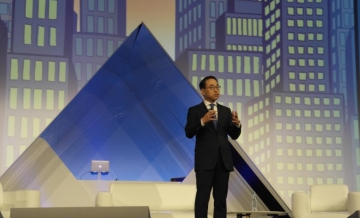
Samsung SDS introduced its blockchain technology and presented future business vision at "Money 20/20 Europe," Europe's largest global fintech conference. "Money 20/20 Europe" is a global financial innovation and fintech event where more than 1,500 global companies participate, including financial institutions such as banks and card companies, as well as companies from mobile and retail sectors. President Hong Won-pyo took the stage as a keynote speaker at "Money 20/20 Europe" and introduced Samsung SDS's blockchain platform NexledgerTM under the theme "Commercialization of Blockchain, Beyond Digital Finance." He presented blockchain expansion models including insurance claim processing and payment automation, which are types of smart contracts, as well as digital logistics.
2017.06.28by 김지혜 기자

The financial services industry is the most active in adopting hybrid cloud.
Nutanix announced the cloud adoption status and outlook for the financial services industry through its Enterprise Cloud Index report. According to a survey of current hybrid cloud adoption rates by industry, the financial services industry's hybrid cloud adoption rate was 21%, which was higher than the industry average of 18.5%. Financial services companies are facing the challenge of providing differentiated experiences to customers through methods such as leveraging emerging technologies like blockchain, while simultaneously simplifying operations.
2019.04.02by 이수민 기자

IBM Blockchain World Wire… Real-time global financial payment network expands to over 50 countries worldwide
IBM announced on the 19th the expansion of IBM Blockchain World Wire, a real-time global financial settlement network for financial institutions. World Wire was developed to accelerate and optimize foreign exchange transactions and cross-border payment and remittance speeds. Additionally, it integrates payment message transmission, clearing, and settlement procedures into a single network while supporting network participants in selecting various types of digital assets for settlement. Starting from the 19th, the payment service area will be expanded to 72 countries, including 47 global currencies and 44 financial endpoints. Busan Bank became the first domestic bank to join World Wire.
2019.03.19by 이수민 기자











