


Red Hat Launches Linux Operating System to Support Hybrid Cloud Deployment
 Published2017.08.03 10:53
보안, 성능 및 리눅스 컨테이너 관련 주요 기능 강화
레드햇 엔터프라이즈 리눅스 7.4는 복잡한 IT 환경을 간소화 해주는 새로운 자동화 기능들을 제공하며, 기존 및 클라우드 네이티브 애플리케이션의 워크로드 보안과 성능을 대폭 향상시켰다. 이를 통해 물리적 서버, 가상 머신, 하이브리드, 퍼블릭 및 멀티 클라우드에 걸쳐 엔터프라이즈 IT의 다양한 요구사항을 충족시킬 수 있는 운영체제를 제공한다.

또한, IBM 파워(IBM Power), IBM 시스템 z(IBM System z) 및 개발자 프리뷰 버전의 64비트 ARM을 포함한 다중 아키텍처에 걸쳐 가용성을 보장한다. IBM 파워 리틀 엔디언 아키텍처(IBM Power Little Endian architecture)의 고가용성 및 탄력적인 스토리지 애드온뿐 아니라 오픈 컨테이너 이니셔티브(Open Container Initiative : OCI) 런타임과 이미지 포맷도 지원한다.
Comments
Related news
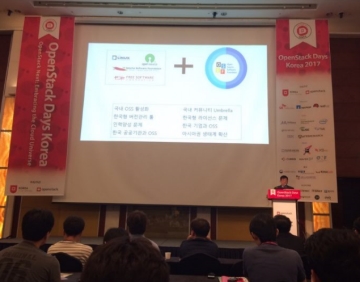
The reason the open source software community emphasizes open online courses, 'MOOCs', is
The fourth industrial revolution is expected to create substantial job opportunities in the software industry. While demand for software talent is increasing, it is difficult to enter the field without competency, making newly created jobs ineffectual. Consequently, there are efforts to open educational programs and introduce certification systems, but voices are emerging that practical competency in the field remains insufficient. Ko Gun, distinguished professor at Ewha Womans University, stated, "Open source is the core of the fourth industrial revolution. As we move toward a hyper-connected society, there is a trend toward opening source code," and added, "Since open software is becoming important, talent development requires source code availability and free licensing," discussing the issues in software education. In software education, theoretical instruction has sufficient resources through textbooks and teaching materials. New theories do not emerge frequently and are semi-permanent, which is advantageous in terms of paper count. Conversely, practical training requires establishing practice environments, creating course materials directly, and is disadvantageous in terms of paper count. Unlike the past where one or two coding languages were learned, the need to learn diverse languages has resulted in an increase in the number of courses. The shortage of professors relative to the number of subjects is also one of the difficult issues in domestic software practical education.
2017.07.18by 김지혜 기자
Upgraded IoT Platform Mobius, Will Global Commercialization Expand?
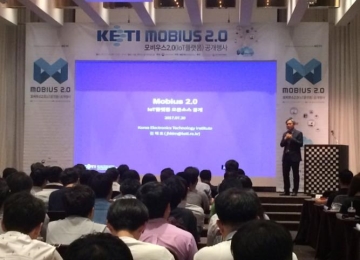
Where is the Internet of Things (IoT) heading in its evolution? Mobius 2.0, an upgraded version of the Internet of Things platform developed by the Electronics and Telecommunications Research Institute (KETI), has been unveiled. Mobius is a platform operated as open source with source code publicly disclosed, created based on oneM2M, a global IoT standard. KETI held an event introducing Mobius 2.0 at Elltower in Yangjae on the 20th. Since first introducing Mobius 1.0 in 2015, the upgraded version was released based on developers' requirements. Park Chung-won, President of KETI, said, "We started from a time when IoT wasn't receiving much attention, and today we're unveiling the 2.0 version. As we move toward a hyper-connected society, interoperability between devices becomes important, and Mobius has technological competitiveness in that regard."
2017.07.21by 김지혜 기자
[Issue] Open Source SW, If License Management Is Negligent, You Will Get a ‘Big Nose’ When Distributing
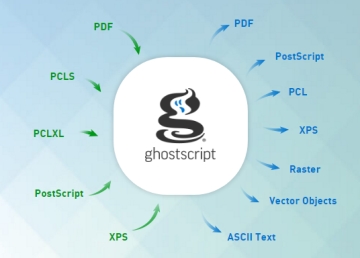
Recently, US software company Artifex Software filed a copyright infringement lawsuit against Hangul and Computer for violation of open source license terms. The issue arose from embedding Artifex's Ghostscript in Hancom Office. Open source software is often thought to be free because developers can freely use, copy, modify, and redistribute the source code. However, open source software has openly available source code while still being protected as intellectual property (IP). When using open source, it is necessary to verify the extent to which it is "open." Open source has over 80 license obligations including source code disclosure requirements, copyright notice requirements, patent waiver requirements, and usage rights notification requirements. Among licenses certified by OSI, the organization that certifies open source licenses (copyrights), representative licenses include AL (Apache License), BSD (Berkeley Software Distribution), GPL (General Public License), LGPL (Lesser General Public License), MIT, and MPL (Mozilla Public License). Even if the names are the same, the details of obligations vary depending on the version, so verification is essential.
2017.08.03by 김지혜 기자
.jpg)
SalePoint Signs Multi-Year Partnership Agreement with AWS… Promoting Identity Security that Integrates Even AI Agents
Sailpoint has entered into a multi-year strategic partnership agreement with AWS and is moving forward with establishing an integrated governance system that manages both human and non-human identities together. The plan is to consistently manage access permissions in an environment where AI agents are increasing as work execution entities, while applying the principle of least privilege and automated policy enforcement. The two companies plan to jointly expand capabilities to manage the identities of various entities, including AI agents, within a single layer in the AWS environment. This collaboration is interpreted as a move to design security and governance together in corporate environments where AI adoption is expanding.
2026.03.26by 배종인 기자
.png)
Databricks Unveils Open AI Security Monitoring 'Lakewatch'
Databricks entered the security market on March 24 by unveiling LakeWatch, an open-source agentic SIEM. The core functionality of this product is to integrate and analyze security, IT, and business data in a single environment to support AI-based threat detection and investigation. The company explained that it reduces the limitations of existing security operations centers, which have had to forgo some data due to high cost structures, and enables large-scale data analysis and automation based on open formats and ecosystems. LakeWatch is currently offered as a private preview, with Adobe and Dropbox mentioned as early customers. Databricks also announced an expanded partnership with Anthropic as well as the acquisition of Antimatter and SiftD.ai.
2026.03.26by 배종인 기자











