


Hilscher netPI, Industrial Raspberry Pi Enablement
 Published2017.08.08 14:25
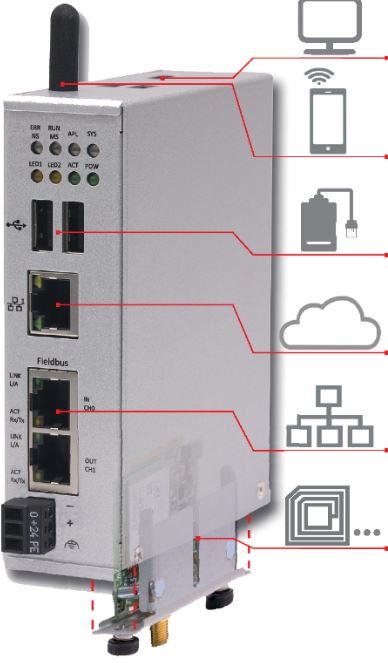
Hilscher has announced that it has teamed up with Raspberry Pi manufacturer Element14 to offer the netPI platform based on the industrial Raspberry Pi 3. It combines the Pi 3 circuitry with Hilscher’s netX industrial multi-protocol network controller on a single board.
netPI improves cooling, allowing the quad-core CPU to operate at full capacity without performance degradation even at ambient temperatures of 50°C. It supports hardware RTC that lasts 7 days when power is lost, and power fail-safe frames that can store data at high speeds. It includes two additional industrial Ethernet ports. It also has wireless communication and is sealed in a rugged metal housing.
By using netX, multiple protocols are supported, including PROFINET IO-Device or other industrial Ethernet slave protocols. netPI is based on the security-enhanced Linux and therefore complies with the IEC 62443 cybersecurity standard. Therefore, functions such as secure boot, updates using approved packages, user and rights management, SSH console access ban, and communication via https secure connections can be implemented to protect against security threats.
In addition, netPI does not allow users to modify the host Linux or install software. Instead, Docker, an advanced virtualization environment, is pre-installed. User applications within Docker are encapsulated and run in containers that protect the Linux host. Hillscher provides free netPI container examples that demonstrate how to leverage Docker technology and netPI features through their official portal, Docker Hub.
It provides examples of containers for Node-RED, an IoT programming tool, such as fieldbus and frame nodes, desktop containers for local display via HDMI port, and Raspbian OS containers.
netPI is particularly useful for companies that work closely with universities and students to encourage research and development and to accelerate innovation through creativity and openness. In the education field, most people are familiar with Raspberry and use it at home.
Now, the use of Raspberry Pi is accelerating in factories through netPI. Also, by using Docker, netPI is open to users like the standard Pi 3, but can also be used for industrial purposes.
Comments
Related news
Element14 Launches Infrared Camera for Raspberry Pi
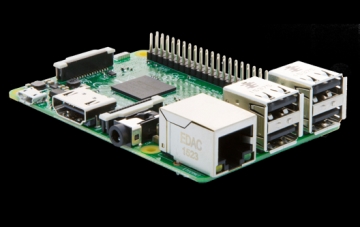
Element14, the manufacturer and distributor of the Raspberry Pi series, has announced the release of two upgraded cameras. The Raspberry Pi Camera v2 and Raspberry Pi NoIR Camera v2 are products that further diversify the applications of Raspberry Pi. These two official Raspberry Pi cameras feature improved resolution of 8MP and an image sensor capable of capturing still images at 3280 x 2464 pixels on Raspberry Pi. Additionally, like the previous version, they support 1080p30, 720p60, and 640x480p90 video recording and connect to Raspberry Pi through a dedicated CSI interface. In the case of the NoIR Camera v2, a No InfraRed (NoIR) filter is applied to the lens, enabling infrared photography and allowing image capture even in low-light environments. Both products are compatible with previous Raspberry Pi models, and their size and weight are identical to the previous 5MP version.
2016.04.29by
[Survey Results Announcement] Raspberry Pi Integrated WiFi Function Satisfaction, Diverse OS Support Disappointing
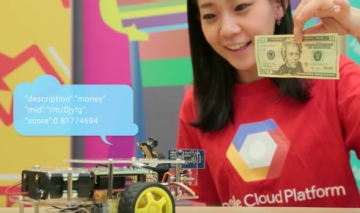
Regarding the 'Raspberry Pi', which has become an icon of DIY culture as a mini computer, developers and those with interest in development cited integrated WiFi support as the greatest advantage of Raspberry Pi's latest version (3), while pointing to diverse OS support as the most disappointing aspect. E4ds News announced the results of a survey conducted during an online real-time live broadcast 'IoT Sensor and Motor Control Practice, 100% Utilization of Raspberry Pi' held on the 26th of last month. Over 200 people registered for the online live broadcast where Jung Jae-jun, representative of the Kernel Research Group, conducted lectures and hands-on training, and 117 people attended the broadcast to watch the online lecture. Approximately 70 people participated in the Raspberry Pi-related survey conducted during the broadcast and answered sincerely about the actual usage of Raspberry Pi.
2016.06.07by 신윤오 기자
Kernel Research Group CEO Jaejun Jeong, Implementing Machine Learning on Raspberry Pi
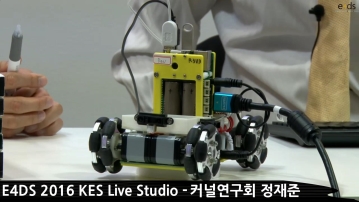
Kernel Research Group, Implementing Machine Learning on Raspberry Pi
2016.11.08by 명세환 기자

Intel Unveils Next-Generation 'Core Ultra Series 3' and vPro Platform for Enterprise PCs
Intel has officially unveiled the "Intel Core Ultra Series 3" for next-generation enterprise PCs and the latest vPro platform, addressing a wide range of demands from enterprise notebooks to high-performance workstations.
2026.03.26by 배종인 기자

ROHM Launches ESD Protection Diode Compatible with High-Speed Interfaces of 10Gbps or Higher
Semiconductor specialist ROHM has developed the 'RESDxVx series' of ESD (electrostatic discharge) protection diodes capable of responding to next-generation high-speed data communication environments exceeding 10Gbps, simultaneously enhancing both signal quality maintenance required in high-speed interfaces and IC protection performance.
2026.03.26by 배종인 기자











