


Simplifying the head unit can solve signal loss and power issues.
 Published2017.08.24 08:09
Connect the antenna to the head unit with one line
While listening to music or the radio in cars has continued from ancient times to the present, the form of head units has gradually changed. From cassette tapes to CDs and MP3s, as sound sources evolved from records to music, head units have become more streamlined.
Supporting such systems in a car requires tens of kilograms of cable. Cable routing is often manual, time-consuming and costly. Car radios typically require up to six cables, depending on the car model and supported band functions. A streamlined head unit reduces the amount of cable required, saving space and reducing heat dissipation.
Maxim Integrated's "Remote Tuner Solution" is a solution to reduce the amount of cables. This remote tuner architecture serializes the output of a radio tuner located near the antenna onto a single cable using Gigabit Multimedia Serial Link (GMSL). This single cable carries control signals (I2C) on the desired channel as well as the back channel of the GMSL link, and powers the remote tuner.
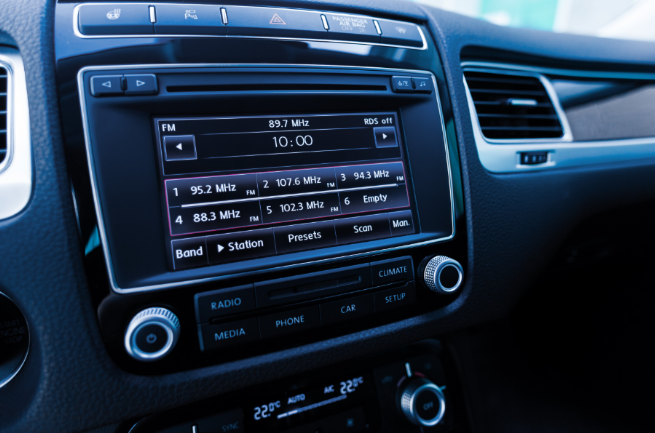
This architecture eliminates the need for a radio receiver, which complicates head unit layout and adds to thermal issues. Radio designs can also be modularized, so changes to the design can be made only through the remote tuner, without modifying the head unit hardware.
The remote tuner solution utilizes a Software Defined Radio (SDR) architecture, which uses software to perform baseband processing and allows reception of various wireless standards on a single radio platform. A typical radio receiver amplifies the signal received from the antenna through a low-noise amplifier in the front-end section and downconverts it with a mixer. This signal is then filtered, digitized, and transmitted.
To increase efficiency and simplify design, some functions can be implemented in front-end hardware. However, wideband signal processing is advantageously implemented in hardware. To maximize flexibility with SDR, the World Band Radio (WBR) is proposed as a standalone front-end tuner capable of implementing major analog and digital radio standards. A typical automotive radio uses three WBR tuner ICs, each serving various purposes, including main station, alternate frequency search, and phase.
The MAX2175 IC is an analog/digital hybrid radio receiver with an RF-to-Bits front-end for SDR solutions in automotive reception environments. It features a single hardware platform supporting global radio standards and can be updated to meet different standards through software changes, rather than requiring hardware rework.
This software-defined radio approach eliminates the need for a dedicated baseband processor, providing users with greater flexibility. Its modular design allows for installation anywhere in the vehicle. The number of cables required is reduced from four to two, reducing cable loss from antenna to tuner, eliminating the need for a low-noise amplifier.
“The MAX2175 was created based on market needs,” said Choi Young-kyun, director of Maxim Integrated Korea. “Maxim’s tuner architecture reduces transmission loss, lowers cost, and saves space.” He added, “Depending on the OEM, the antenna structure they request varies. Maxim proposes a method to transmit the signal from the antenna to the head unit in a single line. This method can solve both signal loss and power issues.”
Comments
Related news
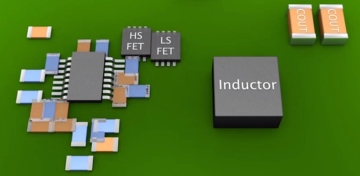
Maxim: "The Himalaya Series Reduces Heat and Increases Efficiency in Power Solutions"
Implement as many features as possible while keeping the design compact. This is a key concern for IC and module design engineers—achieving this while ensuring minimal heat generation. The challenge is that packing multiple functions into a limited space inevitably generates high temperatures, which threatens system stability. For engineers who must account for power loss, thermal issues, and safety standard compliance in confined spaces, Maxim Integrated (www.maximintegrated.co.kr) offers meaningful solutions. Maxim's Himalaya series, which includes voltage regulator ICs and power modules, aims ultimately at enhancing system efficiency. It also ensures compliance with functional safety standards for electronic safety management systems.
2017.07.03by 김지혜 기자
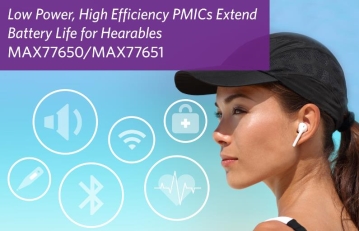
Maxim Unveils Power Management Semiconductor Reduced by Half
Maxim Integrated Korea announced new power management semiconductors (PMICs) 'MAX77650' and 'MAX77651'. The two products can enhance battery life and efficiency in size-constrained wearable and hearable devices such as smart clothing and watches, Bluetooth headphones, and activity monitors. As the form factor of wearable and hearable devices continues to shrink, component miniaturization has emerged as a critical consideration. Most small-form-factor PMICs operating on lithium-ion batteries require current regulators such as boost, buck, LDO (Low Dropout) regulators, chargers, and LED indicators. Maxim integrated all of these functions into a compact power solution measuring 19.2mm² or less—half the size of existing solutions—thereby saving space and improving efficiency.
2017.07.28by 김지혜 기자
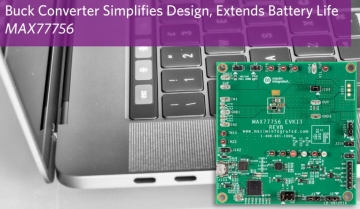
Maxim Launches Buck Converter Providing Low Standby Current for USB Type-C Devices
Maxim Integrated Korea has launched the MAX77756, a buck converter that provides flexible options with 24V, 500mA, and low standby current for multi-cell USB Type-C products requiring high current, dual input, and I2C support. USB Type-C products detect USB insertion by generating a constant 3.3V power rail. Utilizing a power supply in the 5-20V voltage range, the MAX77756 uses a step-down converter to generate always-on power (1.8V/3.3V/5.0V) digital supply rails for port controllers. The MAX77756 reduces standby power consumption while operating continuously through its low standby current of 20μA. The MAX77756 features an ideal dual-input diode ORing circuit that allows external USB power to be supplied to the input stage to drive the chip when the battery has no remaining charge, which simplifies system design.
2017.08.11by 김지혜 기자

[e4ds Tech Day 2026 ⑨] Sim Sang-gyu, Autocrypt CTO: "In the Physical AI Era, Automotive Security Must Extend Beyond the Vehicle"
At e4ds Tech Day 2026, Sim Sang-gyu, CTO of Autocrypt, explained automotive cybersecurity strategies in the era of Physical AI and SDV (Software-Defined Vehicle). Automobiles are evolving as part of an ecosystem connected to AI, cloud, chargers, IoT, and robots, and he emphasized that the scope of security must expand beyond the vehicle interior to the entire connected environment. In particular, AI model tampering, adversarial attacks, OTA updates, and EV charger hacking were identified as major threats. He explained that response measures require zero trust, AI model integrity protection, intrusion detection, Security by Design and Default, and full lifecycle security management, and that proactive security system establishment beyond regulatory compliance is critical for securing future mobility competitiveness.
2026.10.12by 배종인 기자
Practical HIL Construction Strategy for Automotive and Off-Highway Controller Validation
As vehicle E/E architecture transitions to zonal structures and shifts to software-defined vehicles (SDV), the number of controllers (ECUs) requiring validation and software complexity are surging dramatically. Meanwhile, real vehicle testing cannot provide repeated verification under identical conditions and entails lead time and safety concerns. This white paper explains the principles of HIL (Hardware-in-the-Loop) validation and the structure of the NI platform composed of PXI, SLSC, and VeriStand, and through two actual implementation cases—Camera Record & Replay HIL for In-Cabin Monitoring Controller (ICMU) and Forklift Controller (VCU) HILS—describes how controller-level regression testing becomes possible. Additionally, it explicitly states application boundaries and limitations, such as lack of A2B support.
2026.10.12by 편집부











