



China, Riding a Semiconductor Boom: 3 Things Domestic Fabless Companies Need to Enter the Market
 Published2017.08.28 07:45
China experts must utilize local or localized personnel
As the Chinese semiconductor industry grows rapidly due to recent large-scale investments, opportunities for domestic fabless companies to enter the Chinese market are also increasing.
The Chinese semiconductor industry is developing remarkably as the government actively supports it through the "Initiative to Promote Semiconductor Industry Development." Consequently, the consumer market is growing rapidly due to the increase in electronic device production and manufacturing facilities. How, then, should domestic fabless companies prepare to enter the Chinese market to avoid missing out on these opportunities?
When looking at China's semiconductor industry by sector, the fabless industry accounts for a relatively small share but has the fastest growth rate. Both consumption and domestic production are increasing, and a key point to note is that half of the total consumption is produced in China. According to the China Software Industry Association (CSIA), domestic production is accelerating, and it is projected that more than 60% of total consumption will be produced in China by 2018.
Due to the impact of the Chinese government's tax incentives, the number of fabless companies increased from 681 in 2014 to 715 in 2015. Among these, 20% of the companies recorded revenues ranging from $16 million to $2.3 billion. Not only quantitative growth but also qualitative growth is taking place rapidly.
Looking at device market share in the second quarter of 2017, Huawei (11.3%), OPPO (8.1%), and Xiaomi (6.2%) ranked from third to fifth in the smartphone market. While Samsung (23.3%) maintained the top spot, its growth rate remained in the 1% range, whereas Chinese companies demonstrated double-digit growth. China accounts for approximately 70% of the global smartphone market, which remains largely comprised of China and India. Although the tablet PC market declined by 3.4% year-on-year, Huawei recorded a growth of 47.1%. In the wearable market, Xiaomi took the top spot, surpassing Fitbit and Apple.
Kim Hee-cheol, Vice President of Roa Consulting, stated, “The structure of devices such as PCs, smartphones, wearables, drones, and TVs is increasingly becoming a battle of price. It is a difficult time to surpass China, which puts forward low-cost products.” He pointed out that to enter the Chinese market, the perception of being a lagging nation must be abandoned, noting, “While brands are highly important in Korea, if you look at Africa, Latin America, and Europe, brand value is not yet high, yet there is no resistance to Chinese brands.” Vice President Kim added, “The foundry business is a game of facility investment.” "Although Samsung and SK Hynix are also making significant investments, the Chinese government is investing 200 trillion won over five years," he explained, adding, "If things continue this way, it may be difficult to maintain a competitive advantage in the memory business."
He advised that to enter the Chinese market, one must identify areas where China cannot match and build technological capabilities, emphasizing the need to specialize in infrastructure and technology where the country still holds an advantage.
Entering the Chinese Market 1. Strive for Localization
Regarding the points that domestic fabless companies should consider when entering the Chinese market, Lee Byung-in, Director of the Korea-China System IC Cooperation Research Institute, emphasized efforts toward localization, stating, “In China, value chains vary by manufacturing company. It is important to understand the supply chain system,” and adding, “Efforts must be made to utilize local or localized personnel.”
Entering the Chinese Market 2. Don't rush, ensure sufficient lead time.
The next factor to consider after localization is time. It can be said that virtually no Korea-China SoC platform projects have generated large-scale revenue in the same year. Sufficient lead time is required for the commercialization of development projects to expect results exceeding domestic standards.
Entry into China 3. Do not try to establish a direct supply relationship.
Customer relationship management is also crucial. To enter the market for major manufacturers, there must be trust in both the supplied products and the company itself. If establishing direct supply relationships is difficult, utilizing channels among resident companies within the research institute is an option. It is also necessary to communicate in a manner preferred by Chinese customers and representatives.
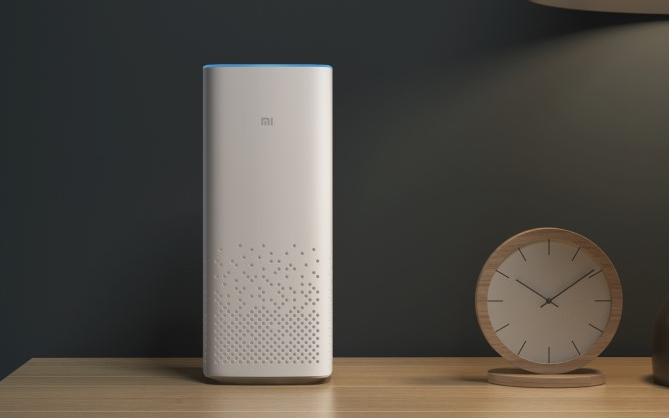
Although China is known as the world's IT manufacturing hub, there are product categories that are not available domestically. These include older products, regionally specialized items, and products for which domestic manufacturing has not yet been established. For instance, in the case of AI speakers, there is potential not only for hardware production but also for the growth of killer apps and the production of new IoT products. Currently, numerous design houses in China are competitively participating in development and production. Furthermore, there is room to consider products such as drones, tablets, small robots, OTT (Over The Top) set-top boxes, and mid-to-low-priced 2-in-1 laptops.
Director Lee stated, "While making good hardware is fundamental for AI speakers, voice recognition technology, deep learning support, and recognition rates in actual apps are becoming increasingly important given limited resources. There are still opportunities for domestic fabless companies," adding, "Whether for components or finished products, global commercialization through China is possible, so this point should be kept in mind."
Comments
Related news
Fabless Industry: “Government Support for High-Growth Potential Intelligent Semiconductors Urgently Needed”
The Ministry of Science, ICT and Future Planning (Minister Choi Yang-hee, hereinafter "MSIP") held the 10th ICT Policy Forum for leading the intelligent information society on the 21st, chaired by Vice Minister Choi Jae-yu, at the Global R&D Center (located in Pangyo). The policy forum was attended by representatives of fabless companies and experts from small and medium-sized semiconductor enterprises, academia, and research institutions, where recent technology trends and government support policy measures were discussed and challenges from industry were heard.
2017.03.24by 신윤오 기자
System Semiconductor Industry Requires Close Collaboration Between Industry and Academia to Strengthen Competitiveness
Industry-University Cooperation Forum for System Semiconductors Held under Ministry of Trade, Industry and Energy Fabless Re-development Requires Commitment from Industry and Academia A venue has been established to discuss the role of system semiconductors in the Fourth Industrial Revolution era and how to cultivate human resources. The "3rd System Semiconductor Industry-University Cooperation Forum," organized by the Korea Institute of Industrial Technology Evaluation and Planning (Keit), was held on the 24th at the Palace Hotel in Seoul. This year's third forum also included a technology exchange meeting for SMEs and universities to share manpower training and information. Ha Sang-tae, head of the System Materials Industrial Technology Division at the Korea Institute of Industrial Technology Evaluation and Planning, opened the event with remarks stating, "The system semiconductor sector has limited market activation and low market share. This is because demand companies prefer overseas companies. Organic cooperation between fabless companies is insufficient, and technological capabilities are concentrated in a small number of products, resulting in limited market activation. To enhance our industrial competitiveness, close cooperation between SMEs/mid-sized companies and universities is necessary."
2017.06.16by 김지혜 기자
EWBM Changes the Internet of Things Security Landscape with SoC Chips
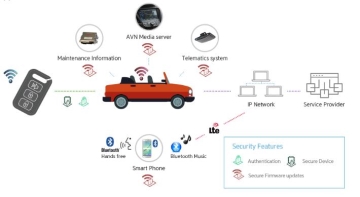
In these times when Internet of Things (IoT) security is gaining attention, there is a company that manufactures secure SoCs with built-in SE (Secure Element) functionality in terminals. eWBM (www.ewbm.co.kr), established in 2009, is a fabless semiconductor company. It develops IoT security semiconductors and 3D imaging semiconductor products. For IoT security, the method used by existing companies has been to use both a microcontroller (MCU) without security and a security chip called a Secure Element (SE) in the terminal together. This approach provides advanced security features compared to standard MCUs, but results in increased terminal costs due to system complexity.
2017.07.26by 김지혜 기자

Intel Unveils Next-Generation 'Core Ultra Series 3' and vPro Platform for Enterprise PCs
Intel has officially unveiled the "Intel Core Ultra Series 3" for next-generation enterprise PCs and the latest vPro platform, addressing a wide range of demands from enterprise notebooks to high-performance workstations.
2026.03.26by 배종인 기자

ROHM Launches ESD Protection Diode Compatible with High-Speed Interfaces of 10Gbps or Higher
Semiconductor specialist ROHM has developed the 'RESDxVx series' of ESD (electrostatic discharge) protection diodes capable of responding to next-generation high-speed data communication environments exceeding 10Gbps, simultaneously enhancing both signal quality maintenance required in high-speed interfaces and IC protection performance.
2026.03.26by 배종인 기자











