


Limelight Networks Releases DDoS Attack Defense Guidelines for the Gaming Industry
 Published2017.08.28 10:25
Limelight Networks has released guidelines for protecting against DDoS attacks on its cloud-based Content Delivery Networks (CDNs) for the gaming and entertainment industries.
“This year we’ve seen firsthand how DDoS attacks have evolved,” said Steve Miller Jones, Senior Director of Product Management at Limelight Networks. “DDoS attacks, which overwhelm a target system with requests and traffic, have become more prevalent on compromised systems, and these large-scale attacks ultimately lead to service outages. By overwhelming the platform with unsustainable requests and traffic, these attacks can significantly degrade the resources and performance of the affected application. This has forced game developers to re-evaluate their cybersecurity practices.”
He also said, "The frequency and sophistication of cyberattacks are expected to continue to increase. To maintain their brand reputation and continue to increase revenue, game developers must leverage high-performance networks capable of protecting their content."

In fact, these cyberattacks can significantly reduce customer satisfaction and ultimately negatively impact brand reputation if users are unable to access content or if the content is of poor quality. Especially in the highly competitive world of gaming and esports, it's all too easy for subscribers to switch to competitors. Therefore, it's crucial for game developers to develop strategies to enhance potential customer satisfaction from the development stage.
Limelight Networks has released DDoS attack defense guidelines for cloud-based CDNs for the gaming and entertainment industries. Key recommendations include: Implement a solution that not only defends against cyberattacks but also provides flexibility to respond to traffic surges; minimize system downtime; accurately identify attackers; and implement continuous performance monitoring to improve the end-user experience.
Comments
Related news

Limelight Hosts Seminar on Cyber Security Attack Response
Limelight Networks announced that it will host an online seminar titled "2017 Cyber Security Threats and Defense Strategy" on Thursday, July 20th, introducing cyber security attack response measures for protecting digital assets, targeting corporate security personnel. The "2017 Cyber Security Threats and Defense Strategy (Top Cyber Security Risks in 2017 and Best Practices for Defense)" seminar will be live-streamed online from an offline customer invitation event held at Park Hyatt Hotel in Samseong-dong on the 20th, running for 3 hours from 9:30 a.m. to 12:30 p.m. The main content of this seminar will proceed as follows: ▲ Introduction of "Cyber threat trend in Korea 2017" by Park Dae-sung, Regional Director of Limelight Networks Korea, followed by ▲ "Security Threats Facing Complex Web Businesses" presented by Laurent Gil, founder and CPO of Zenedge (www.zenedge.com), a cloud-based security solutions company, and Joshua Roza, Sales General Manager, ▲ "A Layered Defense for Safeguarding Digital Applications and Assets" presented by Ryan Jeffs, Senior Product Manager at Limelight Networks, and other sessions in that order.
2017.07.10by 김지혜 기자

Limelight Networks Establishes Network Points of Presence in India
Limelight Networks announced the establishment of three new network Points of Presence (PoPs) in India to meet users' transmission requirements. The new network Points of Presence (PoPs) located in Mumbai, Chennai, and Delhi, India can more smoothly meet the rapidly increasing online traffic and bandwidth requirements. Dan Carney, Senior Vice President of Operations at Limelight Networks, stated, "Movies, music, and sports are fundamental digital content enjoyed by India's 1.3 billion population. Along with infrastructure improvements, a prerequisite for maintaining competitiveness is providing the highest quality online services. Limelight will provide all the necessary capabilities to the market to address these requirements."
2017.07.25by 김지혜 기자
.png)
Databricks Unveils Open AI Security Monitoring 'Lakewatch'
Databricks entered the security market on March 24 by unveiling LakeWatch, an open-source agentic SIEM. The core functionality of this product is to integrate and analyze security, IT, and business data in a single environment to support AI-based threat detection and investigation. The company explained that it reduces the limitations of existing security operations centers, which have had to forgo some data due to high cost structures, and enables large-scale data analysis and automation based on open formats and ecosystems. LakeWatch is currently offered as a private preview, with Adobe and Dropbox mentioned as early customers. Databricks also announced an expanded partnership with Anthropic as well as the acquisition of Antimatter and SiftD.ai.
2026.03.26by 배종인 기자

Kaspersky Unveils Revamped 'NEXT' Combining SOC Integrated Management and AI Analytics
As enterprises increase demand for integrated management and automation in the construction and operation of Security Operations Centers (SOC), Kaspersky has disclosed updates to its B2B security product suite 'Kaspersky Next'. This update expands EPP, EDR, XDR, and SIEM integration through a single console based on OSMP, incorporates AI capabilities such as DLL hijacking detection and suspicious account takeover behavior identification, and includes integration with generative AI assistant tool KIRA. The company stated that in large-scale deployment environments, EDR Expert can reduce resource requirements by up to 30%, and XDR Expert by up to 60%.
2026.03.25by 배종인 기자
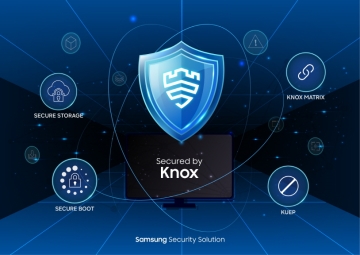
Samsung Electronics Smart Monitor Acquires First International Certification… Expanding Application Scope Following TVs
Samsung Electronics has received Common Criteria (CC) certification for 'Samsung Knox,' a security solution applied to its 2026 smart TVs and smart monitors. The smart TV has achieved certification for 12 consecutive years, while the smart monitor obtained industry-first certification this time. The evaluation was conducted focusing on core functions including kernel integrity monitoring, phishing site blocking, and unauthorized execution prevention. The company plans to expand the scope of security certification beyond TVs to monitors, responding to growing personal information protection requirements as connected devices proliferate.
2026.03.25by 배종인 기자











