



[Reporter's Notebook] Will the 10-Year Drone Policy Plan Succeed in Popularizing Drones Without Leaving Hobby Drones Behind?
 Published2017.09.01 08:45
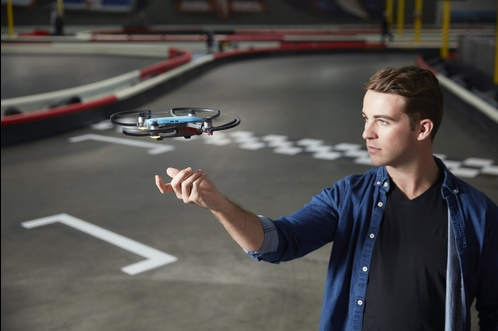
This interest in hobby drones continued at the Ministry of Land, Infrastructure and Transport's Drone Industry Development Basic Plan public hearing, which focused on industrial drones, and the 2017 Republic of Korea Drone Policy Forum.
Kim, who runs a hobby/leisure drone club, said, "At the last public hearing, I suggested that hobby/leisure drones be considered. However, at the policy forum, only hobby/leisure drones were excluded." He expressed curiosity about why the mid- to long-term plan for the domestic drone industry is so unilaterally focused on industrial use.
Initially developed for military use, drones are now expanding beyond the civilian market for hobbyists and photography to include safety diagnostics, surveillance/surveying, and material transport. The domestic market is also seeing a rise in civilian demand, particularly for photography and agriculture.
The Ministry of Land, Infrastructure and Transport (MOLIT) has set mid- to long-term goals: reaching a market size of 4.1 trillion won by 2026, achieving a global ranking of 5th in technological competitiveness, and commercializing 60,000 industrial drones. To achieve this, the ministry plans to increase R&D investment to 1 trillion won and create public demand by introducing drones into government and public institutions. The Aviation Safety Act amendment, which allows drone flights even in non-visible areas, has also been passed, so from November, nighttime and beyond-visible flights will be possible upon request.
Even advanced drone nations view the commercial drone market as an untapped market. Icelandic shopping mall AHA has commercialized a drone delivery system, and Amazon is also preparing for drone delivery. Facebook plans to use drones for internet access.
However, government officials had a different view. A Ministry of Land, Infrastructure, and Transport official explained, "China dominates the global small drone market, and we're not falling behind in terms of technology. We're just lacking in price competitiveness." He added, "Advanced countries already dominate the hobby drone market, so even if we start now, we'll only be second."
Forum participants had differing opinions. An anonymous participant stated, "Many people, regardless of gender or age, are interested in drones. The industry will grow only when this interest continues and they become more popular. Gaming, while initially met with resistance, has become established as an e-sports sport. Drones should follow the same path." He added, "The government should host competitions or immediately expand the number of places where drones can be flown. Then, wouldn't popularization naturally follow?"
There are many examples of drone powerhouses that started out as hobby drones and then successfully popularized them. A prime example is China's DJI, which dominates the global drone market with a 70% share, which started out as a toy drone. It began with a low-cost model, emphasizing accessibility, simplicity, and convenience for consumers. DJI has also grown its technological prowess, releasing new products almost every six months. DJI has also expanded into commercial sectors, including agriculture, search and rescue, wildlife monitoring, surveying, and robotic drones. DJI envisions a "one-person, one-drone" era, where drones will become a necessity, much like smartphones.
A Ministry of Land, Infrastructure and Transport official stated, "Whether hobby drones align with government policy is a strategic decision," and added that the government is considering whether to extend support to the private sector. He continued, "The message of expanding the R&D budget carries significant meaning. We are open to other sectors, beyond commercial use." This means that support is possible if hobbyist drones are not restricted.
As the government prepares for the next decade of the drone industry, it is time to clearly outline policies for what can be done for hobbyist drones to commercialize and popularize drones.
Comments
Related news
"If we follow China's lead in small drones, we will fail." The Korean industrial drones that we should focus on are
"Drones are important in terms of enabling the development of core technologies for the future aviation industry. Therefore, a national master plan is necessary." Song Ki-han, Director of the Korea Transport Institute, stated this on the 19th at a public hearing on the drone industry development master plan, explaining the current status, market outlook, fostering targets, and strategies for the domestic drone industry. In response, the public hearing proceeded with industry, academia, and research experts offering advice on content that should be supplemented in the plan. The drone industry master plan addresses the need for government-wide support based on a mid- to long-term master plan in the drone industry, which is still in a growth phase. The targets include expanding the market size to 4.1 trillion won by 2026, entering the world's top 5 in technological competitiveness, and commercializing 60,000 industrial drones.
2017.07.24by 김지혜 기자
[Foreign News Briefing] Attack Drones for Counter-Terrorism and Smart Soccer Ball and More
Drones Have Become Attack Weapons Data Center Built in the Arctic What's Your Dribbling Skill Rating? One Smart Home Sensor Is Enough
2017.08.21by 김자영 기자

Drones are entering a phase of regulatory reform, but their widespread adoption will require special legislation.
"Drones are a core issue and topic of the Fourth Industrial Revolution. The drone industry is highly expandable, promising, and an industry that citizens can directly experience." On the 24th, at the '2017 Republic of Korea Drone Policy Forum' held at the National Assembly grounds, Chairman Jo Jeong-sik of the Land, Infrastructure and Transport Committee mentioned the importance of the drone industry with these remarks. This forum was held as a continuation of the 'Drone Industry Development Master Plan Public Hearing' that took place on the 19th of last month, and was hosted by Chairman Jo Jeong-sik of the Land, Infrastructure and Transport Committee and the Ministry of Land, Infrastructure and Transport, with co-hosting by the Korea Transportation Safety Authority, Korea Drone Industry Association, Korea Transport Institute, and Korea ITS Society. Drones for day/night video acquisition, drones for power transmission tower and line diagnosis, 3D mapping using drones, agricultural drones, and real-time meteorological observation drones equipped with small unmanned aircraft were on display. In addition, drone racing demonstrations by members of the Drone Racing Association, industrial drone demonstrations, and participant experience activities were conducted.
2017.08.24by 김지혜 기자

Korea Instrument, KOLAS Accredited Calibration Agency First to Simultaneously Acquire ISO/IEC 27,001·27,701
Korea Instrument has become the first among KOLAS accredited calibration agencies to simultaneously acquire ISO/IEC 27,001 and ISO/IEC 27,701 certifications. Through its proprietary platforms CWIZ Enterprise and CWIZ Partners, the company has embedded information security and personal data protection requirements across all business processes including customer information, equipment data, and calibration reports, with plans to continuously advance its management system through regular audits and security inspections.
2026.10.12by 배종인 기자
TeamViewer One, IT Incident Automation Workflow and Resolution Center Enhanced
TeamViewer has added IT incident automation capabilities and an advanced Resolution Center to its integrated digital workplace management platform 'TeamViewer ONE'. Recurrent service disruptions, configuration errors, and capacity shortages are automatically handled according to preset policies, and device status verification through script deployment can be managed in a unified interface, significantly reducing repetitive tasks for IT teams.
2026.10.12by 배종인 기자











