


Radiation Watch, just connect the sensor to your smartphone to measure radiation
 Published2017.08.31 11:30
Easy to use by connecting to a smartphone for portability
From fine dust, radioactivity, pesticide eggs to sanitary pads, concerns about the environment are growing in our daily lives. There is a product that can help ease these concerns.
Pocket Geiger from Radiation Watch, a subsidiary of REVV, is one such example. Radiation Watch is an NGO non-profit organization, and Pocket Geiger is a portable radiation meter that measures the level of radiation in the atmosphere. It can measure soil or air contaminated with radiation.
Connect the sensor to your smartphone and you can measure the radiation levels in the air in as little as 30 seconds or as much as 2 minutes. It performs as well as expensive radiation meters used in the field.
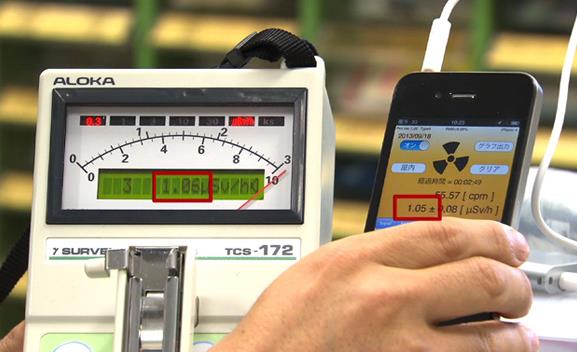
Most of the existing field radiation measuring devices adopt the Geier-Muller counter (GM) method. The GM measuring device is the cheapest among field measuring devices, but it has a good detection ability for its price and a wide radiation measurement range. The measurement efficiency is somewhat lower, but it is less affected by external factors such as temperature.
Pocket Geiger uses silicon semiconductors to achieve precise measurements and portability with a small size. The GM meter uses a glass tube as a pressurized gas tube. This part is filled with solid particles to embed p-type silicon and n-type silicon inside the device, and the principle is that the measured value is obtained by forming the depletion zone of the irradiated radiation and increasing the radiation-induced current.
It can be used to monitor accumulated radiation levels in the surrounding area or to detect radon, a type of radiation, in the home. Radiation sources are divided into alpha, beta and gamma. Alpha rays can be shielded with a single sheet of paper, and beta rays can be shielded with metal. Gamma rays have a short wavelength, so they can only be blocked with lead or concrete. Pocket Geiger detects and measures gamma rays and X-rays.
Also, alpha particles produced by radon gas can be detected. To measure radon gas using a pocket Geiger, activated carbon or charcoal must be used. The method is to place charcoal in the place where radiation is to be measured for 1 to 3 days and then measure the radiation level. There are differences depending on the region, but if the measured value is 0.4 μSv or higher, it can be considered dangerous.
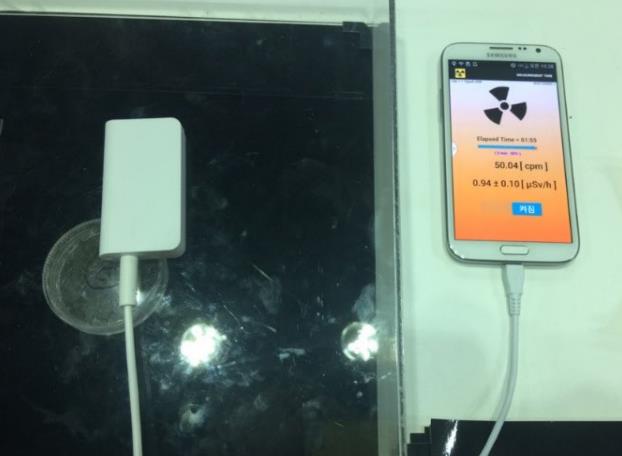
A common use is to monitor radiation in the air and soil, but extremely low levels of radiation are generally not detectable, except in food or water that is heavily contaminated with radiation.
Currently, there are Type 3 and Type 4 products available for purchase. Type 3 can be used on smartphones running iOS and Android, but requires a separate battery. Type 4 is exclusive to iOS, and can only be used on iPhones and iPads, and can measure without a separate battery. Both products have a measurement range of 0.05 μSv/h to 10 mSv/h and operate at temperatures between 0 and 40 degrees. The product size is 34x70x36 and it weighs 40g, making it portable.
Radiation Watch also has a product that connects to a smartphone to measure fine dust. It measures the size of PM2.5, which is called ultrafine dust, and PM10, which is fine dust. It measures using laser scattering and can measure in the range of 0 to 999㎍/m3.
Comments
Related news
Honeycomb, Big Data Analysis with Open Source SW Platform
Big data is no longer an unfamiliar term. Beyond government and public sectors, the volume of data generated in real-time by individuals is increasing exponentially. How to collect and analyze the growing data determines the value of big data. To analyze big data, a big data platform—the IT environment necessary to process and analyze diversely collected data, extract knowledge, and provide intelligent services based on that knowledge—and experts are required. Onycom (www.onycom.com), a company providing solutions and services in big data, Internet of Things, and cloud, recently released 'Ankus Analyzer G', a big data analysis platform for public institutions, as open source. Ankus is divided into an open source version managed by the community and a commercial version managed by Onycom.
2017.08.09by 김지혜 기자
Polariant, enjoy the mobile VR gun game realistically
At the Smart Device Show and the VR Summit alike, Samsung Gear was the only domestic VR device on display. Many voices said "hardware is already too late; let's focus on content," but it was disappointing. Around that time, I discovered a domestic startup called Pollarient that manufactures VR controllers. From the photos, the controller looked different from existing controllers. There was a shiny, round ball resembling a disco ball at the very top, with buttons below it.
2017.08.18by 김자영 기자
Cearstech Technology: Record your daily life with a wearable camera
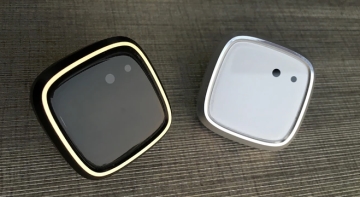
Instagram, a social media platform for sharing photos and videos, has surpassed 700 million monthly active users. Recording daily life through photos or videos is no longer noteworthy, even outside of travel or special occasions. There is a wearable camera that can automatically record daily activities at regular time intervals. It is the 'MEWECLIP' from Searstech Technology, a device platform specialist company that provides smart home and mobile healthcare-related communication modules, service terminals, and mobile applications. Existing compact cameras, such as action cameras, had inconveniences with battery consumption and transmitting or storing recorded content. MEWECLIP enables automatic transmission by simply syncing with a smartphone app without cables or manual operation.
2017.08.23by 김지혜 기자
ESP32 Development Environment Selection and GPS Application Implementation
The ESP32 is a microcontroller that integrates Wi-Fi, Bluetooth, 12-bit ADC, capacitive touch, PWM, DAC, and UART in a single SoC. However, the abundance of features does not by itself solve the designer's problems. The real challenges lie in selecting the appropriate development environment, determining which pins can be used and which must be avoided, and converting raw data from modules into usable information. This document addresses ESP32 peripheral constraints (ADC2 and Wi-Fi coexistence limitation, UART1 occupancy, ADC non-linear regions), the trade-offs between Arduino IDE and ESP-IDF, and the process from connecting NEO-6M/NEO-M8N GPS modules to UART2, parsing NMEA sentences, and visualizing routes in Google Earth, all organized based on documented references.
2026.10.12by 편집부
MIPI CSI-2, DSI-2, C-PHY, D-PHY Test Solution Technical White Paper
The MIPI interface adopts a burst mode that transitions between low-power (LP) and high-speed (HS) states for low-power consumption, and in return, strict timing rules are imposed on state transitions. Additionally, the high-speed section operates as a packet-based protocol with headers, ECC, and CRC, so verification engineers must handle waveforms and protocols simultaneously. Traditional configurations combining general-purpose oscilloscopes and AWGs reveal limitations in setup complexity, measurement uncertainty, and lack of reproducibility when faced with these requirements. This white paper, based on webinar materials, organizes the structure of this problem and describes how the SV5C-DPTXCPTX generator for receiver testing and SV5C-DPRXCPRX analyzer for transmitter testing integrate state transition testing, stressed eye testing, and protocol analysis into a single bench, along with their application boundaries.
2026.10.12by 편집부











