



[Foreign Press Briefing] IFA Eye-Catching Items and Aquarium Cleaning Robots, and More
 Published2017.09.04 10:56
Facebook announced that accounts updating inaccurate news articles will not be able to advertise. The company is taking various measures to combat this after being criticized last year for aiding the spread of fake news. The advertising ban is in the same vein. TechCrunch reported that changing advertising policies could make it more difficult to attract customers. However, a Facebook official stated that the advertising ban is not a permanent measure and that accounts will be able to purchase ads again once they stop sharing inaccurate articles.
A goldfish caretaker who can clean the aquarium and look inside
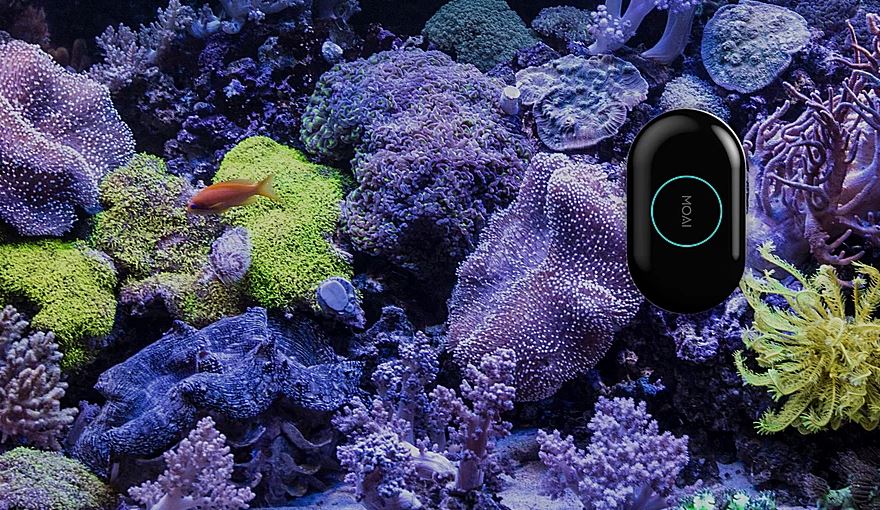
Robots that clean glass in aquariums could become carpenter caretakers for goldfish. MOAI, a Silicon Valley Kickstarter project, is a self-moving robot unlike conventional algae removal devices. It differs from devices that cleaned the interior using magnets separated by glass. Users only need to set the internal cleaning schedule via an app. Additionally, a 1080p camera looks inside, allowing users to view the aquarium in real-time through the app. It is also possible to take photos or record. When the battery is low, MOAI automatically returns to the charging dock on the front of the aquarium.
Which kids are catching the eye at the IFA electronics exhibition?
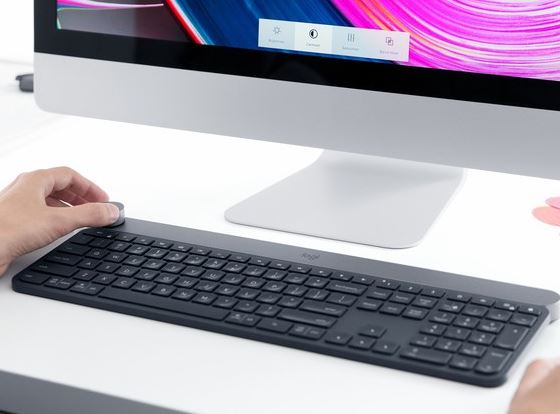
What devices caught the eye at IFA 2017, Europe's largest electronics exhibition held in Berlin? Wired highlighted Sony's Google Assistant speaker, LG's V30, Beoplay's E8 wireless earphones, Lenovo's upgraded Yoga laptop, SanDisk's 400GB microSD card, Logitech's keyboard wheel, and Samsung's Gear Sport. In particular, Logitech's keyboard garnered attention for featuring a wheel capable of clicking, touching, and rotating, designed for graphic designers and video editors. It recognizes Adobe Photoshop, Illustrator, InDesign, etc., and automatically recognizes and responds to other programs as well.
Rice- grain-sized RFID chips improve drone inventory management efficiency
MIT found a way to effectively manage inventory by using RFID technology to reduce the weight of drones and increase accuracy. When managing existing items, the direction of the drone was important because barcodes required reading signals.
RFID operates like a WiFi repeater regardless of direction. It is about the size of a grain of rice, so it does not significantly affect the drone's volume. The drone flies around and reads each tag multiple times. It can determine the movement and location of surrounding objects without attaching a physical reader. Location accuracy is achieved by attaching RFID tags to exchange location data. The Verge reported that drones are expected to be of great help, particularly by allowing easy access to high places that would otherwise require a lift to reach, and by facilitating repetitive tasks.
Comments
Related news
[Foreign Press Briefing] Microchip Implantation Becomes a Reality, and More
Apple Testing 5G Technology for One Year In May of this year, Apple applied for 5G testing authorization. The millimeter-wave bands are 28GHz and 39GHz. Business Insider revealed through an interview with an analyst shortly after Apple applied for the license that "Apple is likely building a network at its headquarters to test 5G." With an experimental license, it was predicted to be one-way transmission testing signal strength according to distance from the mobile transmitter to the receiver. Subsequently, the report stated that since the applications Apple uses require fixed transmitters, 5G for iPhone would be difficult.
2017.08.07by 김자영 기자
[Foreign Press Briefing] Urine-analyzing mobile phone app, charging earphones, and more
iPhone 7 earphones that let you listen to music while charging, GE's laser printing technology to be unveiled in November, Analyzing urine with a mobile phone, Samsung Gear to be released in fitness form
2017.08.14by 김자영 기자

[Foreign News Briefing] Attack Drones for Counter-Terrorism and Smart Soccer Ball and More
Drones Have Become Attack Weapons Data Center Built in the Arctic What's Your Dribbling Skill Rating? One Smart Home Sensor Is Enough
2017.08.21by 김자영 기자

ESP32 Development Environment Selection and GPS Application Implementation
The ESP32 is a microcontroller that integrates Wi-Fi, Bluetooth, 12-bit ADC, capacitive touch, PWM, DAC, and UART in a single SoC. However, the abundance of features does not by itself solve the designer's problems. The real challenges lie in selecting the appropriate development environment, determining which pins can be used and which must be avoided, and converting raw data from modules into usable information. This document addresses ESP32 peripheral constraints (ADC2 and Wi-Fi coexistence limitation, UART1 occupancy, ADC non-linear regions), the trade-offs between Arduino IDE and ESP-IDF, and the process from connecting NEO-6M/NEO-M8N GPS modules to UART2, parsing NMEA sentences, and visualizing routes in Google Earth, all organized based on documented references.
2026.10.12by 편집부
MIPI CSI-2, DSI-2, C-PHY, D-PHY Test Solution Technical White Paper
The MIPI interface adopts a burst mode that transitions between low-power (LP) and high-speed (HS) states for low-power consumption, and in return, strict timing rules are imposed on state transitions. Additionally, the high-speed section operates as a packet-based protocol with headers, ECC, and CRC, so verification engineers must handle waveforms and protocols simultaneously. Traditional configurations combining general-purpose oscilloscopes and AWGs reveal limitations in setup complexity, measurement uncertainty, and lack of reproducibility when faced with these requirements. This white paper, based on webinar materials, organizes the structure of this problem and describes how the SV5C-DPTXCPTX generator for receiver testing and SV5C-DPRXCPRX analyzer for transmitter testing integrate state transition testing, stressed eye testing, and protocol analysis into a single bench, along with their application boundaries.
2026.10.12by 편집부











