



Shutterstock Protected Copyrights with Watermark Removal Technology
 Published2017.09.04 11:18
Solution applied to Google watermark removal technology
Shutterstock announced that it has completed the application of a solution through enhanced watermarking technology to address the copyright protection controversy sparked by the stock photo watermark removal algorithm technology recently revealed by Google. According to the method disclosed by Google, computer vision technology can automatically remove watermarks embedded in photos, thereby jeopardizing the copyrights of photographers and creators protected by watermarks.
As a solution to this announcement, Shutterstock developed a random watermark generator and implemented changes to insert a unique watermark for each image. The shapes of the modified watermarks differ for each image, and the names of the contributors who uploaded the images are also included. By creating completely different watermarks for each image, it was made technically difficult for algorithms to identify and remove them. The new watermarks successfully passed Google's algorithms, proving their effectiveness in copyright protection. Even before Google's research results were announced, Shutterstock had already protected its assets by applying new watermarks to more than 150 million of its images.

Watermark before change 
Watermark after change
Marty Brodbeck, Chief Technology Officer at Shutterstock, said regarding the technology, “When developing the watermark enhancement technology, the primary consideration was preserving image quality. Since simply changing the transparency or position of the watermark did not solve the problem, we chose a shape modification method. Another challenge was how to apply the new watermark to a vast collection of over 150 million images. Our technology development team quickly and effectively applied the developed solution to assets securely stored in various locations through collaboration with internal and external partners.”
Comments
Related news

Magnet Forensics Launches Solution to Catch Criminals by Analyzing Chat Contexts with AI
Magnet Forensics announced today the release of a new version of its evidence collection and analysis solution, 'Magnet AXIOM'. The newly unveiled 'Magnet AXIOM 1.1' features artificial intelligence capabilities for chat analysis as an industry first, while supporting more powerful inspection tools and faster processing. Magnet AXIOM is a comprehensive digital evidence collection and analysis solution that collects data from smartphones and computers on a single platform, examines evidence data, and provides result reports. Currently, approximately 3,200 customers worldwide across 92 countries—including law enforcement, government, military, and corporate organizations—are using Magnet Forensics' internet evidence analysis solutions. In Korea, the company has secured major customers including leading law enforcement agencies, copyright-related organizations, public and corporate audit teams, law firms, and major enterprises.
2017.07.19by 김자영 기자

[Foreign News Briefing] Lenovo AR Headset and Google's Unveiled Feed
#Autonomous_vehicles_test_road_driving_is_it_okay,#Artificial_intelligence_Lenovo_joins_too,#Robots_are_we_coping_or_being_replaced,#Google_is_building_a_feed
2017.07.24by 김자영 기자
[Issue] Open Source SW, If License Management Is Negligent, You Will Get a ‘Big Nose’ When Distributing
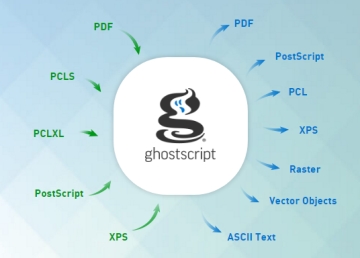
Recently, US software company Artifex Software filed a copyright infringement lawsuit against Hangul and Computer for violation of open source license terms. The issue arose from embedding Artifex's Ghostscript in Hancom Office. Open source software is often thought to be free because developers can freely use, copy, modify, and redistribute the source code. However, open source software has openly available source code while still being protected as intellectual property (IP). When using open source, it is necessary to verify the extent to which it is "open." Open source has over 80 license obligations including source code disclosure requirements, copyright notice requirements, patent waiver requirements, and usage rights notification requirements. Among licenses certified by OSI, the organization that certifies open source licenses (copyrights), representative licenses include AL (Apache License), BSD (Berkeley Software Distribution), GPL (General Public License), LGPL (Lesser General Public License), MIT, and MPL (Mozilla Public License). Even if the names are the same, the details of obligations vary depending on the version, so verification is essential.
2017.08.03by 김지혜 기자

LG Home Appliances Connect with Amazon Echo Voice Recognition Following Google
LG Electronics' home appliances continue to expand their voice recognition AI platform compatibility. LG Electronics will demonstrate the integration and control of LG home appliances with Amazon's AI speaker 'Amazon Echo' at the 'IFA 2017' exhibition opening on September 1st in Berlin, Germany. The 'Amazon Echo' is a speaker equipped with Amazon's voice recognition AI assistant 'Alexa'. Following LG Electronics' earlier integration of LG home appliances with 'Google Home' equipped with 'Google Assistant' starting in May, the company has now also connected with Amazon's 'Alexa', enabling more consumers to experience smart homes utilizing voice recognition AI platforms.
2017.08.28by 신윤오 기자
.jpg)
SalePoint Signs Multi-Year Partnership Agreement with AWS… Promoting Identity Security that Integrates Even AI Agents
Sailpoint has entered into a multi-year strategic partnership agreement with AWS and is moving forward with establishing an integrated governance system that manages both human and non-human identities together. The plan is to consistently manage access permissions in an environment where AI agents are increasing as work execution entities, while applying the principle of least privilege and automated policy enforcement. The two companies plan to jointly expand capabilities to manage the identities of various entities, including AI agents, within a single layer in the AWS environment. This collaboration is interpreted as a move to design security and governance together in corporate environments where AI adoption is expanding.
2026.03.26by 배종인 기자











