


NVIDIA Provides NVIDIA DGX Systems to General Hospital Research Lab
 Published2017.09.07 15:19
The AI healthcare sector is expected to develop.
NVIDIA announced that it has provided the NVIDIA DGX system, the world's first artificial intelligence supercomputer based on the NVIDIA Volta architecture, to the Center for Clinical Data Science at Massachusetts General Hospital.
The new Volta architecture-based DGX-1 provided this time offers groundbreaking artificial intelligence computing performance that is three times faster than the previous generation DGX, and delivers up to 800 CPU performance in a single system. The new NVIDIA DGX Station is the world's first personal supercomputer for artificial intelligence development. It has the computing power of 400 CPUs but consumes about 40 times less power and has a form factor that fits well on a corner of a desk.
Both systems utilize an integrated deep learning software stack and are ideal for conducting the world's most complex artificial intelligence research.
The research team at the Clinical Data Science Center consists of clinicians, researchers, data scientists, and experts in product development and translational research, and they are collaborating with the goal of advancing medicine through the use of artificial intelligence.
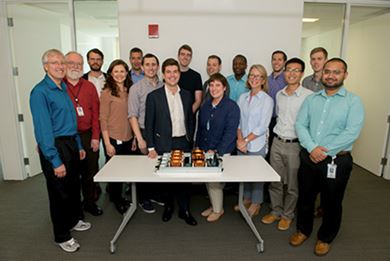
Research team at the Clinical Data Science Center of Massachusetts General Hospital
The research team plans to advance groundbreaking research aimed at developing multiple training algorithms and directly delivering AI performance to medical professionals using the NVIDIA DGX Station, the world's first personal AI supercomputer scheduled for release this month, and the NVIDIA DGX-1, a supercomputer based on the Volta architecture.
Neural networks trained on the DGX-1 system built within the research team's data center continuously acquire numerous medical images from around the world. This not only provides superhuman performance in identifying images at the pixel level but also analyzes other data scores at an incredible speed, supporting faster and more accurate disease diagnosis by medical professionals in MRI, CAT scans, X-rays, and more.
"Mark Michalski, Executive Director of the Clinical Data Science Center at Massachusetts General Hospital, explained, 'Amidst a flood of data—including laboratory reports, MRIs, CAT scans, and family health records—practitioners today face significant difficulties in making rapid decisions. Therefore, possessing technology that can support their efforts to make such decisions will lead to highly innovative results.'"
NVIDIA, together with a research team from the Clinical Data Science Center at Massachusetts General Hospital, plans to showcase cutting-edge medical imaging research at the upcoming MICCAI 2017 conference (Medical Image Computing and Computer Assisted Interventions Conference) in Quebec, Canada.
Comments
Related news
NVIDIA Provides Gaming Recording Feature to 'Battlegrounds'
NVIDIA announced a partnership with Bluehole, a domestic game development company. Advanced PC features including NVIDIA® ShadowPlay Highlights and other cutting-edge PC capabilities will be added to Bluehole's PlayerUnknown's Battlegrounds (PUBG), delivering an enhanced gaming experience on GeForce GTX PCs. Using NVIDIA ShadowPlay Highlights, gamers can capture gaming moments in video and screenshot formats and share them.
2017.08.22by 김자영 기자
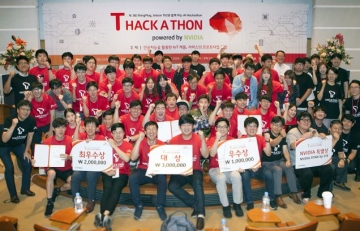
Nvidia Concludes Successful Third T Hackathon from IoT to AI
Nvidia, in collaboration with SK Telecom (CEO and President Park Jung-ho), successfully held the Third T Hackathon on August 26–27 at SK Telecom's headquarters in Eulji-ro. Marking the third edition since 2015, this year's T Hackathon's most distinctive feature was the expansion of themes from the existing Internet of Things (IoT) to Artificial Intelligence (AI). The 12 participating teams comprising 60 total participants, based on Nvidia's compact supercomputer board "Jetson TX2" that was provided, showcased various AI-driven services including ▲'a deep learning model that identifies optimal discount rates in real time' ▲'a gesture-based interface system that controls IoT devices in the home according to hand gestures' ▲'a classroom management system utilizing face recognition technology' and others.
2017.08.28by 신윤오 기자
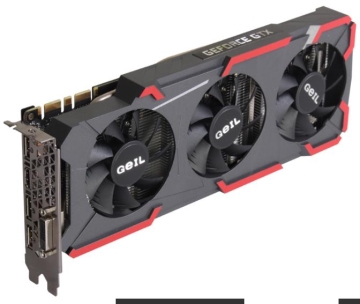
Seorin C&I Officially Launches NVIDIA VGA Series
Seorin C&I has officially launched the NVIDIA graphics card series from GEIL, which has been gaining attention from PC enthusiasts worldwide. The NVIDIA graphics card series from GEIL this time includes the GeForce GTX1080, GTX1070, GTX1060 6GB, GTX1060 3GB, GTX1050TI 4GB, GTX1050, and GT1030, which are equipped with the most advanced NVIDIA GPU architecture Pascal GPU. This NVIDIA graphics card product line has implemented a quadruple packaging system to prevent in advance any cases of product repackaging and selling used products as new items. The company has implemented full measures in product packaging with four layers of sealing: first layer white air cap packaging to prevent damage during shipping, second layer steel premium box packaging, followed by third layer pouch packaging, and fourth layer sealed air cap packaging upon pouch opening, all applied with sealing tape.
2017.09.04by 김지혜 기자
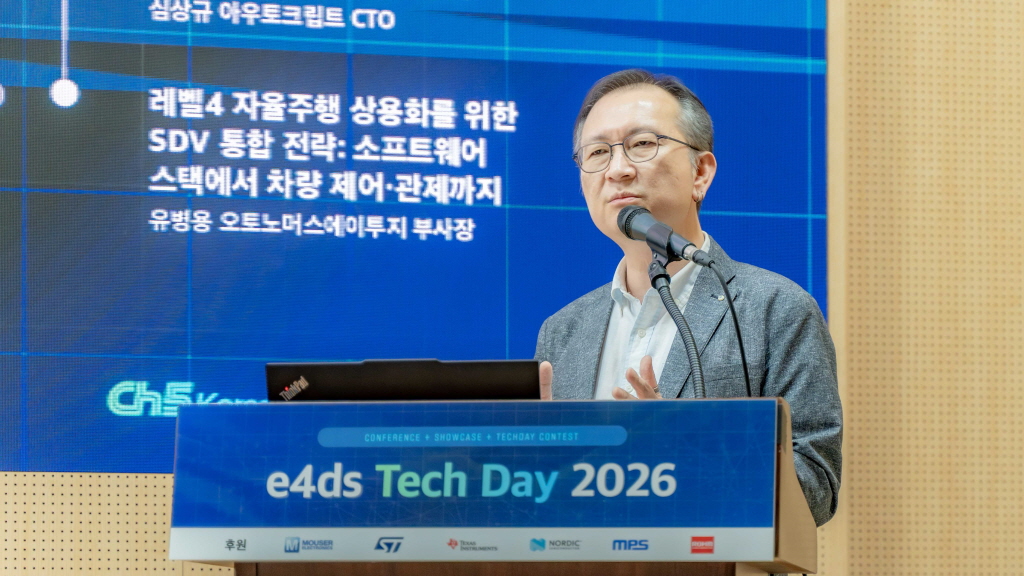
[e4ds Tech Day 2026 ⑨] Sim Sang-gyu, Autocrypt CTO: "In the Physical AI Era, Automotive Security Must Extend Beyond the Vehicle"
At e4ds Tech Day 2026, Sim Sang-gyu, CTO of Autocrypt, explained automotive cybersecurity strategies in the era of Physical AI and SDV (Software-Defined Vehicle). Automobiles are evolving as part of an ecosystem connected to AI, cloud, chargers, IoT, and robots, and he emphasized that the scope of security must expand beyond the vehicle interior to the entire connected environment. In particular, AI model tampering, adversarial attacks, OTA updates, and EV charger hacking were identified as major threats. He explained that response measures require zero trust, AI model integrity protection, intrusion detection, Security by Design and Default, and full lifecycle security management, and that proactive security system establishment beyond regulatory compliance is critical for securing future mobility competitiveness.
2026.10.12by 배종인 기자
NVIDIA to Invest $1 Billion in U.S. Science Over Next Five Years
NVIDIA has announced plans to invest $1 billion over the next five years to strengthen U.S. scientific and technological competitiveness. The company will enhance cutting-edge artificial intelligence research and development capabilities in key areas including quantum computing, healthcare, and energy security, while expanding support for higher education research institutions and cloud service providers. NVIDIA is participating as a major industry partner in the White House Office of Science and Technology Policy's Genesis Mission, and is promoting supercomputer construction in collaboration with national laboratories including Argonne and Los Alamos.
2026.10.12by 배종인 기자











