



[Smart City] Smart City Completion: Not Just Technology but Administrative Functions as Well
 Published2017.09.07 16:44
“ A smart city should be the perfect embodiment of the technological elements that are considered core to the 4th industrial revolution, such as big data, artificial intelligence, and robots.”
Speakers who participated in the 'Smart City Public Service Innovation Conference' held at KINTEX in Ilsan, Gyeonggi Province on the 7th emphasized that ultimately, smart cities should become a future where smart people live and smart governance exists, and that not only technology but also administrative aspects should go together.
Professor Nam Tae-woo of Sungkyunkwan University cited Barcelona and Stockholm as examples of successful overseas smart city introduction. Barcelona set the goal of smart cities as improving the lives and communities of citizens by integrating urban planning, ecosystem, and information technology. It is also a representative model city for smart cities that apply low-carbon technologies. The overall promotion is carried out by the city council, and the project management committee is in charge of detailed planning, execution, cooperation, and project performance supervision.
Stockholm aims for sustainability in four dimensions: ecological, financial, social and democratic. It uses big data to control traffic signals to prioritize buses, pedestrians and bicycles, and to quickly notify of free parking spots. There are examples of services such as street lights and electric bicycles that adjust their brightness to match the length of daylight and demand.
Professor Nam said, “The smart cities of both countries have succeeded because they have struck a balance between continuous government-level attention, efficiency-oriented services, and capacity building based on self-reliance.” He added, “There is a conflict between development and regeneration, but it is not as apparent as in our country. We are reducing the conflict through institutional participation and providing desired services.”
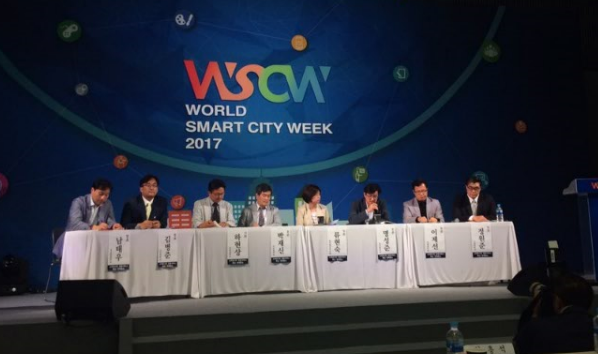
After introducing overseas cases, discussions continued on building a Korean-style smart city innovation model.
Kyung Sang University Professor Myeong-jun said, “A smart city is one where people are connected and live smartly through ICT. That’s why domestic smart cities are biased toward the technical aspect. The city of the future is considered to be a city that can smoothly supply human needs and ideals.” He explained, “In terms of technology, software and hardware must be harmoniously integrated. In addition, social discussions on data copyright, standards, etc. must take place.”
Professor Lee Je-seon of Yonsei University said, “We were ahead in U-City, but we are falling behind as we move to smart cities,” and pointed out that we need to pay attention to the physical aspects where smart cities are actually implemented. He said, “It is impossible to create a perfect city. “It is important that advanced technology, human roles, and systems go together,” he said.
While overseas cities are planned and managed in a planned manner and have the conditions to become smart cities, questions were raised about how to move forward as local small and medium-sized cities in Korea are not managed in a way.
Professor Nam said, “We need to come up with a roadmap for governance in the area of regeneration of local small and medium-sized cities,” and added, “If we want to solve it in our own way, we need to change the control tower or legal system. Europe is using the top-down method, but this method takes a long time. We need to think about which method is right for our domestic situation.”
Comments
Related news
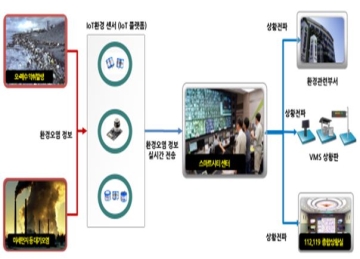
Large-scale industrial complexes monitor the environment using IoT sensors
Building an advanced smart city through the Internet of Things. The Ministry of Science and ICT and the Ministry of Land, Infrastructure and Transport announced that they will implement a "Smart Environmental Monitoring Demonstration Project" that enables rapid identification of causes and situational response when environmental pollution incidents such as odor and noise occur by utilizing IoT and smart city technologies. This demonstration project will install IoT environmental sensors (10 units) in Gangseo-gu, Busan, where large industrial complexes are densely concentrated and odor complaints are rapidly increasing, to detect various pollution sources and generation points of odors. Data collected through the sensors will be transmitted 24/7 in real-time to the Smart City Center to be utilized for grasping pollution conditions and enabling rapid environmental pollution response through cooperation among related organizations such as the environmental department.
2017.07.31by 김지혜 기자
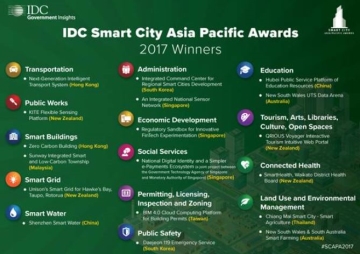
IDC Selects 18 Outstanding Smart City Projects of 2017
IDC announced the selection of 18 outstanding smart city projects in the Asia Pacific region for 2017, with New Zealand and Singapore chosen as the top-performing countries. These nations were designated as the leading smart city countries for two consecutive years, with 4 and 3 award winners respectively out of a total of 14 categories. In Korea, Daejeon Metropolitan City's '119 Emergency Rescue Service' was selected as an outstanding smart city project in the 'Public Safety' category, and Incheon Metropolitan City's 'Incheon Free Economic Zone (IFEZ) Smart City Integrated Operations Center' was selected in the 'Administration' category, resulting in award winners in a total of 2 categories.
2017.08.08by 김자영 기자
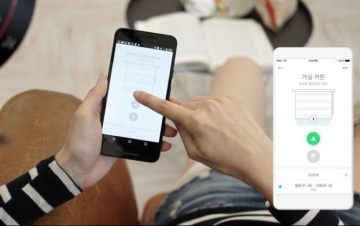
What products, including electric curtains and IoT lighting, are being crowdfunded?
Wadiz (CEO Shin Hye-sung), a leading crowdfunding platform, announced that crowdfunding projects in the IoT technology sector, which help turn ideas into reality, are attracting significant investor interest. As the Internet of Things (IoT) era is entering full swing, it is already bringing substantial changes to consumer experiences. In particular, the three major sectors leading the global IoT market are smart homes, smart cities, and connected cars. IoT, which had previously remained confined to the consumer market, is rapidly expanding and developing into B2B applications such as industrial sites and smart buildings.
2017.08.31by 신윤오 기자
Nvidia invests $5 billion in Intel
NVIDIA and Intel, leaders in global AI computing technology, are now forging ahead in providing cutting-edge solutions through NVLink-based architecture integration. NVIDIA and Intel have officially announced a strategic partnership and stated that they will jointly develop customized data center and personal computing products to accelerate diverse applications and workloads ranging from hyperscale to enterprise and consumer markets, thereby laying the foundation for the next generation computing era.
2025.09.22by 배종인 기자
.jpg)
Applied Materials Launches Environmental Protection Campaign to Mark World Cleanup Day
Applied Materials Korea (CEO Park Kwang-seon) is carrying out environmental cleanup activities with employees and their families around the Dongtan Sinricheon area on the occasion of World Cleanup Day, evolving into a company that engages with the local community beyond technological innovation.
2025.09.22by 명세환 기자











