


"Complete Autonomous Vehicle Safety with Professional ADAS Testing"
 Published2017.09.12 20:21
Autonomous vehicles are a field that emphasizes reliability, directly linked to the safety of drivers, passengers, and pedestrians. To achieve this, they must drive at least 100,000 kilometers, but real-world driving is challenging. This is why hardware-in-the-loop (HIL) testing, which simulates real-world conditions as closely as possible, is crucial for advanced driver assistance systems (ADAS).
Notably, prior to the fatal Tesla S accident, radar-based simulations had not been conducted. The autopilot function used CAN communication to simulate messages to verify proper braking and the proper functioning of each unit. This led to growing calls for tests that replicate actual driving conditions after the accident.
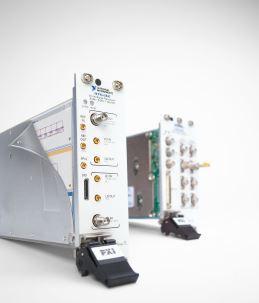
NI Vector Signal Transceiver (VST)
Vice President Jeong continued, “AUDI adopted HIL solutions during the testing phase because they can simulate various situations.”
NI's HIL solution creates a virtual environment for pre-testing entire embedded systems. Furthermore, its open platform allows for easy system upgrades, enhancing test efficiency.

The radar validates simulations using NI's signal generation, processing, and analysis technologies. It also measures traceable RF and performs system simulations.
In February, NI announced a collaboration with the University of Austin on context-aware automotive engineering systems. ADAS technology and communications were tested on the University of Austin testbed, based on NI's mmWave front-end technology and second-generation vector signal transceivers (VSTs).
“The ADAS test solution can be applied not only to radar, but also to three test vehicles equipped with Lidar, cameras, DSRC radios, and NI mmWave communication prototypes,” said Vice President Jeong.
Comments
Related news

NI, Automotive Components and Development Engineers, Come Here, 'Automotive Day 2017'
National Instruments announced that it will hold 'NI Automotive Day 2017' at the AT Center in Yangjaedong on the 25th (Tuesday). 'NI Automotive Day' is Korea's largest automotive electrical component engineer conference that shares new technologies through real-world case studies on the theme of reliable automotive components and vehicle development. At this conference, NI plans to introduce the latest technologies that can reduce development costs and time for automobiles while ensuring reliability. To this end, NI will share technical case studies implemented with NI solutions according to themes reflecting automotive industry trends, and conduct educational and hands-on seminars. Additionally, participants will have the opportunity to experience NI solutions firsthand at booths. In sessions with domestic and international experts, case studies related to autonomous vehicles, ADAS, infotainment, and V2X will be introduced, actively reflecting the needs of electrical component engineers. Featured presentations include ▲ the radar simulation implementation case for Audi vehicles from German company Konrad and NI's infotainment testing technology ▲ 5G/LTE-based V2X technology currently under development with SK Telecom's participation ▲ technical presentations on V2X wireless communications using NI's system design software LabVIEW and requirements for automotive component standard mass production inspection platforms. Alongside the sessions, educational and hands-on training will include a CAN seminar on vehicle communication networks for autonomous vehicles. Additionally, the automotive solutions booth prepared by NI and partner companies will exhibit and demonstrate more than 15 solutions to support new customers to NI products in acquiring useful knowledge and information. Kim Jong-woo, head of strategic marketing at Korean NI, stated, "Through this event where real-world cases are shared, automotive developers will be able to confirm the latest trends and technologies in the automotive industry. We hope that these innovative technologies will be widely applied to the development of increasingly intelligent and complex automobiles."
2017.04.20by 김자영 기자
[Contribution] How to design a flexible ADAS radar sensor
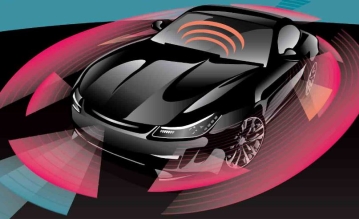
TI's AWR1x millimeter wave (mmWave) sensor portfolio enables developers to drive more safely and conveniently. Based on a mmWave sensing architecture (Figure 2), the AWR1x sensor integrates radio frequency (RF) and analog functions along with digital control functions into a single chip.
2017.07.20by 명세환 기자
NI Launches High-Performance PXI Remote Control Family, Boosting Throughput
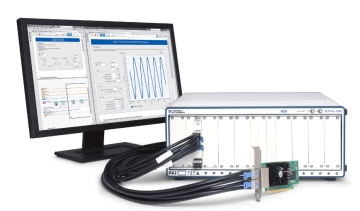
National Instruments (NI) has announced the launch of a new high-performance PXI remote control and bus expansion module family incorporating PCI Express Gen 3 connectivity. PCI Express Gen 3 technology provides wide bandwidth, which is essential for data-intensive applications such as 5G cellular research, RF recording and playback, and multi-channel data acquisition. Luke Schreier, Marketing Director of NI Automated Test, stated, "As technology focuses on smarter devices under test (DUT), there is a need to build smarter test and measurement systems that leverage the latest processing and data movement capabilities to reduce test costs and improve coverage. With this new remote control module family, we have enhanced our existing PCI Express Gen 3 chassis and embedded controller portfolio, and increased the throughput of multi-chassis systems by more than double."
2017.08.28by 김지혜 기자
[e4ds Tech Day 2026 ⑨] Sim Sang-gyu, Autocrypt CTO: "In the Physical AI Era, Automotive Security Must Extend Beyond the Vehicle"
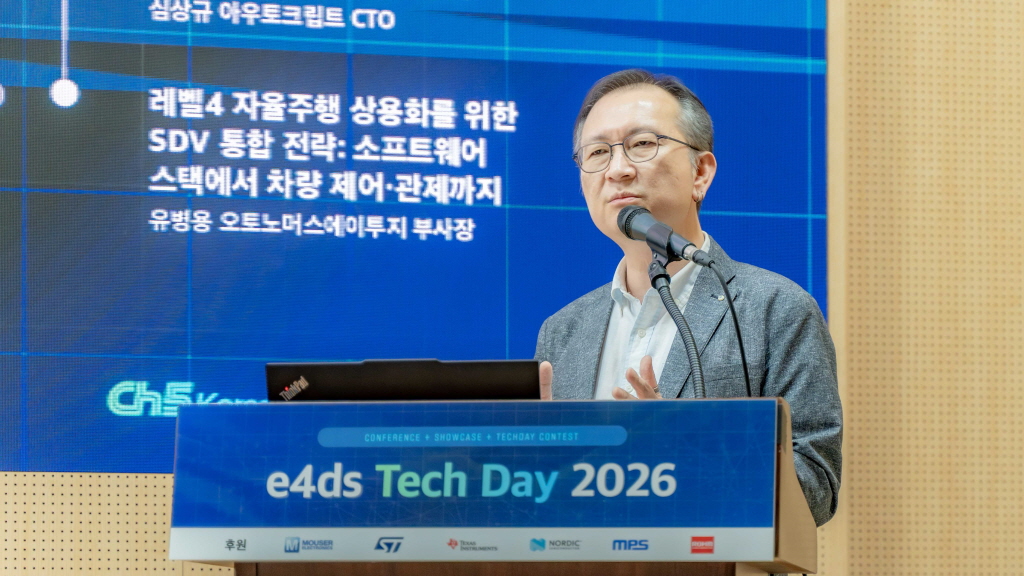
At e4ds Tech Day 2026, Sim Sang-gyu, CTO of Autocrypt, explained automotive cybersecurity strategies in the era of Physical AI and SDV (Software-Defined Vehicle). Automobiles are evolving as part of an ecosystem connected to AI, cloud, chargers, IoT, and robots, and he emphasized that the scope of security must expand beyond the vehicle interior to the entire connected environment. In particular, AI model tampering, adversarial attacks, OTA updates, and EV charger hacking were identified as major threats. He explained that response measures require zero trust, AI model integrity protection, intrusion detection, Security by Design and Default, and full lifecycle security management, and that proactive security system establishment beyond regulatory compliance is critical for securing future mobility competitiveness.
2026.10.12by 배종인 기자

Practical HIL Construction Strategy for Automotive and Off-Highway Controller Validation
As vehicle E/E architecture transitions to zonal structures and shifts to software-defined vehicles (SDV), the number of controllers (ECUs) requiring validation and software complexity are surging dramatically. Meanwhile, real vehicle testing cannot provide repeated verification under identical conditions and entails lead time and safety concerns. This white paper explains the principles of HIL (Hardware-in-the-Loop) validation and the structure of the NI platform composed of PXI, SLSC, and VeriStand, and through two actual implementation cases—Camera Record & Replay HIL for In-Cabin Monitoring Controller (ICMU) and Forklift Controller (VCU) HILS—describes how controller-level regression testing becomes possible. Additionally, it explicitly states application boundaries and limitations, such as lack of A2B support.
2026.10.12by 편집부











