


[Discussion] I was wondering what business models there are for making money with drones.
 Published2017.09.19 08:57
There is a need to cultivate talent to develop the core technologies that are lacking.
Drones are considered a key challenge of the Fourth Industrial Revolution. Whenever drones are discussed in Korea, market revitalization is a constant topic. The Ministry of Land, Infrastructure and Transport has decided to prioritize industrial drones over hobbyist drones. So, what kind of businesses should small and medium-sized enterprises and startups pursue using drones?
Under the theme of 'Drones, Emerging as a New Business', a forum was held at the Sangam Seoul Business Agency to discuss what businesses can be practically created using drones and what challenges exist in revitalizing the industry.
First, experts discussed areas recommended for SMEs to explore. Robolink CEO Lee Hyeon-jong said, "Ten years ago, we focused on developing our own products. Now, we're integrating with domestic and international drone partners." He added, "We're on fire for hardware development, but it's difficult to compete with China on this front. Instead of focusing on specific drones, focus on software."
RoboLink said its exports have increased by incorporating its software, remote controls, and drone accessories into global open-source drones. "Four years ago, we developed and sold our own platform," he said. "Now, we've adopted an open system. The drone market going forward will be determined by software competitiveness, not hardware competitiveness. “We need to quickly lead the market by expanding open technologies,” he said.
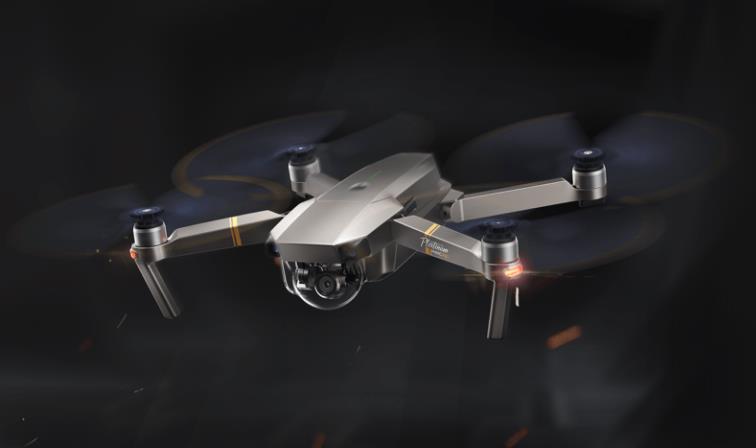
Professor Oh Seung-hwan of Kyungsung University stated, "The manufacturing market can't create a business model based solely on drones. New business models will emerge depending on what drones are loaded with and utilized." He added, "Don't try to be the first mover in creating a market. Instead, use drones as a tool in your current field to become a fast follower."
There was also a point made about the hobbyist market, an essential part of the drone market. Professor Oh responded to the suggestion that, given the domestic market for hobby drones, it would be better to prioritize expanding the sectors where people use them, given that the domestic market for these devices is still underdeveloped. He stated, "The drone manufacturing market seems to be giving up on consumer drones too easily. China claims 70% of the global market, but the domestic market for consumer demand is also growing." He added, "Increasing the number of consumers is essential for market revitalization. Only when the general public utilizes drones will the commercial market grow."
In a dissenting opinion, Professor Lee Im-pyeong of Seoul Metropolitan University stated, "The hobby market is already slowing down. Public and commercial drones will grow rapidly. DJI is also shifting to commercial drones." He added, "Given the monopoly held by China's DJI, it's difficult for the nation to invest in consumer drones at the national level." He argued that “it would be possible if large corporations took strategic action.”
In line with the trend of AI chips, there was also discussion about how intelligent drones will transform business. Professor Lee explained, "They need to be able to perceive their surroundings and avoid collisions. By installing sensors to monitor their surroundings, spatializing this real-time, unchanging information, and rapidly providing it via mobile communications, AI will be able to avoid collisions." He added, "AI will be used in drones to complement human work."
Additionally, some suggested that GPS errors, which vary depending on climate, need to be refined to be useful for business. CEO Lee stated, "As communication speeds increase, security is increasingly emphasized. However, with so much focus on speed, security is often neglected. Rather than rushing ahead, we need to improve upon each step."
So, what are the areas that are lacking for drones to become popular in the domestic market? Yukon Systems CEO Song Jae-geun pointed out that all areas are lacking, suggesting that core technologies should be neglected and a focus should be placed on quickly generating profits through assembly.
Some suggested that talent development is necessary to foster the core technologies that are lacking. CEO Song responded, "We need passionate talent. To attract these individuals, we need a carrot. Success stories will be the carrot." He added, "Drones require complex and advanced technology. He emphasized that “I can’t do it alone.”
Kang Chang-bong, head of the Safety Research Lab at the Korea Aerospace Safety Institute, said, “The number of specialized training institutions is increasing every month, and universities are opening drone-related departments, but I don’t know if they are accurately predicting demand,” pointing out that unorganized data could lead to future manpower problems.
He continued, "Technology isn't something that can be achieved overnight. Drones were first discussed in 2015. They're still in their infancy." He added, "Don't be too hasty. Once the waters open, the market will naturally form a foundation. We have the strengths of commercial drones, and the pace of technological development is quite rapid." He delivered a positive message for the drone market's revitalization.
TechFrontier CEO Sang-ki Han also advised, "While government-led markets may be helpful in the short term, industries that rely solely on them will lack competitiveness. This is the era of startups. There are new content and applications to challenge."
Comments
Related news
[Reporter's Notebook] Will the 10-Year Drone Policy Plan Succeed in Popularizing Drones Without Leaving Hobby Drones Behind?
At major exhibitions like 'World IT Show' and 'K Drone Summit', drones are consistently featured. While agricultural and industrial drone exhibitions are also present, the greatest interest is drawn by consumer drones such as 'drone battles', 'drone racing', and 'drone soccer'. This interest in drones continued at the public hearing on the Basic Plan for Drone Industry Development hosted by the Ministry of Land, Infrastructure and Transport and the 2017 Republic of Korea Drone Policy Forum. Kim, who operates a hobby/leisure drone enthusiast club, stated, "At the last public hearing, I proposed that hobby/leisure drones be considered as well. However, at the policy forum, hobby/leisure drones were excluded again." He expressed curiosity about why the medium to long-term plan for Korea's domestic drone industry is unilaterally focused solely on industrial applications. Drones, identified as a core task and key topic of the Fourth Industrial Revolution, initially started with military applications. They are expected to expand beyond the civilian market for hobbies and filming to include applications in safety inspections, surveillance/surveying, and cargo transportation. The domestic market is also showing a trend of increasing private demand, centered on filming and agricultural uses.
2017.09.01by 김지혜 기자
The Backlash of IoT Security: Intact Drones Crash and Moving Cars Stop
There have been cases where refrigerators opened and closed multiple times a day, vacuum cleaners that traverse throughout the home, and TVs that people sit facing have been hacked. In 2014, when IoT security was being discussed, Proof Point, an American security company, revealed that malicious emails were being sent three times a day in units of 100,000 to not only enterprises and individuals but also home appliances. It goes beyond simply receiving them—hackers can control cameras attached to devices. The cameras in vacuum cleaners and TVs can become the eyes of hackers, allowing them to photograph every corner of the home.
2017.09.07by 김자영 기자
Drone Racing Competition Held in Miryang
The 4th Korea Aerospace Leisure Sports Festival, the nation's largest aviation event, will be held from September 16 to 17 at the Sports Park in Gakok-dong, Miryang. The festival, which carries the slogan "Enjoy the sky, fly higher, move toward a more brilliant future," will feature six championship competitions including drone racing, paragliding, and skydiving. Additionally, approximately 20 diverse experience and exhibition programs have been prepared, including F-16 flight simulator experiences, aviation-related VR simulator experiences, model aircraft construction and flying, and tethered hot air balloon rides.
2017.09.12by 김지혜 기자

Nvidia invests $5 billion in Intel
NVIDIA and Intel, leaders in global AI computing technology, are now forging ahead in providing cutting-edge solutions through NVLink-based architecture integration. NVIDIA and Intel have officially announced a strategic partnership and stated that they will jointly develop customized data center and personal computing products to accelerate diverse applications and workloads ranging from hyperscale to enterprise and consumer markets, thereby laying the foundation for the next generation computing era.
2025.09.22by 배종인 기자
.jpg)
Applied Materials Launches Environmental Protection Campaign to Mark World Cleanup Day
Applied Materials Korea (CEO Park Kwang-seon) is carrying out environmental cleanup activities with employees and their families around the Dongtan Sinricheon area on the occasion of World Cleanup Day, evolving into a company that engages with the local community beyond technological innovation.
2025.09.22by 명세환 기자











