


Standard patents must be prepared to meet IoT standardization.
 Published2017.11.06 17:40
Standard technology is required to produce products
By installing a smart hub in your home, you can now connect and use IoT-enabled appliances like TVs, robot vacuums, washing machines, rice cookers, humidifiers, and air purifiers. However, for now, only products from the same manufacturer can be connected.
The reason products from multiple manufacturers cannot be integrated is the lack of a unified IoT standard. Associations and companies are stepping up to create a unified standard. The Open Connectivity Foundation (OCF), a global IoT standards organization, announced the OCF 1.0 standard in late June, unifying the technical specifications of each company to enable interconnection between objects. Another IoT standard, oneM2M, is also scheduled to release Release-3 in June 2018.
As domestic companies such as Samsung Electronics and LG Electronics obtain OCF standard certification, interest in IoT standard essential patents is also growing.
Standard patents are patents that include standard technologies established by international standardization organizations such as the International Organization for Standardization (ISO), the International Electrotechnical Commission (IEC), and the International Telecommunication Union (ITU). Since circumvention of the technology is impossible, it is difficult to produce related products without using the technology.
Attorney Kang Jeong-bin of IPIST Patent Law Firm said, “As IoT patents increase rapidly, standards are becoming an issue,” adding, “Unlike artificial intelligence or big data, it is difficult to clearly divide patents for IoT. “In a system where IoT, which is a ‘de facto standard,’ is being implemented, everyone is focusing on patents, which is something they have no choice but to do,” he said.
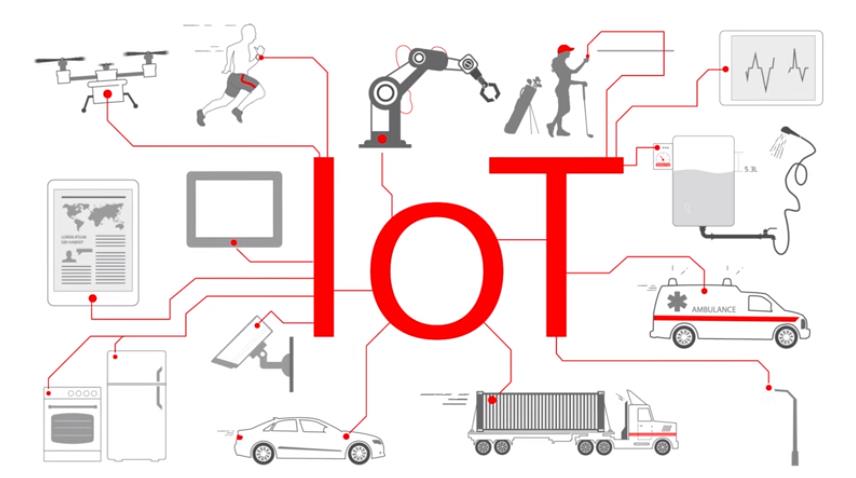
He added, "A large part of IoT is the machine-to-machine interface, so there are bound to be numerous communication issues. We claim that 215,000 patents related to IoT and LTE are standard patents."
Traditionally, there are three ways in which standard-essential patents are created. The most common method is to patent technologies developed through actual participation in standardization activities. Another method is to intentionally patent technologies predicted by standardization trends, even if the product isn't actually manufactured. Finally, there are cases where patents held by companies with a high number of patents are found to unintentionally conform to established standards. This often occurs because the scope of patent rights is broadly defined.
Attorney Kang explained, "Because IoT technology is complex, there are already many patents in the communications field. However, as IoT standardization progresses, companies are filing standard patents accordingly." He added, "If we consider the value of standard patents, the average price per standard patent in LTE is around 8 billion won."
Standard patents can be found by searching the European Telecommunications Standards Institute (ETSI). There are 155 standard patents registered, and by searching by code given by each country's patent office according to technology classification, you can find out which fields have the most standard patents filed.
Last year, as part of its support for the creation of standard patents, the Korean Intellectual Property Office (KIPO) published a "Standard Patent Guide," which included detailed strategies for securing standard patents during the standardization process, including methods for obtaining standard patents and obtaining qualifications for standardization activities.
Comments
Related news
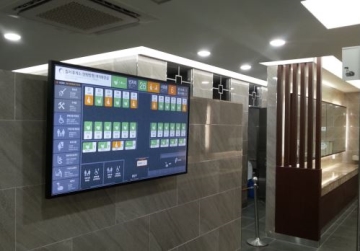
KNUS Completes Patent Registration for Smart Toilet Core Technology Sensor
IoT specialist company Cornus has completed patent registration for wireless sensor-based smart occupancy detection technology. The technology for which this patent was acquired is a system that accurately determines the presence or absence of people, such as humans, by using two types of sensors that detect temperature and motion in combination. It includes functions to convert information into data and display and store it on monitor devices (DID, Digital Information Display), LED indicators, and wired/wireless servers. As a core technology of Cornus's smart restroom system, one of its main business areas, the company is proceeding with installation projects of smart restroom systems in highway rest area restrooms nationwide through the "Highway Rest Area Restroom Remodeling Project" that Korea Expressway Corporation has been implementing since last year. To date, installations at 38 locations have been completed. Among them, the restrooms at Chilgok Rest Area (Busan direction) and Hwaseong Rest Area (Mokpo direction) were each selected as the best restroom and excellent restroom, respectively, in Korea Expressway Corporation's evaluation of outstanding rest area restrooms in the second half of 2016.
2017.06.22by 김자영 기자

Domestic semiconductors are experiencing a boom thanks to memory, but manufacturing technology patents are down.
According to the Korean Intellectual Property Office, an analysis of patent application trends related to semiconductor manufacturing technology over the past 10 years (2007-2016) revealed that the number of patent applications has continuously declined from 7,583 in 2007 to 4,241 in 2016. While foreign nationals' patent applications remained at around 2,000 cases annually during the same period, domestic applicants' patent applications have sharply decreased to 1,936 cases in 2016, less than half of the 4,928 cases recorded in 2007.
2017.07.07by 신윤오 기자
Reasons to Register IoT Patents in Korea, According to a Patent Expert
Apple's patent infringement lawsuit against Samsung Electronics over the "slide to unlock" feature, which began in 2012, is still ongoing. Not only Samsung, but many smartphone manufacturers are engaged in patent infringement lawsuits with Apple. The reason why the "slide to unlock" feature, which anyone could have conceived, became controversial is that Apple transformed the smartphone market from one centered on hardware to one centered on software. For the top 500 companies in the United States, intangible assets currently account for approximately five times the proportion of tangible assets. As awareness of intangible assets has improved, the number of patents a company holds has become a concept for evaluating enterprises. Patent disputes emerged as the smartphone market grew in scale. As the smartphone market became saturated due to technological advancement, disputes are concentrating on the Internet of Things (IoT), which has a large user base and a large market.
2017.07.28by 김지혜 기자
[Issue] Open Source SW, If License Management Is Negligent, You Will Get a ‘Big Nose’ When Distributing
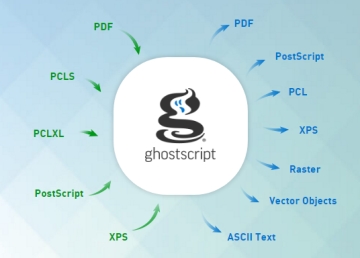
Recently, US software company Artifex Software filed a copyright infringement lawsuit against Hangul and Computer for violation of open source license terms. The issue arose from embedding Artifex's Ghostscript in Hancom Office. Open source software is often thought to be free because developers can freely use, copy, modify, and redistribute the source code. However, open source software has openly available source code while still being protected as intellectual property (IP). When using open source, it is necessary to verify the extent to which it is "open." Open source has over 80 license obligations including source code disclosure requirements, copyright notice requirements, patent waiver requirements, and usage rights notification requirements. Among licenses certified by OSI, the organization that certifies open source licenses (copyrights), representative licenses include AL (Apache License), BSD (Berkeley Software Distribution), GPL (General Public License), LGPL (Lesser General Public License), MIT, and MPL (Mozilla Public License). Even if the names are the same, the details of obligations vary depending on the version, so verification is essential.
2017.08.03by 김지혜 기자
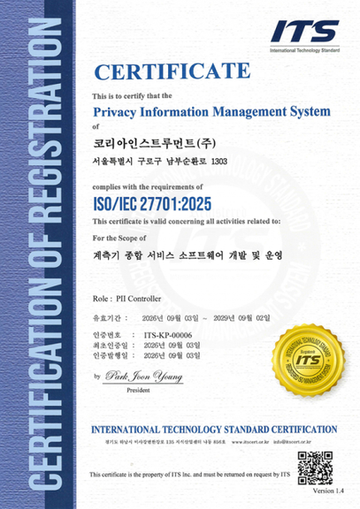
Korea Instrument, KOLAS Accredited Calibration Agency First to Simultaneously Acquire ISO/IEC 27,001·27,701
Korea Instrument has become the first among KOLAS accredited calibration agencies to simultaneously acquire ISO/IEC 27,001 and ISO/IEC 27,701 certifications. Through its proprietary platforms CWIZ Enterprise and CWIZ Partners, the company has embedded information security and personal data protection requirements across all business processes including customer information, equipment data, and calibration reports, with plans to continuously advance its management system through regular audits and security inspections.
2026.10.12by 배종인 기자











