


Advanced sensors will become a crucial technology in the Fourth Industrial Revolution.
 Published2017.11.09 17:47
"Advanced sensors serve as the peripheral nerves of industries related to the Fourth Industrial Revolution, including AI, self-driving cars, and the Internet of Things."
Ha Sang-tae, Director of the Industrial Convergence Technology Division at the Korea Evaluation Institute of Industrial Technology (KEIT), made these remarks at the "3rd Advanced Sensor 2025 Forum," held at the Yangjae L Tower on the 8th. The event aims to foster the sensor industry by strengthening networking and cooperation between industry, academia, and research institutions. Launched in 2015, the Advanced Sensor 2025 Forum consists of four divisions: smart devices, automobiles, healthcare, and smart factories, with a public-private joint steering committee chaired.
Advanced sensors are a general term for next-generation intelligent sensors that integrate detection, information processing, and communication functions into a single semiconductor chip, and are an elemental technology applied across industries.
Professor Jeon Kook-jin of Seoul National University said, "Sensors are evolving from single devices into smart systems that handle multiple functions, including AR and VR." He added, "There are no major companies in the sensor field in Korea yet. Small companies are working hard, and I hope that these efforts will coalesce to create a large company in three to four years."

At the event, LG Electronics CEO Lee Jae-deok gave the keynote speech. "The Internet of Things (IoT) is changing the sensor industry structure," the director explained. "We need to use sensors to cover areas that humans cannot perceive. Sensors are a technology that can differentiate sets at a low price."
He emphasized that the sensor itself doesn't need to be top-notch, and that it should move toward adding "intelligence." While sensors have previously only been able to alert users that the refrigerator door is open and should be closed, sensors will now need to recognize and communicate situations. For example, after opening the refrigerator door and taking out an apple, they should be able to report that the door is still closed.
"There's no need to limit sensors to a single category," the director said. "By combining AI and software with low-performance sensors, rather than high-performance ones, we can create amazing products." He added, "While the cloud is being utilized, it's difficult to transmit all data due to response times and data traffic. We need to move toward a system where devices make their own decisions and transmit the data accordingly."
In addition, he added, “Since packaging must be miniaturized, fan-out packaging will become an important technology,” and “In the future, when it becomes embedded in SoC, sensor technology will play an important role in various fields.”
Comments
Related news
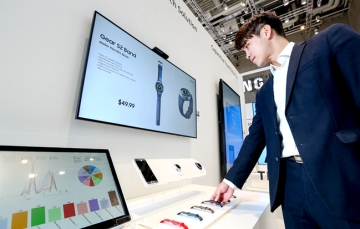
Autonomous vehicles, drones, healthcare... Ultimately, the key lies in the development of "smart sensors." Where are we now?
As emerging strategic industries such as future automobiles, healthcare, smart factories, robots, and drones have become hot issues, the importance of so-called 'smart sensors' is growing day by day. Smart sensors are sensors that have been given intelligence, referring to intelligent advanced sensors in the IT convergence era. As the types of sensors and their application objects have increased, the role of sensor hubs that can control sensors and collect data at low power consumption has also become increasingly important.
2016.10.10by 신윤오 기자
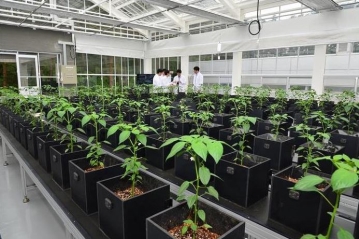
9 Reasons Why You Should Be Amused by Smart Sensors
Nine Reasons Why Smart Sensors Are Attractive Sensors are the senses of objects. For people, having a sense of perception seems to be a point of attraction. You've never seen someone with "good sense" who was perpetually single. Now, "smart" has been added to such sensors. Sensors, which had been confined to the mobile phone, information and communications, and automotive industries, have expanded their scope to robotics, automobiles, medical care, environment, and energy industries. How much more appeal has been added. This is what Jeon Young-min, director of the Sensor System Research Center at the Korea Institute of Science and Technology, has to say about smart sensors.
2017.04.04by 김자영 기자
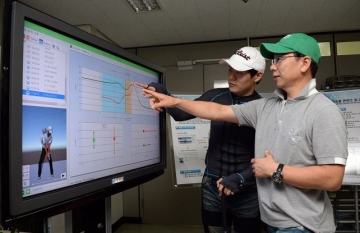
ETRI uses sensors to analyze movement and create vibrations to help correct posture.
ETRI has developed a technology that attaches 17 sensors and 10 actuators to major joints on the human body to learn and 3D analyze and compare the movements of a target and the user, providing vibration signals for correction when movements are performed incorrectly. The research team explained that this technology can determine joint angles and three-dimensional positional coordinates through data values obtained from sensors installed at each of the 17 joints. When worn as clothing or attached as a band, it assists with spinal posture correction during exercise movements and rehabilitation therapy.
2017.06.12by 김자영 기자
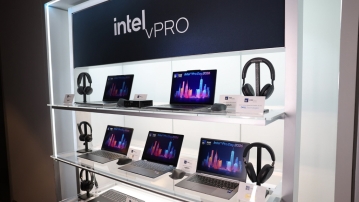
Intel Unveils Next-Generation 'Core Ultra Series 3' and vPro Platform for Enterprise PCs
Intel has officially unveiled the "Intel Core Ultra Series 3" for next-generation enterprise PCs and the latest vPro platform, addressing a wide range of demands from enterprise notebooks to high-performance workstations.
2026.03.26by 배종인 기자
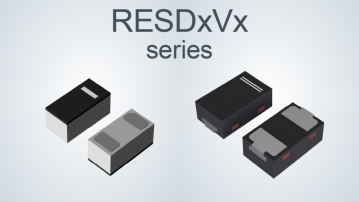
ROHM Launches ESD Protection Diode Compatible with High-Speed Interfaces of 10Gbps or Higher
Semiconductor specialist ROHM has developed the 'RESDxVx series' of ESD (electrostatic discharge) protection diodes capable of responding to next-generation high-speed data communication environments exceeding 10Gbps, simultaneously enhancing both signal quality maintenance required in high-speed interfaces and IC protection performance.
2026.03.26by 배종인 기자











