



LG Uplus Opens 5G Test Base Station in Gangnam
 Published2017.11.13 11:32
LG Uplus announced that it has opened a new 5G test base station near Gangnam Station in Gangnam-gu, Seoul, and has started testing 5G technology and services in a real-world environment using the 3.5GHz and 28GHz frequency bands.
The Gangnam area is useful for testing 5G technologies and services targeting users in an urban environment with high population density, large-scale data usage, and many obstacles that make it difficult to bypass radio waves, due to the large floating population and high-rise buildings.
LG Uplus plans to establish a 5G cluster centered around a new 5G test base station to serve as a hub for preparing 5G technology and services.
First, utilizing the 3.5GHz and 28GHz frequency bands, which are likely candidates for 5G frequencies, we will test the coverage and inter-frequency interference of 5G technology and conduct field tests on transmission speeds so that the most efficient 5G network can be configured without dead zones.
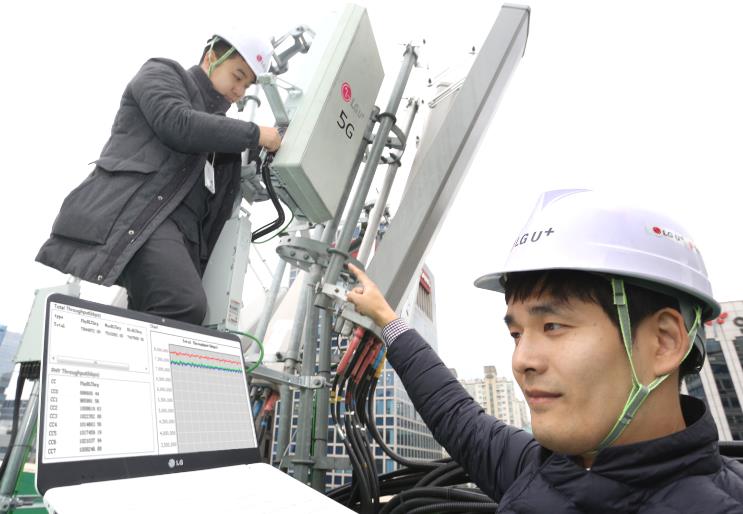
Last September, LG Uplus successfully demonstrated a field test of dual connectivity technology that combines 3.5GHz and 28GHz to provide a transmission speed of 20Gbps, the first of its kind in Korea.
In addition, we plan to conduct interoperability tests with frequencies such as 800MHz, 2.6GHz, and 1.8GHz, which are currently being used to provide LTE services.
5G buses will also be introduced and operated. The 5G bus will be equipped with 5G test terminals and will drive through a 5G cluster to conduct mobility tests for providing seamless 5G services between base stations and terminals.
In particular, at the '5G Global Event' to be held in Seoul from November 22 to 24, LG Uplus is set to play a leading role in promoting the excellence of its 5G technologies and services by providing VIPs from around the world attending the event with the opportunity to experience dual connectivity technology, which enables high-speed transmission speeds by combining 3.5GHz and 28GHz frequencies while on the move, as well as real-time IPTV services based on FWA (Fixed Wireless Access).
"We are steadily making preparations not only in technical aspects but also in service aspects, such as recently succeeding in demonstrating core 5G technologies and services like frequency aggregation technology," said Kim Dae-hee, Senior Vice President of 5G Strategy at LG Uplus. "We plan to lead the way in 5G, just as we did with LTE, by consistently preparing for 5G that all citizens, not just a select few, can enjoy."
Comments
Related news

LG Uplus's operating profit increases thanks to stable growth in both wired and wireless businesses.
LG U+ disclosed that its operating profit for the third quarter of 2017 under Korean Adopted International Financial Reporting Standards recorded 214.1 billion won, a 1.3% increase compared to the same period last year, driven by stable growth in both wired and wireless businesses. Total revenue reached 3.05960 trillion won, up 11.8% compared to the same period last year and up 1.7% compared to the previous quarter. Operating revenue recorded 2.3772 trillion won, up 5.2% compared to the same period last year and up 1.9% compared to the previous quarter. Net profit for the period achieved 142.8 billion won, up 6.6% compared to the same period last year and up 4.8% compared to the previous quarter, due to decreased interest expenses resulting from debt repayment.
2017.11.03by 김지혜 기자
LG U+ Launches Thin and Light LTE Router
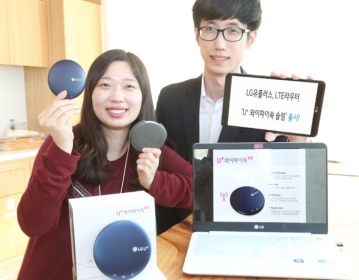
LG U+ is exclusively launching "U+ Wi-Fi Ssok Slim," a thin and lightweight LTE router shaped like a compact cosmetic product. U+ Wi-Fi Ssok Slim is a portable router that receives LTE signals from anywhere across the country and converts them into Wi-Fi signals. The product supports simultaneous Wi-Fi connection of up to 10 devices, enabling easy and convenient data usage on any device. It is expected to be popular among college students and office workers who utilize various smart devices such as laptops, tablets, and beam projectors.
2017.11.07by 김지혜 기자
LG Uplus Develops 5G Equipment Automatic Control Software Platform with Cowiver
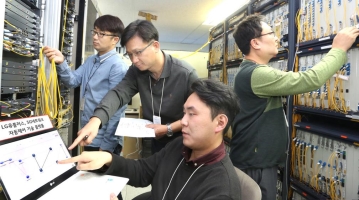
LG Uplus announced that it jointly developed an 'SDK (Software Development Kit)', a 5G network automatic control software development platform, with domestic small and medium-sized manufacturers Coweaver and HFR. The SDK is a program that enables development of 'SDN (Software Defined Networking)', software that can centrally integrate and manage various network equipment. By utilizing this, software capable of automatically controlling 5G equipment can be created. As various types of equipment continue to increase annually, telecommunications operators are actively utilizing SDN to centrally integrate and manage complex network equipment and systematically oversee operations.
2017.11.13by 김지혜 기자
European Patent Applications Surpass 200,000 for the First Time… South Korea Maintains 5th Place, Led by Batteries and Telecommunications
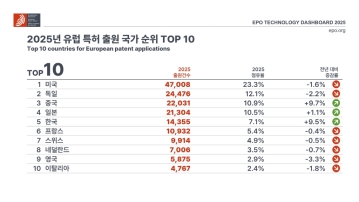
According to the European Patent Office (EPO)'s 'Technology Dashboard 2025', European patent applications last year reached 201,974, surpassing 200,000 for the first time. Korean companies and inventors filed 14,355 applications, representing a 9.5% increase from the previous year and maintaining 5th place by country. Battery, digital communication, and semiconductor technologies led the growth, with Samsung ranking as the top EPO applicant for the second consecutive year and LG reaching 3rd place. The presence of major domestic cities such as Seoul, Suwon, and Yongin was also confirmed. It was also revealed that Korea's European patent strategy is expanding beyond individual technologies to span the entire industry.
2026.03.24by 명세환 기자

SK Telecom First Applies AI-Based Network Operations at Gwanghwamun K-Pop Concert
SK Telecom announced that it applied an AI-based network operation system for the first time at a large-scale K-pop concert held in the Gwanghwamun area of Seoul on March 21st, managing communication quality throughout the event. Mobile data usage during the three hours before and after the concert reached 12.15TB, approximately doubling compared to the same time slot the previous weekend. SK Telecom monitored traffic using the AI system 'A-One' in five-minute and 50-meter units to respond to potential overload situations, while also operating temporary communication facilities and on-site personnel in parallel. This case is interpreted as confirmation of the practical applicability of AI-based autonomous network operation in an environment where demand from dense events and foreign users increases simultaneously.
2026.03.23by 명세환 기자











