


Cloud companies choose NVIDIA GPUs for AI computing.
 Published2017.11.15 10:39
NVIDIA announced that the NVIDIA Tesla V100 GPU, based on NVIDIA's Volta architecture, the world's most advanced data center GPU, is now available from all major cloud providers and computer manufacturers to enable AI and high-performance computing.
Dell EMC, Hewlett Packard Enterprise, Huawei, IBM, and Lenovo have all announced the launch of NVIDIA Volta-based products. Additionally, major cloud service providers such as Alibaba Cloud, Amazon Web Services, Baidu Cloud, Microsoft Azure, Oracle Cloud, and Tencent Cloud have also announced the launch of Volta-based cloud services.
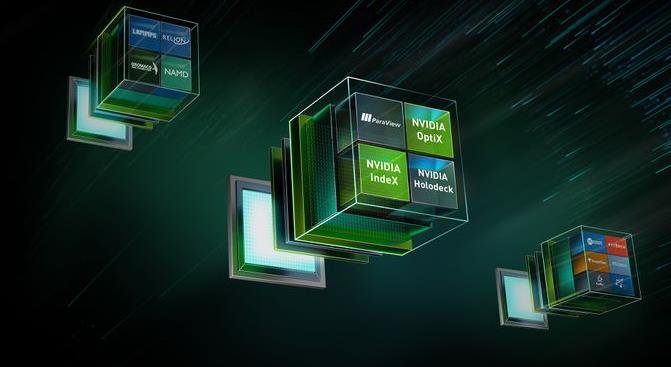
Building on this diverse product launch, NVIDIA has introduced new software and tools to the NVIDIA GPU Cloud (NGC) container registry to enable scientists to conveniently deploy NVIDIA's accelerated computing platform for compute-intensive research activities.
“Volta, the world’s most powerful platform for AI and high-performance computing, will enable the world’s leading scientists to push the boundaries of drug discovery, alternative fuel development and predicting natural disasters,” said Jensen Huang, founder and CEO of NVIDIA, at the Supercomputing 2017 (SC17) conference, where computer makers and cloud providers announced the launch of a range of Volta-based products and services. “With Volta now available in data centers and clouds around the world, we anticipate a new wave of innovation that will have profound ripple effects across society.”
Adding HPC Containers to NVIDIA GPU Cloud
Over 500 HPC applications, including the industry's most widely used ones, feature GPU acceleration. However, the biggest challenge for researchers utilizing these applications lies in the complex deployment process.
NVIDIA's new containers for scientific computing applications and HPC visualization tools provide easy access to the most widely used GPU-based HPC software. Last month, NVIDIA introduced GPU-optimized AI frameworks and deep learning applications to the NVIDIA GPU Cloud container registry.
The launch of these new containers gives researchers free, convenient access to essential AI frameworks, HPC applications, and visualization tools for scientific workflows via the NVIDIA GPU Cloud.
NVIDIA GPU Cloud enables researchers and developers to set up and deploy scientific computing applications, freeing them from complex software updates and allowing them to focus solely on research and development. With GPU-optimized HPC containers available through NVIDIA GPU Cloud, tedious tasks that once took hours can now be completed in minutes.
The HPC application containers also include some popular third-party research applications, including GAMESS, GRMACS, LAMPS, NAMD, and RELION.
HPC visualization containers, currently available in beta form on NVIDIA GPU Cloud, include industry-leading visualization tools such as ParaView with the NVIDIA IndeX volume renderer, the NVIDIA Optix ray tracing library, and NVIDIA Holodeck for interactive, real-time visualization and high-quality visual effects.
Comments
Related news
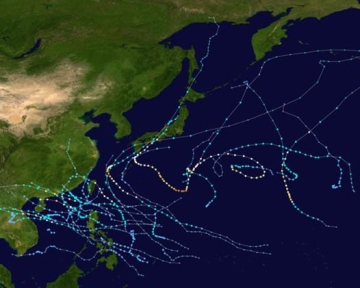
NVIDIA Leverages GPUs for KISTI's Typhoon Damage Prediction System
Nvidia announced that Nvidia GPUs are being utilized in the training of GlobeNet and DeepRain, groundbreaking systems developed by the Korea Institute of Science and Technology Information (KISTI) for predicting damage caused by typhoons and heavy rainfall. KISTI researchers are garnering attention for their efforts to develop a damage prediction system for typhoons and heavy rainfall using GPU-accelerated deep learning. Dr. Jo Min-soo, director of KISTI's HPC Research Center, stated, "While it is impossible to prevent natural disasters, we can minimize risk if provided with accurate information." Korea is a country surrounded by storms such as hurricanes and tropical cyclones. Hurricanes and typhoons are phenomena that occur globally, but are called by different names depending on geographical location: hurricanes in the Atlantic and eastern North Pacific regions, typhoons in the western North Pacific region, and cyclones in the South Pacific and Indian Ocean regions.
2017.10.26by 김지혜 기자
NVIDIA Launches Pascal-Based GPU Line 'GTX 1070 Ti'
Nvidia has announced the launch of the GeForce GTX 1070 Ti, adding it to its Pascal-based gaming GPU lineup. The GeForce GTX 1070 Ti, which will be positioned between the GeForce GTX 1080 and 1070 GPUs that have garnered high praise among gamers, will launch globally on November 2nd and is currently available for pre-order. The estimated consumer price for the GeForce GTX 1070 Ti is $449 USD. Based on the Pascal GPU architecture recognized for its excellence through numerous awards, the GeForce GTX 1070 Ti is equipped with 2,432 cores and 8GB of memory, delivering speeds of 8Gbps (gigabits per second), with total memory bandwidth reaching 256GB per second. This represents roughly twice the performance of the legendary GeForce GTX 970.
2017.10.30by 김지혜 기자
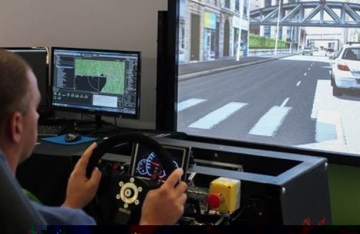
NVIDIA Enhances Autonomous Driving Safety with GPU-Powered Road Driving Simulation
Nvidia has announced that it is enhancing the safety of autonomous vehicles by testing various driving environments through simulations utilizing its GPUs. In the development process of autonomous vehicles, simulation testing can be more effective than actual testing due to its higher flexibility and adaptability, particularly when testing hazardous or uncommon driving conditions. Simulations also enable the testing of multiple scenarios in a short timeframe. During the opening keynote address at GTC Europe held in Munich, Nvidia CEO Jensen Huang announced that through real-time simulation via Nvidia DGX and the new TensorRT 3, engineers can conduct driving simulations of 300,000 miles (approximately 480,000 kilometers) in just 5 hours. This means that all roads within the United States can be simulated in just two days.
2017.10.31by 김지혜 기자

[e4ds Tech Day 2026 ⑨] Sim Sang-gyu, Autocrypt CTO: "In the Physical AI Era, Automotive Security Must Extend Beyond the Vehicle"
At e4ds Tech Day 2026, Sim Sang-gyu, CTO of Autocrypt, explained automotive cybersecurity strategies in the era of Physical AI and SDV (Software-Defined Vehicle). Automobiles are evolving as part of an ecosystem connected to AI, cloud, chargers, IoT, and robots, and he emphasized that the scope of security must expand beyond the vehicle interior to the entire connected environment. In particular, AI model tampering, adversarial attacks, OTA updates, and EV charger hacking were identified as major threats. He explained that response measures require zero trust, AI model integrity protection, intrusion detection, Security by Design and Default, and full lifecycle security management, and that proactive security system establishment beyond regulatory compliance is critical for securing future mobility competitiveness.
2026.10.12by 배종인 기자
NVIDIA to Invest $1 Billion in U.S. Science Over Next Five Years
NVIDIA has announced plans to invest $1 billion over the next five years to strengthen U.S. scientific and technological competitiveness. The company will enhance cutting-edge artificial intelligence research and development capabilities in key areas including quantum computing, healthcare, and energy security, while expanding support for higher education research institutions and cloud service providers. NVIDIA is participating as a major industry partner in the White House Office of Science and Technology Policy's Genesis Mission, and is promoting supercomputer construction in collaboration with national laboratories including Argonne and Los Alamos.
2026.10.12by 배종인 기자











