


SK Telecom: "We will lead smart city development by integrating our partners under one platform."
 Published2017.11.15 16:14
Establishing a system to protect socially vulnerable groups, such as elderly people with dementia and children.
"Smart cities," which incorporate cutting-edge ICT technologies to solve urban problems and build smart cities, are attracting attention. SK Telecom is leading the way in realizing smart cities by addressing urban challenges, expanding its services to include the protection of elderly people with dementia and children, the safety of teachers working in remote areas, and the personal safety of crime victims.
SK Telecom's Citizen Safety Network initiative began in 2012 with the "Smart T Guardian" app. Since then, it has expanded beyond 3G and LTE to leverage LoRa networks, and the number of users of the intelligent emergency call system has now surpassed 100,000.
Kim Seong-han, head of SK Telecom's IoT Solutions Business Division, said, "The safety service that connects local government CCTVs and the National Police Agency is available in five locations: Seongdong-gu in Seoul, Gangseo-gu in Busan, Daejeon, Osan, and Anyang." He added, "It will be available in Suwon, Siheung, Incheon, Gwangju, and Gimhae within the year, and will be applied to 25 districts in Seoul in the first half of next year."
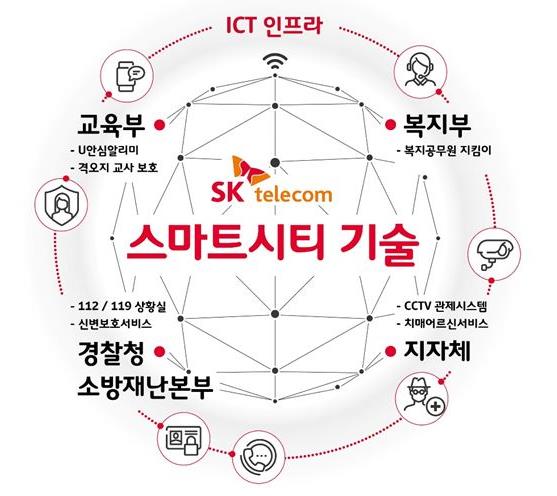
SK Telecom divides its smart city business into six areas: transportation, safety, energy, environment, convenience, economy, and revitalization. By adding devices, sensors, IoT, and platforms, we plan to provide various services such as intelligent pedestrian safety, fire prevention management, BEMS, fine dust monitoring, and digital signage.
SK Telecom has been working with the Ministry of Education since 2014 to develop "U-Safety Alert," a smart city technology program designed to ensure student safety. This service offers features such as student arrival and departure notifications, location tracking, emergency calls and alerts, and phone calls. With the rise of dual-income households, it has become a valuable tool in today's society, with over 36,000 users.
Additionally, last year, the Ministry of Education launched the "Teacher Safety Service," which sends emergency alerts to ensure the safety of teachers working in remote areas. This year, the Ministry of Health and Welfare and approximately 6,000 welfare workers responsible for home visits launched the "Safety Guardian" service, which allows immediate emergency calls.
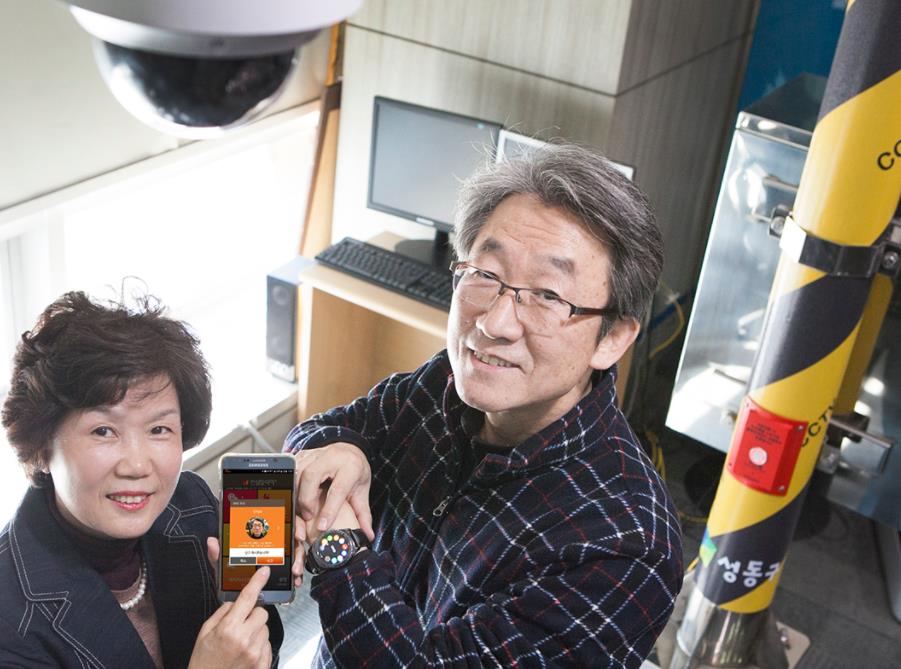
Then, in July of last year, an agreement was signed with the Ministry of Land, Infrastructure and Transport, Sejong City, Anyang City, Osan City, and Korea Land and Housing Corporation to ‘establish a socially vulnerable protection linkage system.’ Based on this, we have established a social protection system for the socially vulnerable, aimed at protecting the disabled, elderly with dementia, and children, linked to an intelligent emergency call service, and are currently providing a service to prevent disappearance of elderly with dementia by participating in the 'Project to Make Seongdong-gu Safer' of Seongdong-gu, Seoul.
Chief Kim explained, “While the U-City project launched in 2005 simply monitored urban infrastructure by incorporating ICT, the smart city goes one step further and integrates the city’s physical, complex spaces with technology and services to create an ecosystem.”
He added, "We will move toward integrating existing individual services into a single platform. We will lead by integrating various partners into a single, massive platform where data is mashed up, disclosed, and shared."
Comments
Related news
[Smart City] Smart City Completion: Not Just Technology but Administrative Functions as Well
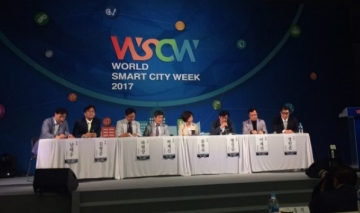
"Smart cities should become the complete form of technological elements that are considered core to the Fourth Industrial Revolution, such as big data, artificial intelligence, and robotics." Speakers who participated in the 'Smart City Public Service Innovation Conference' held at KINTEX in Ilsan, Gyeonggi Province on the 7th emphasized that ultimately smart cities should become a future where smart people live and smart governance exists, stressing that administrative aspects must progress alongside technology. Professor Nam Tae-woo from Sungkyunkwan University cited Barcelona and Stockholm as successful overseas smart city adoption cases. Barcelona set its smart city goal as improving citizens' lives and communities by converging urban planning, ecosystems, and information technology. It is also a representative pilot city for smart cities applying low-carbon technology. Overall implementation is carried out by the city council, while the project management committee carries out detailed planning, execution, and cooperation duties as well as project performance supervision. Stockholm aims for sustainability across four dimensions: ecological, financial, social, and democratic. By leveraging big data, it controls signals prioritizing buses, pedestrians, and bicycles, and quickly notifies users of free parking spaces. There are service examples such as street lights where illumination is adjusted according to daylight hours and demand, and electric bicycles.
2017.09.07by 김지혜 기자
[Smart City] Location-tracking streetlights and trash cans announcing collection times, the city is getting smarter
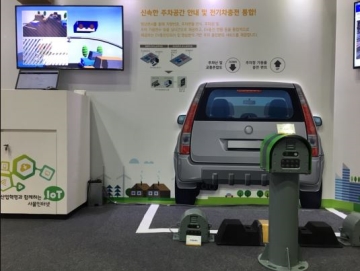
When autumn arrives, the maple trees turning yellow and the yellow streetlight glow are truly beautiful. But one day, the streetlights were replaced with white LED lights. I thought, 'A civil servant with no sense of romance.' I never imagined that those dim LED streetlights were actually smart streetlights that could pinpoint exact locations during late-night commutes. Smart streetlights are controlled via beacon technology and equipped with IP cameras and LoRa communication modules that transmit the location of late-night commuters to others through an application, and can connect with relevant agencies to request assistance. The service can also be expanded to support missing person searches.
2017.10.13by 김자영 기자

Meet future smart city technology
The Ministry of Science and ICT (Minister You Young-min, hereinafter "MSIT") announced that it will hold the "Innovation Growth Momentum Challenge Parade (hereinafter 'Challenge Parade')" on November 18 (Saturday) at Gwanghwamun Plaza (North Plaza, Central Plaza, and Sejong-daero area). This event will demonstrate and exhibit fourth industrial revolution new technologies that can drive future growth and solve social problems at Gwanghwamun, a venue for national communication.
2017.11.10by 김지혜 기자
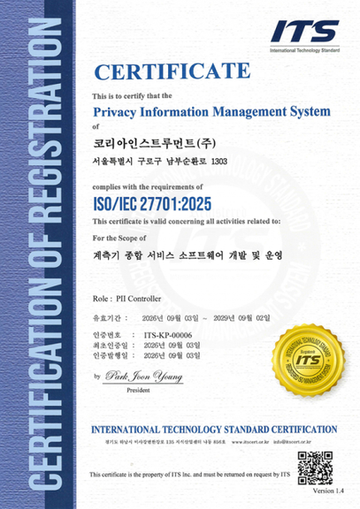
Korea Instrument, KOLAS Accredited Calibration Agency First to Simultaneously Acquire ISO/IEC 27,001·27,701
Korea Instrument has become the first among KOLAS accredited calibration agencies to simultaneously acquire ISO/IEC 27,001 and ISO/IEC 27,701 certifications. Through its proprietary platforms CWIZ Enterprise and CWIZ Partners, the company has embedded information security and personal data protection requirements across all business processes including customer information, equipment data, and calibration reports, with plans to continuously advance its management system through regular audits and security inspections.
2026.10.12by 배종인 기자
TeamViewer One, IT Incident Automation Workflow and Resolution Center Enhanced
TeamViewer has added IT incident automation capabilities and an advanced Resolution Center to its integrated digital workplace management platform 'TeamViewer ONE'. Recurrent service disruptions, configuration errors, and capacity shortages are automatically handled according to preset policies, and device status verification through script deployment can be managed in a unified interface, significantly reducing repetitive tasks for IT teams.
2026.10.12by 배종인 기자











