


10 Things Small and Medium-Sized Enterprises Should Commercialize in the Fourth Industrial Revolution
 Published2017.11.24 15:09
50 technologies selected from 11 fields based on quantitative data
There are numerous technologies poised to drive the Fourth Industrial Revolution, including big data, self-driving cars, the Internet of Things (IoT), and artificial intelligence. While there's a growing call to prepare for the Fourth Industrial Revolution, it's unclear which items are truly suitable for commercialization.
Accordingly, the Korea Institute of Science and Technology Information (KISTI) has identified commercialization items that SMEs should focus on in response to the Fourth Industrial Revolution. Based on venture capital investment data, market data, and technology trends, the institute analyzed the technologies to determine their suitability for SMEs, marketability, potential for technological development, and potential for significant market ripple effects. The institute selected 50 technologies across 11 categories. Below, we present ten promising commercialization items.
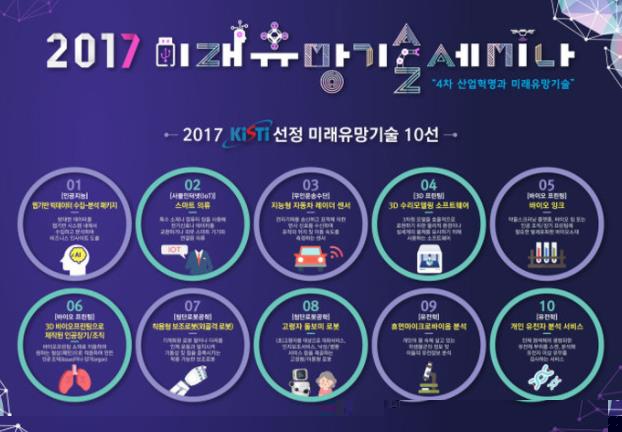
The first is a big data collection and analysis package. It collects and analyzes data within a web-based system to derive business insights. The current implementation phase is expected to have a high probability of success. Requirements include securing a database structure for data retrieval and analysis, data transmission control technology, and cloud computing technology. Representative companies include Saltlux and IBM. For example, L Confectionery is leveraging Watson's big data analysis results for new products.
The second is smart clothing. These garments, which use special materials or computer chips to exchange electrical signals or data or connect to external smart devices, have high commercial potential, but the current market is small. However, given the size of the apparel market, their size is expected to grow. Toray, a textile company, collaborated with NTT to develop clothing that uses electrically conductive fibers to collect data like heart rate and calorie consumption, earning recognition as a medical device. Kolon Sport also developed a jacket equipped with a communication module that alerts users to emergencies.
The third is intelligent automotive radar sensors. They transmit electromagnetic waves and receive reflected signals from targets to measure their location and speed. The market has entered a period of growth and is large in scale. As a technology standard in autonomous vehicles, priority should be given to the development of embedded ECU technology and sensor fusion technology utilizing existing sensors and additional, low-cost sensors. Leading companies include Bosch and Continental.
The fourth is 3D mathematical modeling software. It's used to efficiently represent 3D models and depict physical environments or real-world objects. It's a growing market, and there are currently examples of its use in motion capture and AR. Research is needed to develop methods for processing image data utilizing spatial information and for data conversion between modeling programs. It's also a valuable tool for creating 3D maps needed for autonomous vehicles in the future. Autodesk is a leading company in this field.
The fifth is bioink, a decellularized biomaterial required for biochips or artificial tissue/organ printing. This is an item that requires a mid- to long-term perspective, requiring the acquisition of fundamental technologies. Representative companies include regenHU and CELLINK.
The sixth category is artificial organs/tissues produced using 3D bioprinting. These are artificial tissues or organs created by layering bioink into a desired shape. While the market is still in its infancy, the company believes there's a high probability of commercialization. There are many priority technologies to secure, including xenotransplantation production technology and immune modulation technology. Leading companies include organovo and envisionTEC.
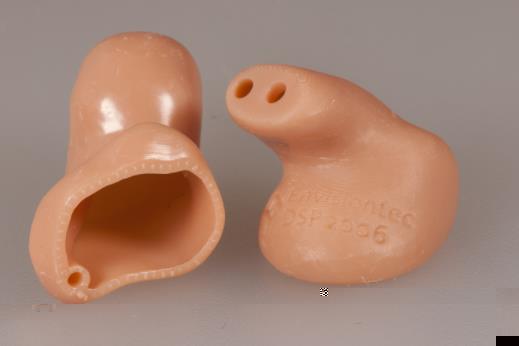
KISTI Technology Commercialization Analysis Center Director Jeon Seung-pyo said, “The reason Starkey, an American hearing aid company, was successful was because they created a hearing aid that was ‘in the ear.’ It is a case of meeting consumer needs well in a social context rather than having outstanding technology.”
The seventh is a wearable assistive robot. This robot synchronizes mechanized robotic arms or legs with human movements, amplifying mobility and strength. While still in the introductory phase, the potential for commercialization remains low, and with the aging population, it is expected to become a commercial product. The Israeli company ReWalk's exoskeleton walking assistance robot received sales approval in Korea last year.
The eighth is a senior care robot. The market has entered a growth phase, and commercialization potential is high. This robot is capable of recognizing, judging, and expressing information, including video and audio information, and analyzing situations. It is a stationary/mobile robot that provides conversational services, cognitive assistance, and fall/illness support for the elderly. A representative example is Softbank's 'Pepper'.
The former center director emphasized the importance of social understanding, saying, “In Denmark, a fixed care robot was installed in the bathroom to help with undressing and dressing.” He added, “Many elderly people were reluctant to have the robot act as a caregiver, but when it was installed in the bathroom, they preferred the robot to a caregiver.”
The ninth area is human microbiome analysis. This involves analyzing the microbiome and genetic information of the microorganisms living within an individual's body. The market is still in its infancy phase, with low commercialization potential. Securing core technologies that can analyze the correlation between the microbiome and diseases such as inflammatory bowel disease, inflammatory skin disease, and metabolic disorders is crucial. Enterome, a leading company, has developed a method for diagnosing diseases by analyzing the genes of intestinal bacteria extracted from stool.
The final option is a personal genetic analysis service. This service scans and analyzes extensive genetic regions of the human chromosome to detect genetic abnormalities. New companies have a high potential for commercial success. Angelina Jolie was previously diagnosed with breast cancer prematurely, and 23andme is a prime example. Since this service deals with the detection of genetic abnormalities, institutional issues are crucial.
The former center director said, "Rather than approaching the 10 items as primary technologies, I hope to utilize them as indirect businesses by considering the political, social, and economic contexts."
In addition, the 50 selected items can be checked in the Promising Item Knowledge Base System ( http://boss.kisti.re.kr ).
Comments
Related news
Advancement of Deep Learning Technology Brings Artificial Intelligence to Reality
Since the advent of AlphaGo, 'artificial intelligence (AI)' has come much closer to us. From IBM Watson's cancer diagnosis to AI speakers, artificial intelligence, once only associated with robots, is now being applied across various fields. An opportunity has been created to discuss what new changes artificial intelligence will bring to computing, mobile robots, and other areas. Nvidia held 'Deep Learning Day 2017' at the InterContinental Seoul COEX on the 31st, presenting the history and direction of artificial intelligence. The event was attended by approximately 1,500 participants from academia and industry with interests in AI, autonomous driving, healthcare, and related fields.
2017.11.01by 김지혜 기자
Advanced sensors will become a crucial technology in the Fourth Industrial Revolution.
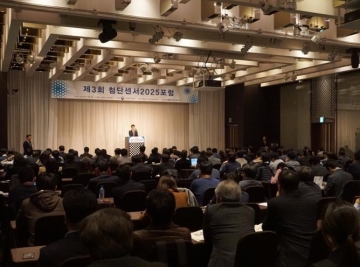
"Advanced sensors serve as peripheral nerves for industries related to the Fourth Industrial Revolution, including artificial intelligence, autonomous vehicles, and IoT." Ha Sang-tae, head of the Industrial Convergence Technology Division at the Korea Institute of Industrial Technology Evaluation and Planning (KEIT), made this statement at the '3rd Advanced Sensor 2025 Forum' held at El Tower in Yangjae on the 8th. This event is designed to foster the sensor industry by strengthening network formation and cooperation among academia, industry, and research institutions. The Advanced Sensor 2025 Forum, established in 2015, is organized into four divisions centered on public-private joint operating chairs: △smart devices, △automobiles, △healthcare, and △smart factories. Advanced sensors are a collective term for next-generation intelligent sensors that integrate sensing, information processing, and communication functions into a single semiconductor chip, serving as an elemental technology applied across industries.
2017.11.09by 김지혜 기자

Gartner: "Asia-Pacific CIOs Actively Adopt Digital Innovation Technologies"
Gartner's annual survey of chief information officers (CIOs) revealed that CIOs in the Asia Pacific region are adopting innovative technologies such as the Internet of Things (IoT) and artificial intelligence (AI), as well as conversational interfaces, at higher rates compared to CIOs in other regions. Gartner announced these survey results at the Gartner Symposium/ITxpo held recently in Australia. The 2018 Gartner CIO Agenda Survey was conducted with 3,160 CIOs globally, including 537 CIOs from 17 countries in the Asia Pacific region. The surveyed enterprises' combined revenue and public sector budgets totaled $3.4 trillion, with IT spending reaching $49 billion.
2017.11.15by 김지혜 기자

Nvidia invests $5 billion in Intel
NVIDIA and Intel, leaders in global AI computing technology, are now forging ahead in providing cutting-edge solutions through NVLink-based architecture integration. NVIDIA and Intel have officially announced a strategic partnership and stated that they will jointly develop customized data center and personal computing products to accelerate diverse applications and workloads ranging from hyperscale to enterprise and consumer markets, thereby laying the foundation for the next generation computing era.
2025.09.22by 배종인 기자
.jpg)
Applied Materials Launches Environmental Protection Campaign to Mark World Cleanup Day
Applied Materials Korea (CEO Park Kwang-seon) is carrying out environmental cleanup activities with employees and their families around the Dongtan Sinricheon area on the occasion of World Cleanup Day, evolving into a company that engages with the local community beyond technological innovation.
2025.09.22by 명세환 기자











