



Blockchain “Will Spread to All Sectors of Society, Not Just Finance”
 Published2017.11.27 16:32
PoC will lead to a project after the consulting phase passes.
It is predicted that blockchain will spread across all sectors of society without limitations, including the financial, manufacturing/distribution, private, and public sectors.
Joo Yong-wan, Head of the Korea Internet & Security Agency, participated in the 'Korea Blockchain Society Academic Conference and Workshop' held on the 24th and stated, "Blockchain application services are becoming active in non-financial fields, moving from cryptocurrencies to smart contracts."
He predicted, “While blockchain is defined in different ways, rather than that, four technologies are important: a distributed database, a P2P network protocol, a digital algorithm that agrees on the value of specific property or data, and a security technology that enables trust using cryptographic hash functions and private/public keys.”
He emphasized, “High-quality data, computing power to analyze data, and algorithms to provide services are fundamental to digital transformation,” adding, “When blockchain is added to this, data can be trusted and transparency achieved.”
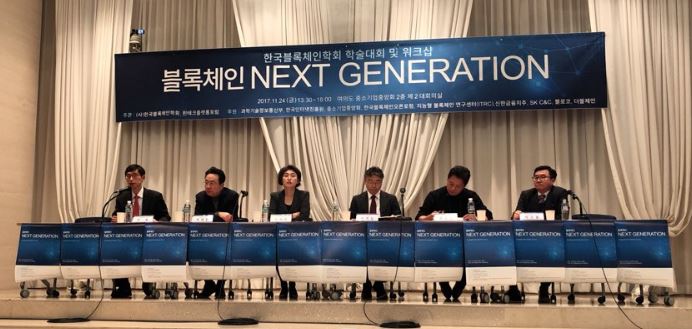
While the scale may vary depending on how blockchain is defined, it is rapidly growing with six core areas: Assets, Trust, Ownership, Money, Identity, and Contracts. The domestic market size is estimated to be at least approximately 6.5 billion KRW as of last year. It is projected to expand to about 900 billion KRW by 2025. The global market size is projected to reach approximately $19.9 billion in 2025.
The health and medical sector is an example of where blockchain can be used in non-financial fields. Lee Young-sung, President of the Korea Institute of Health and Medical Research, stated, “By utilizing medical big data and connectivity, blockchain technology can be applied to medical services,” adding, “The boundary between medical care and well-being is blurred. I think we could pilot lifestyle-oriented well-being technologies, such as delivering diabetic or low-salt meals.”
He added, “I think the integration of blockchain technology will provide an opportunity for doctors to view daily life and medical care as part of the realm of well-being,” and “I hope it will play a role in alleviating the vague anxiety the public has regarding medical data or personal information on the internet.”
For blockchain to be utilized across various fields, a large number of business use cases must emerge. Furthermore, it is necessary to consider scalability and adjust entry barriers through improvements to the regulatory framework. Consensus on core standards and active collaboration among participants are also crucial. Accordingly, the Korea Internet & Security Agency (KISA) is expanding joint industry-academia-research collaboration linked to open forums to identify business cases and is supporting the establishment of new startups in conjunction with the K-Global Program. To remove obstacles to development, a Framework Act on Blockchain is currently being enacted. Reliability evaluation certification standards, testing methodologies, and joint reliability guidelines are also under development.
Efforts to apply blockchain to business models continue, but no successful cases have emerged yet. Regarding the reasons for this, Oh Se-hyun, Chairman of the Korea Blockchain Open Forum, stated, “Many groups are interested in services using blockchain. They simply harbor a fear of being the first,” adding, “It is not a technical issue, but a matter of target audience and conviction.” "We are waiting for it to become visible," he explained.
He predicted, “If this year was a year of interest in blockchain and conducting PoCs, the next step will be consulting on how to apply it,” adding that “this will lead to the adoption of consulting and projects in the future.”
Comments
Related news
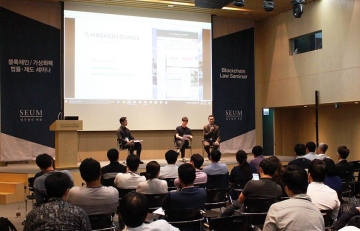
[Discussion] Why Korea, Home to the Largest Blockchain Exchange, Cannot Create Cryptocurrency
Looking at the global blockchain exchange trading volume rankings, Korean exchanges hold 3 positions in the top 10. However, when examining virtual currency rankings, there are no Korean projects within the top 100. Regarding why our country, which has the world's largest exchanges, lacks virtual currencies, attorney Jung Ho-seok from Law Firm Seum stated, "One might think it's because technology hasn't developed enough, but that's not the case," adding that it is "because legal systems and environments have not provided sufficient support." Last month, an amendment to the "Electronic Financial Transactions Act" was initiated by Representative Park Yong-jin. The bill requires virtual currency operators to maintain capital of 500 million won or more and obtain authorization from the Financial Services Commission to conduct business, and includes provisions prohibiting illegal activities such as market manipulation using virtual currencies and money laundering. There is concern about whether regulation is necessary given that the amendment leans more toward regulation than promotion and blockchain has not even been defined as currency. In response, a forum has been arranged to discuss issues surrounding blockchain regulation.
2017.09.04by 김지혜 기자
Unraveling the Causes of Electrical Fires Through Blockchain
The Ministry of Science and ICT and the Korea Electrical Safety Corporation announced that they have jointly established a "blockchain-based electrical fire ignition point analysis support service" with SK Telecom. Currently, when electrical fires occur, the ignition cause is analyzed using photographs, drawings, and inquiries; however, most evidence is destroyed by the fire, making it difficult to identify the ignition point. This has led to frequent legal disputes regarding liability among building owners, tenants, and property insurance companies, resulting in significant social costs. If objective data related to the accident existed, it would facilitate root cause identification; however, it is currently difficult to find cases of relevant data collection, and even when collected, securing legal evidentiary value for such data is not straightforward.
2017.11.15by 김지혜 기자
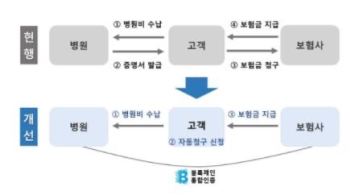
Paying medical indemnity insurance claims via blockchain
The Ministry of Science and ICT and the Korea Information Society Development Institute announced that they have jointly built a "blockchain-based automatic medical expense insurance claim service" with Kyobo Life Insurance. Currently, for actual medical expense insurance, policyholders must pay medical fees at healthcare institutions and then submit copies of medical records such as receipts and insurance claim forms to insurance companies through fax, mail, internet, or in-person visits to claim insurance benefits. Since the insurance claim procedure is cumbersome, there are numerous cases where policyholders forgo claiming insurance benefits due to the burden of document preparation, particularly when the claim amount is small.
2017.11.22by 김지혜 기자

The financial services industry is the most active in adopting hybrid cloud.
Nutanix announced the cloud adoption status and outlook for the financial services industry through its Enterprise Cloud Index report. According to a survey of current hybrid cloud adoption rates by industry, the financial services industry's hybrid cloud adoption rate was 21%, which was higher than the industry average of 18.5%. Financial services companies are facing the challenge of providing differentiated experiences to customers through methods such as leveraging emerging technologies like blockchain, while simultaneously simplifying operations.
2019.04.02by 이수민 기자

IBM Blockchain World Wire… Real-time global financial payment network expands to over 50 countries worldwide
IBM announced on the 19th the expansion of IBM Blockchain World Wire, a real-time global financial settlement network for financial institutions. World Wire was developed to accelerate and optimize foreign exchange transactions and cross-border payment and remittance speeds. Additionally, it integrates payment message transmission, clearing, and settlement procedures into a single network while supporting network participants in selecting various types of digital assets for settlement. Starting from the 19th, the payment service area will be expanded to 72 countries, including 47 global currencies and 44 financial endpoints. Busan Bank became the first domestic bank to join World Wire.
2019.03.19by 이수민 기자











